Commuters with delicate trousers
If you want to treat a trouser hem after getting caught in the rain, check the care label on the specific garment first. GINETEX describes care labels as guidance on the treatments permitted.


For a single trouser hem after a wet commute, a steam generator iron isn’t automatically the right purchase; a standard iron or letting the fabric dry first may be better suited to a quick job. A steam generator iron is more appealing if you regularly have other clothes to iron and have room for the base and hose. The care label is the deciding factor: extra steam isn’t an option if the fabric’s care instructions rule it out or if it would leave the hem even wetter.
If you want to treat a trouser hem after getting caught in the rain, check the care label on the specific garment first. GINETEX describes care labels as guidance on the treatments permitted.
If you regularly have other clothes to iron as well as the hem, tank capacity, the hand unit and descaling may become more important when choosing a model. The manufacturers’ specifications explain what each model offers.
If you only deal with a hem now and again, factor in the extra space needed for the steam generator base and hose.
A good fit if: you regularly have other clothes to iron as well as the hem, and have room for the unit, hose and ironing surface.
The trade-off: The larger tank and steam supply for longer ironing sessions come with a bigger footprint and the need for descaling.
A good fit if: you’re usually dealing with individual hems and quick jobs, and need a suitable temperature setting as well as the option to iron without steam.
The trade-off: You won’t have a separate, large tank like the one on a steam generator iron; the garment’s care instructions still apply to a standard iron, too.
A good fit if: the hem is still very wet or the care label rules out ironing or steam.
The trade-off: The creasing may not be sorted straight away; a more powerful appliance won’t change the fabric’s care limits.
| Concern | What to check when buying | Who is this most relevant to? |
|---|---|---|
| Fabric and moisture | The care symbols on the specific trousers and whether you can iron without steam. | If my trousers are still damp, I want to rule out heat or steam damaging the fabric first. Around 36% of consumers are likely to put garment protection first. |
| Precision around the hem | Documented precision tip and details of the steam output on the exact model. | If I want to work carefully along a narrow hem, the way the soleplate moves matters more to me than a single steam boost figure. Around 29% of consumers are likely to prioritise precision at the hem above all. |
| Quick jobs and space | Space for the base, hose and ironing surface, as well as the stated heat-up time. | If I only iron individual hems, I want to be able to set up and put away the appliance without too much effort. Around 21% of consumers are likely to place particular importance on quick jobs that don’t take up much space. |
| Other items to iron | Tank capacity, whether it can be removed and the descaling method for the specific model. | If I regularly have other clothes to iron as well as the hem, I want to consider refilling and maintenance when choosing. Around 14% of consumers are likely to give particular thought to longer ironing sessions. |
Philips specifically says that its OptimalTEMP claims apply to ironable fabrics. The care label on the specific trousers sets the limit for how they should be treated.
Check the label before choosing a temperature and steam setting. If it rules out ironing or steam, an automatic setting doesn’t make it safe to proceed.
A steam boost figure doesn’t tell you how precisely you can work along a narrow edge. Extra steam may also be unwelcome when the hem is damp.
Compare how often you’ll use it with the space you have, and treat continuous steam and steam boost as separate specifications. First check whether the trousers are suitable for steam at all.
Philips describes a descaling system for the PSG6023/20, but maintenance is still part of regular use.
Before buying, check the descaling method and water guidance for the model in question.
The Express Protect SV9202E0 and SV6116E0 models offer different features to consider when choosing a steam generator iron.
The PerfectCare 6000 PSG6023/20 may appeal if you’re looking for an automatic temperature setting for ironable fabrics and a removable tank.
The CareStyle 3 IS3257BK is an example of a steam generator iron where you may also want to consider the design and hand unit.
The Silence Steam Pro DG9248F0 is an example of a steam generator iron with several temperature settings, if you’d prefer to choose the setting yourself.
These product models relate to steam generator irons as an option if you regularly have other clothes to iron as well as the trouser hem.
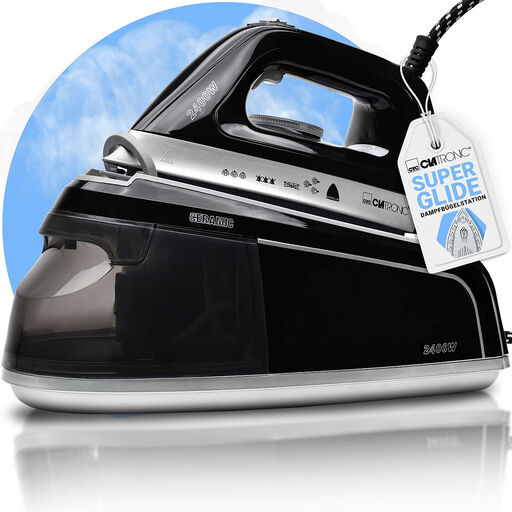 No image available
A steam generator iron like this is more suitable if you have other clothes to iron as well as the hem; allow extra room for the unit.
Listed in the product title: 3.5 bar, 1.2-l water tank, 80 minutes’ operating time, 2400 W and ceramic soleplate.
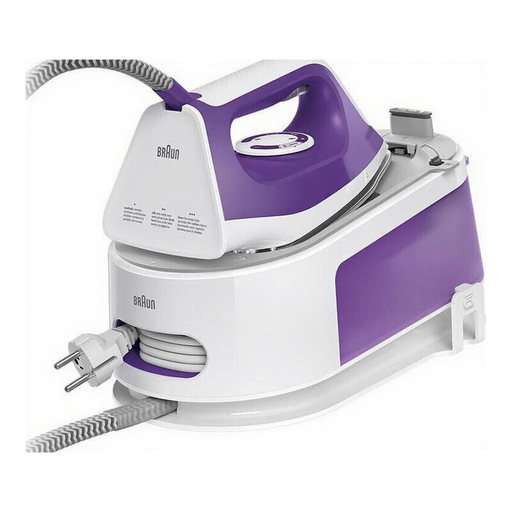 No image available
This steam generator iron may suit a household that regularly has other clothes to iron as well as the hem. Bear in mind the space needed for the base.
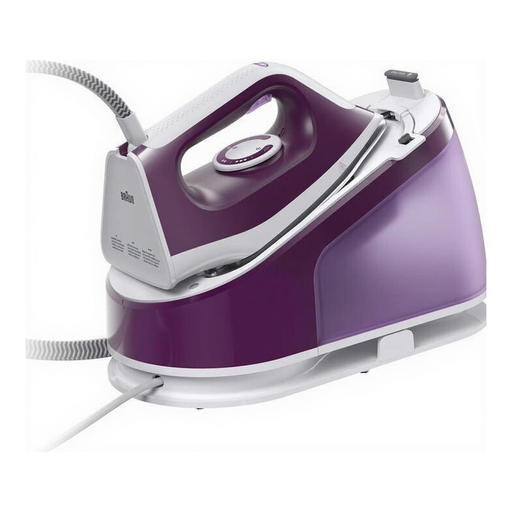 No image available
This steam generator iron may suit a household that regularly has other clothes to iron as well as the hem. Bear in mind the space needed for the base.
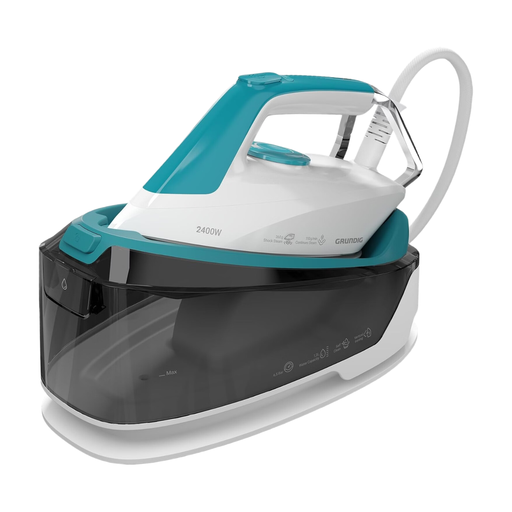 No image available
A steam generator iron like this is more suitable if you have other clothes to iron as well as the hem; allow extra room for the unit.
Listed in the product title: 2400 W, 6.5 bar, 110 g/min steam, 360 g/min extra steam boost, ceramic soleplate, self-cleaning and 1.2-l water tank.
Don’t decide based on the dampness alone: first check the ironing and steam instructions on the care label. If extra steam isn’t recommended, let the hem dry first and only use a permitted treatment; a powerful steam boost doesn’t override the fabric’s care instructions.
Philips points out that steam can condense in the hose. For affected steam generator irons, the manufacturer recommends directing steam away from the fabric first, until steam rather than water comes out; condensation on the ironing board cover is also possible.
Follow the descaling procedure for the specific model. Philips describes limescale build-up as a possible cause of reduced steam and discolouration; descaling methods can vary between models.
For a standard online purchase from a business seller, you generally have a 14-day right to cancel from delivery, as described by Your Europe for distance purchases. If the goods are faulty, you have a statutory guarantee from the seller of at least two years from receipt; an additional manufacturer’s guarantee doesn’t replace this.
According to EU consumer information, electrical and electronic equipment is among the product categories that must carry a CE marking. This is a declaration by the manufacturer, not an independent assessment of ironing performance. Also follow the safety instructions for the specific product.