
Lieferung heute & morgen

Qualitätsgarantie

Willkommens-Angebote freischalten: KOSTENLOSE Lieferung | Bis zu 80 % RABATT | Kostenlose 30-Tage-JoyPlus-Testphase
App herunterladen
A wet and dry vacuum cleaner can pick up dry dirt, liquids or, depending on its design, even water used for mopping. However, not every appliance is suitable for the same purpose. There are clear differences between a traditional workshop vacuum, a cordless wet and dry vacuum cleaner and a vacuum mop in terms of construction, maintenance and intended use.
Anyone who focuses solely on a high wattage or Pa rating often overlooks important details. These include the filter configuration, tank layout, brush roller cleaning and the appliance’s actual suitability for carpets or sealed hard floors.
Watts, kilopascals and Air Watts describe different technical characteristics. A high motor rating does not automatically mean that an appliance will perform equally well when mopping, dealing with pet hair or cleaning carpets. Nozzle design, airflow, filters and the brush roller are also decisive factors.
For example, a traditional wet vacuum with a large tank is designed for spilled liquids and coarse workshop dirt. A vacuum mop, on the other hand, works with clean- and dirty-water tanks and a damp roller. Both appliances belong to the wet and dry vacuum cleaner category, but they perform different tasks.
A self-cleaning wet vacuum cleaner usually rinses the brush roller or suction channel. However, the dirty-water tank, filters, seals and collection areas still need to be emptied and dried regularly. If residual moisture remains inside the appliance, unpleasant odours can develop.
You should therefore check whether the tanks and filters can be removed and whether replacement rollers or compatible filters are available. Automatic hot-air drying, offered by some models, reduces manual effort but does not replace regular checks.
Many cordless vacuum mops are designed for sealed hard floors such as tiles, vinyl or treated wood. Carpets, unfinished wood, sensitive natural stone surfaces or very rough materials may be unsuitable. Before buying, you should therefore check the surface recommendations in the product description and operating instructions.
Separate tanks are practical in a household with several rooms: the brush works with clean water, while the collected dirty water is stored separately. Among the available models, capacities range from 460 ml dirty-water tank on the Lubluelu T6 to larger containers on corded workshop vacuums.
Large tanks reduce interruptions but often increase weight and the amount of storage space required. For a flat, a lighter appliance with around 30 to 45 minutes of runtime may be more suitable than a 20- or 30-litre workshop vacuum.
With a cordless wet and dry vacuum cleaner, you should always consider runtime in relation to the operating mode. Turbo or Max modes generally use more energy than Standard or Eco modes. Charging time is also important: several hours of charging can be inconvenient when cleaning large living spaces or carrying out several cleaning sessions a day.
You should also look out for:
For households with pets, anti-tangle brushes, combs or toothed scrapers may be useful, as they are designed to make it less likely for long hairs to wind around the roller. For allergy sufferers, information about a HEPA or multi-stage filtration system may be relevant. However, this should not be interpreted as a medical benefit.
A workshop wet and dry vacuum cleaner, on the other hand, requires suitable dry and wet filters, a crevice nozzle, extension tubes and, where applicable, a connection for power tools. During renovation work, a tool socket with automatic vacuum activation can be especially practical.
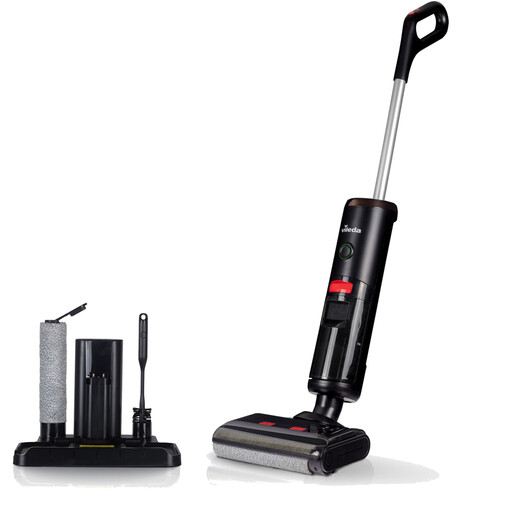
Why this product suits this profile: According to the product information, this cordless vacuum mop combines vacuuming and mopping on hard floors and offers 35 to 45 minutes of runtime.
The separate water tanks and self-cleaning function make maintenance more straightforward than with appliances without a wet-cleaning system.
Cordless operation, 750 ml clean-water tank, 600 ml dirty-water tank and washable HEPA filter according to the product description.
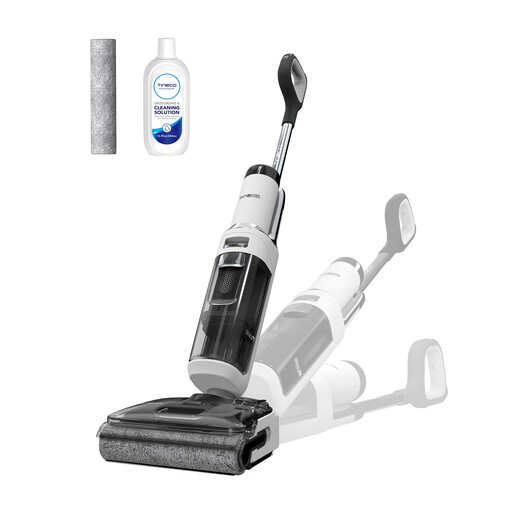
Why this product suits this profile: According to the product information, this model is designed for sealed hard floors and features a flat 180-degree design for cleaning underneath furniture.
Its stated suitability for hard floors clearly defines where it can be used, rather than suggesting unrestricted use on every surface.
Up to 40 minutes of runtime, 13 cm lying height, three-sided edge cleaning and 70-degree FlashDry self-cleaning according to the product information.
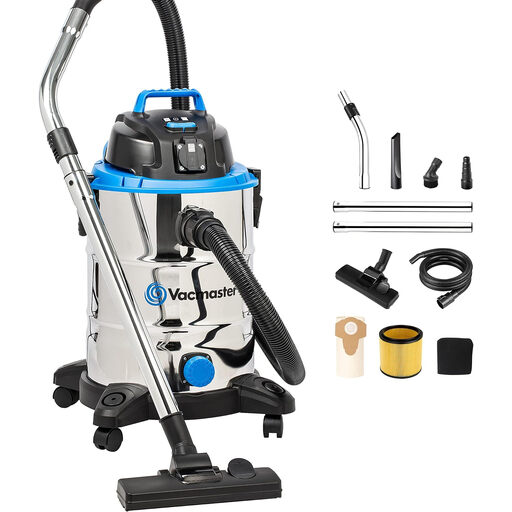
Why this product suits this profile: This corded appliance is aimed at workshops, garages and renovation work involving liquids, coarse dirt or power tools.
The filters for dry and wet pickup are used separately. This allows the operating mode to be adapted to the task at hand.
1500-watt motor, 30-litre container, 240-volt EU socket for power tools and blower function according to the product description.
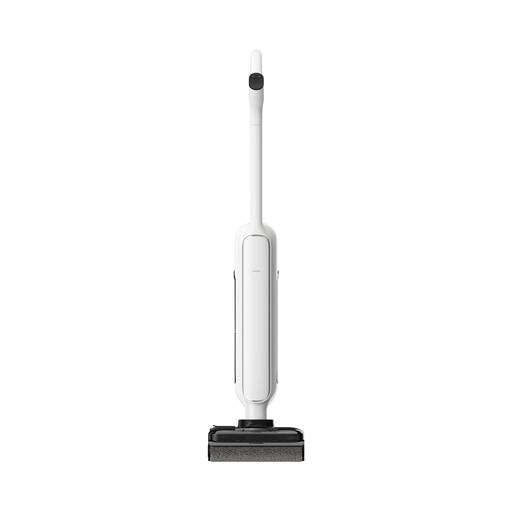
Why this product suits this profile: The product information mentions anti-tangle technology for long hair, as well as the combination of vacuuming, mopping and brush cleaning.
The stated hair-management feature addresses a common cause of maintenance issues. Nevertheless, the roller and dirty-water tank should still be checked after use.
According to the product description, 18,000 Pa suction power, a roller brush speed of 450 revolutions per minute and two cleaning modes.
We have compiled a complete, regularly updated list of products that fully meet these strict selection criteria and the safety regulations applicable in the EU.
Before switching between wet and dry vacuuming, the correct filter must be fitted. With traditional workshop appliances, dry dirt must not be picked up using a foam filter designed for liquids. Similarly, liquids should only be vacuumed if the model is designed for this purpose.
After every wet-cleaning session, the following routine is recommended:
With a carpet cleaner featuring a spray or washing function, you should also check whether the cleaning solution has been approved by the manufacturer. Unsuitable additives can affect seals, pumps or tanks.
This depends on the sealant and the amount of water dispensed. Only use a wet and dry vacuum cleaner on hard floors if the manufacturer explicitly lists laminate as suitable. A low water setting and working quickly may be sensible on suitable surfaces; standing water should be avoided.
Operating time depends on battery quality, operating mode, charging cycles and maintenance. Models with a removable battery may be more practical when capacity starts to decline. To maximise battery life, ensure the appliance is dried fully, maintain the filters regularly and use the supplied charger.
For corded appliances, power consumption is determined by performance and operating time. Cordless models also require energy for charging, as well as water and, where applicable, cleaning solution. Running costs therefore depend not only on motor power, but also on filters, brush rollers, cleaning products and potential replacement batteries.