
Lieferung heute & morgen

Qualitätsgarantie

Willkommens-Angebote freischalten: KOSTENLOSE Lieferung | Bis zu 80 % RABATT | Kostenlose 30-Tage-JoyPlus-Testphase
App herunterladen
A wet and dry vacuum cleaner can pick up dry dirt, remove liquids and mop the floor in a single pass. For families, pet owners and larger homes, that may sound like a practical way to save time. In everyday use, however, there are important differences that product descriptions often fail to highlight.
As a Joybuy Product Recommendation Officer, I therefore focus on clear specifications such as tank capacity, runtime, cable length, filtration system and suitable floor types. Before choosing a wet and dry vacuum cleaner, you should pay particular attention to three common buying misconceptions.
Figures such as 15,000 or 22,000 Pa describe just one aspect of suction power. On their own, they do not tell you how effectively a device picks up liquids, cleans along edges or prevents hair from wrapping around the brush roll. Airflow, brush design and the seal on the dirty-water tank also play an important role.
The maximum runtime of a cordless wet and dry vacuum cleaner often refers to its energy-saving mode. In Turbo mode, actual operating time can be considerably shorter. A device offering 30 minutes may be sufficient for a flat with many hard floors, while a runtime of 40 to 50 minutes is more practical for larger homes.
A self-cleaning wet vacuum cleaner rinses the brush roll or internal lines after use. The dirty-water tank still needs to be emptied and rinsed. Filters and the brush roll should be left to dry to prevent unpleasant odours from developing. Hot-air drying can reduce this maintenance work, but it does not make manual checks unnecessary.
Many wet and dry vacuum cleaners are primarily designed for sealed hard floors such as tiles, vinyl, laminate or sealed wood. A carpet cleaner for textile surfaces, on the other hand, often uses separate spray and suction functions. So check whether carpets may simply be refreshed or whether the device is genuinely suitable for intensive wet cleaning.
A steam cleaner is a different product category again: it works with hot steam and does not necessarily pick up dry dirt or liquids in the same way as a wet and dry vacuum cleaner. Steam should only be used on sensitive wood or unsealed surfaces if the manufacturer expressly permits it.
A larger clean-water tank extends the possible operating time, but usually also increases the weight. For smaller flats, around 500 to 750 ml may be sufficient. For larger areas, 900 ml or additional tanks can be useful. The size of the dirty-water tank is also important: if it needs emptying frequently during cleaning, the practical time saving is reduced.
Look for the stated edge-cleaning capability. Models with a brush roll that reaches close to the side wall clean skirting boards and corners more effectively than devices with a wide gap. A 180-degree recline function can make it easier to clean underneath low furniture.
Noise levels are usually given in dB(A). A rating of 70 to 76 dB(A) means the operating noise will be clearly noticeable. With corded devices, you should also make sure the cable length suits the layout of your home. A 7.6-metre cable may be sufficient in many rooms, but you will need a socket within reach.
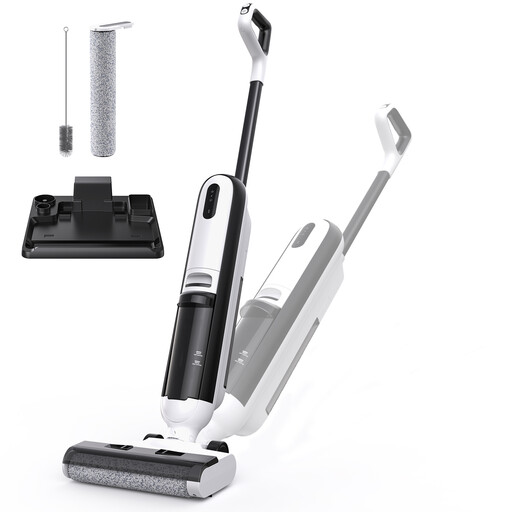
Why this product suits this profile: This cordless wet and dry vacuum cleaner combines a stated suction power of 16,000 Pa with up to 30 minutes of runtime, making it suitable for regular cleaning of small to medium-sized hard-floor areas.
The runtime and tank specifications are clearly stated. This makes it easier to assess before buying whether the capacity will be sufficient for your household.
Cordless operation, 540 ml dirty-water tank and stated self-cleaning function.
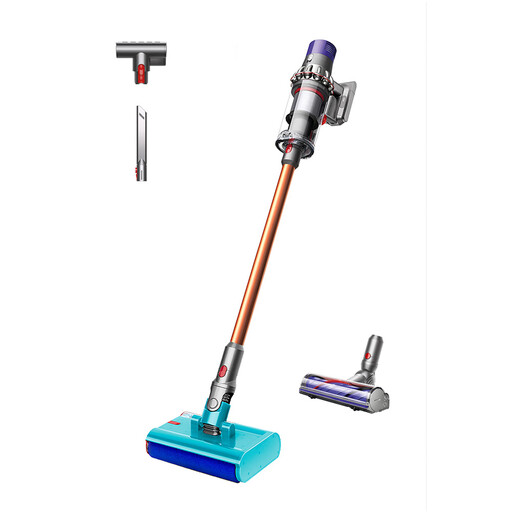
Why this product suits this profile: The system includes a wet-cleaning head for hard floors and a separate Motorbar cleaner head for dry dirt and carpets.
The stated runtime ranges from up to 60 minutes in Eco mode to 5 minutes in Max mode. This makes the difference between the operating modes clear.
3.3 kg net weight, 0.76-litre tank capacity and a filtration system with stated filtration down to 0.1 micrometres.
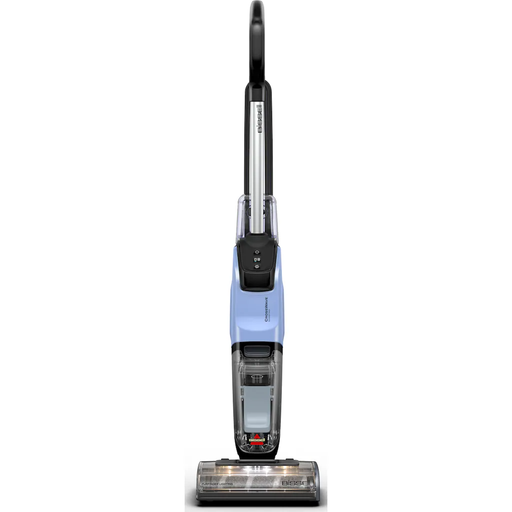
Why this product suits this profile: This corded floor cleaner vacuums and washes hard floors as well as designated carpeted areas at the same time. The 7.6-metre cable is suitable for longer cleaning sessions without needing to stop and recharge.
Use is not limited by battery life. For edge areas, the stated ZeroGap edge-cleaning function on the right-hand side is particularly relevant.
340-watt power rating, separate tanks and self-cleaning docking station.
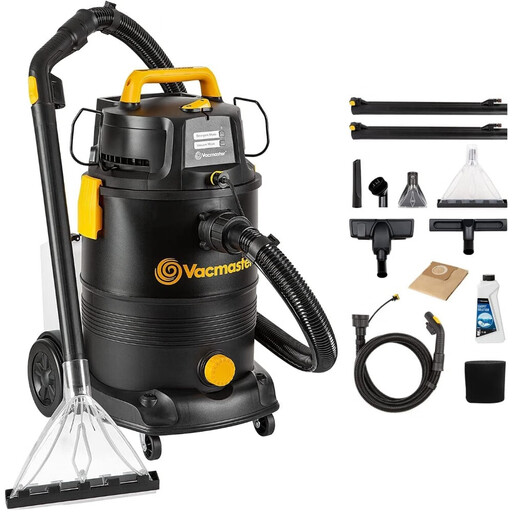
Why this product suits this profile: This corded device is designed for hard floors, carpets, upholstery and vehicle interiors. Its large 30-litre collection capacity is suitable for extensive cleaning tasks.
The device is not limited to small household quantities. Its filter setup distinguishes between dry, wet and cleaning-detergent operation.
1300-watt motor, 30-litre collection container and HEPA exhaust filter for dry operation according to the product specifications.
We have put together a complete, regularly updated list of products that fully meet these strict selection criteria and the safety regulations applicable in the EU.
With a cordless wet and dry vacuum cleaner, potential ongoing costs for filters, brush rolls, cleaning products and replacement batteries may arise in addition to electricity consumption. Before buying, check whether these components are available and whether the manufacturer specifies clear replacement intervals.
Corded models do not need charging time, but they consume electricity continuously while in use. Devices with hot-air drying also require additional electricity for the drying process. For a long service life, regular rinsing, completely dry filters and the use of approved cleaning products are more important than individual performance figures.
This depends on the model and the selected cleaning mode. Many wet and dry vacuum cleaners pick up dry dirt together with liquid on hard floors. With traditional wet and dry workshop vacuums, different filters may need to be fitted for wet and dry operation. The user manual is the definitive source of information.
Depending on the model and operating mode, the stated runtime is often between around 30 and 50 minutes. It may be shorter in Turbo mode or when cleaning heavily soiled areas. For large homes, you should also check the tank capacity, charging time and availability of replacement batteries.
Self-cleaning can make caring for the brush roll easier and reduce the time needed after mopping. Nevertheless, the dirty-water tank, filters and seals still need to be checked and cleaned regularly. A station that also dries the brush is particularly convenient.