
Lieferung heute & morgen

Qualitätsgarantie

Willkommens-Angebote freischalten: KOSTENLOSE Lieferung | Bis zu 80 % RABATT | Kostenlose 30-Tage-JoyPlus-Testphase
App herunterladen
A wet and dry vacuum cleaner can pick up dry dust, crumbs, pet hair and spilt liquids. However, not every appliance is suitable for every task. There are clear differences between a traditional wet vacuum cleaner, a compact dry vacuum cleaner, a cordless wet and dry floor cleaner and a more professional carpet and upholstery cleaner.
The Joybuy buying guide explains the most important purchasing criteria and shows which types of appliance are best suited to different households and places of use.
A stated suction power of 15.000 or 20.000 Pa initially describes only a technical measurement. What matters as well is how effectively the brush roll, air channels, filter and floor head work together. An appliance with a high figure can still be impractical for carpet fibres, hair or wet dirt if the nozzle becomes blocked quickly.
You should therefore consider the complete system:
A vacuum cleaner with a mopping function is generally designed for sealed hard floors. Models with a water tank pick up liquids and clean the floor with a damp roller. However, this does not mean they are suitable as a carpet cleaner or for washing upholstered furniture.
For carpets and car seats, you need an appliance that applies water and cleaning solution in a targeted way before vacuuming it up again. Check whether a washing or spray-extraction function is explicitly mentioned.
A self-cleaning wet and dry floor cleaner often rinses the brush roll and can then dry it. Nevertheless, the dirty-water tank, filters, seals and suction channels still need to be emptied, rinsed and dried thoroughly on a regular basis. If this step is skipped, unpleasant smells may develop or air circulation may deteriorate.
For appliances with hot-air or thermal drying, you should also observe the stated temperature and safety clearances. Do not touch the brush roll during a drying cycle.
A corded wet and dry vacuum cleaner with a large tank is suitable for garages, basements, renovation work and workshops. It can be used for longer periods and often comes with accessories for coarse dirt. A cordless wet vacuum cleaner, on the other hand, is more manoeuvrable and more convenient for everyday hard-floor cleaning around the home.
For cordless appliances, three specifications are particularly important:
Compact tanks are often sufficient for a household. Larger homes, families with children or frequent cleaning benefit from bigger containers. In wet and dry floor cleaners, fresh and dirty water should be kept separate. This prevents the appliance from continuing to clean with water it has already collected.
For workshop vacuums, the container capacity and straightforward emptying are more important. For example, the Vacmaster VQ1530SFDC features a 30-litre stainless-steel container, a drain plug and a 1500-watt motor. The integrated 240-volt socket is intended for dust extraction when using compatible power tools.
For homes with pets, an anti-tangle brush and an easily accessible roller are practical features. Effective edge cleaning is supported by a side-guided brush or a slim design. Check the manufacturer’s specific wording: “close-to-edge” does not necessarily mean that both sides clean right up to the wall.
The type of flooring is also crucial. Hard-floor cleaners with a damp roller are designed for sealed wood, tiles, laminate or vinyl. For carpets, you need a dedicated carpet brush or a suitable dry-vacuuming mode.
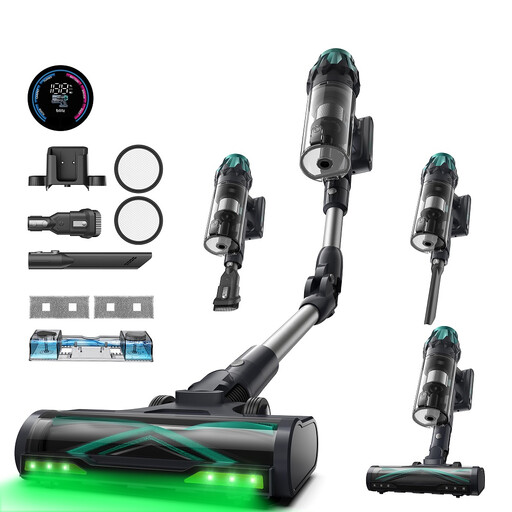
Why this product suits the profile: This cordless stick vacuum combines dry vacuuming with an optional 230-ml water-tank function and, according to the product details, offers up to 60 minutes of runtime.
The mopping function is described as an additional feature and does not replace a carpet cleaner. Separate suction modes are available for carpets.
Removable battery, anti-tangle brush, three suction levels and LED display.
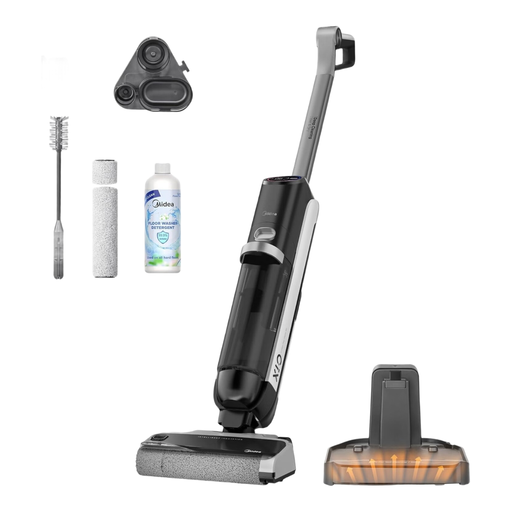
Why this product suits the profile: This cordless model is designed for sealed hard floors and combines automatic dirt detection with mopping and vacuuming functions.
The product details explicitly mention an anti-tangle brush, an edge brush and a self-cleaning station with 60-°C hot-air drying.
170° recline for cleaning under furniture, LED display and automatic adjustment of suction power and water flow.
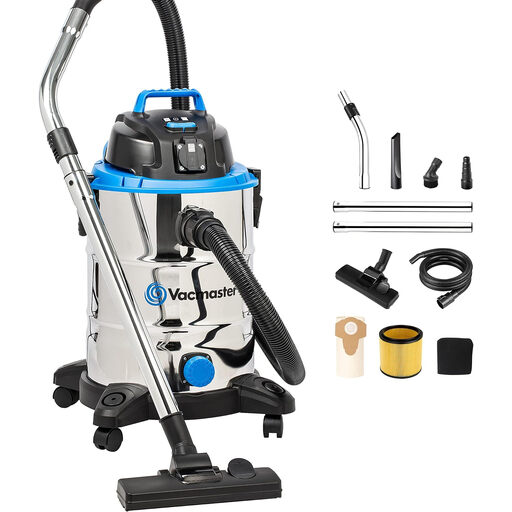
Why this product suits the profile: This corded appliance is aimed at workshop users, DIY enthusiasts and households that need to pick up larger amounts of dry or wet dirt.
The use of suitable filters for wet and dry vacuuming is expressly provided for. This prevents the wrong filter from being used for a particular application.
Stainless-steel container, 240-volt socket for power tools, drain plug and workshop vacuum with blower function.
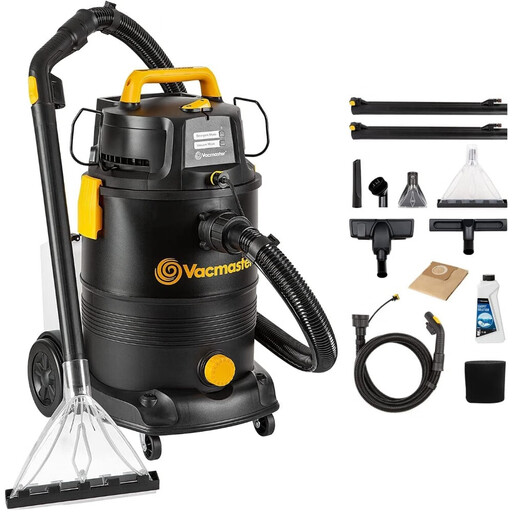
Why this product suits the profile: This model is designed for wet and dry vacuuming, as well as cleaning carpets, upholstered furniture and car seats.
Unlike hard-floor wet and dry cleaners, it has a separate 6-litre cleaning-solution tank and a 30-litre collection container.
1300-watt motor, various filters for dry, wet and washing modes, plus accessories for textile surfaces.
We have put together a complete, regularly updated list of products that fully meet these strict selection criteria and the safety regulations applicable in the EU.
In addition to the purchase price, there are ongoing costs for filters, brush rolls, cleaning solution and, where applicable, replacement batteries. An appliance with a washable filter can reduce the consumption of disposable filters, but it requires regular drying time. When buying a cordless wet and dry floor cleaner, you should check the price and availability of replacement parts.
For a long service life, follow these simple rules:
Yes, provided the model is explicitly designed for both operating modes and the correct dry filter is fitted. With many appliances, the dust filter must be changed or removed before wet vacuuming. Always follow the operating instructions.
Runtime depends on the cleaning mode, the surface and the age of the battery. The examples in the product details range from around 30 to 60 minutes. Maximum runtime is usually achieved in the eco mode, while turbo mode often reduces it.
In addition to the electricity used for charging, you need to factor in cleaning solution, filters, brush rolls and possible replacement batteries. For appliances with a self-cleaning station in particular, you should also consider the additional water and electricity consumption. Therefore, do not compare only the purchase price; check the availability of consumable parts as well.