
Lieferung heute & morgen

Qualitätsgarantie

Willkommens-Angebote freischalten: KOSTENLOSE Lieferung | Bis zu 80 % RABATT | Kostenlose 30-Tage-JoyPlus-Testphase
App herunterladen
A disorganized bathroom can make for a difficult start to the day. A lack of proper storage for towels, toiletries, and cleaning supplies is a common problem, especially in smaller apartments or rental homes. A well-chosen white bathroom cabinet can solve this by combining functionality with a bright, clean aesthetic.
This article serves as a practical guide. We'll introduce you to various models and explain the key criteria to consider, helping you make an informed decision that suits your needs.
Before you decide on a model, several functional aspects should be considered. These will help you find a cabinet that not only looks great but also proves its worth in daily use.
The first step is to accurately measure the intended space. A narrow bathroom cabinet is perfect for unused nooks next to the sink or toilet. To take advantage of your room's height, a tall bathroom cabinet is a space-saving solution. For more counter space and a more traditional look, a wider bathroom floor cabinet might be the right choice. Also, consider the clearance needed to open doors and drawers.
Efficient bathroom storage adapts to your needs. Models with adjustable shelves offer the flexibility to accommodate both tall bottles and small jars. A combination of closed compartments, drawers, and open shelves allows you to keep everyday items within easy reach while storing others dust-free and out of sight.
A simple white cabinet is often more than just a piece of bathroom furniture. Thanks to their neutral design, many models can also serve as a white kitchen cabinet for pantry items, a hallway cabinet with drawers for accessories, or as extra storage in the bedroom. Such a multipurpose cabinet is a cost-effective and flexible investment. Look for materials like MDF boards, known for their durability, ease of maintenance, and suitability for the typical humidity in a bathroom.
Here is a selection of practical and versatile cabinets that stand out for their functionality and clean design.

Why it stands out At 170 cm tall, this cabinet makes optimal use of vertical space while having a small footprint of just 40 x 30 cm. Its thoughtful layout, featuring two cabinet sections, a drawer, and an open compartment, provides a structured solution for a wide variety of items.
Pros
Who is it for? For those looking to maximize storage in narrow spaces. Its versatility makes it a great choice not only for bathrooms but also for kitchens or entryways that need a slim storage solution.
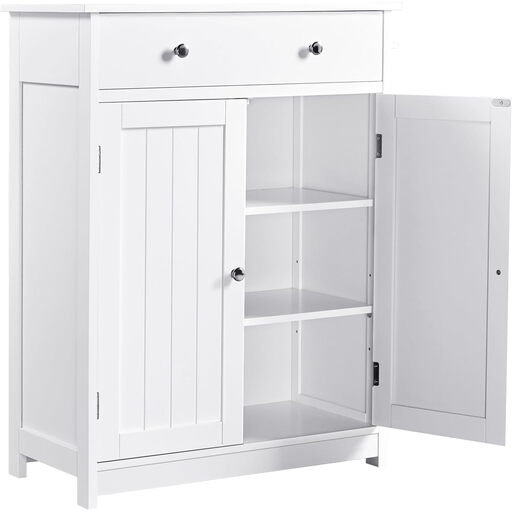
Why it stands out This bathroom floor cabinet, with its 60 cm width, offers a generous tabletop that serves as extra counter space. The combination of a deep drawer and a two-door cabinet makes it a practical all-rounder.
Pros
Who is it for? For anyone looking for a freestanding cabinet with a usable surface. It fits well in the bathroom for storing towels and supplies, but also works perfectly as a small kitchen cabinet or a side cabinet in the living room.

Why it stands out With its ultra-compact dimensions of just 30 x 30 cm, this cabinet is specifically designed for the tightest of spaces. The two removable drawers offer unique organizational flexibility.
Pros
Who is it for? Ideal for renters or owners of very small bathrooms who need a clever and discreet storage solution for a corner. It can also be used as a narrow nightstand or a small corner cabinet in a living area.
The models featured here cover many common needs. However, if you prefer different dimensions, designs, or layouts, there are other possibilities.
Explore our full range of storage cabinets with drawers to find the perfect solution for your home.
1. What is the best material for a bathroom cabinet? MDF (medium-density fiberboard) is a very common and practical choice. It is resistant to moisture, easy to clean, and cost-effective. The models featured here use FSC-certified MDF, which supports responsible forestry. Solid wood is more durable but requires more maintenance and is typically more expensive.
2. What's the best way to organize a small bathroom cabinet? Utilize vertical space with adjustable shelves. Use small boxes or drawer dividers to sort small items like cosmetics or accessories. Store rarely used items in the back or lower sections, and keep daily essentials in the front or in open compartments for easy access.