
Lieferung heute & morgen

Qualitätsgarantie

Willkommens-Angebote freischalten: KOSTENLOSE Lieferung | Bis zu 80 % RABATT | Kostenlose 30-Tage-JoyPlus-Testphase
App herunterladen
A white bathroom cabinet complements many types of tiles, fittings and wall colours. However, a light-coloured surface alone says little about how practical it is for everyday use. The key factors are suitable dimensions, durable materials, flexible shelving and secure fixing.
In rented homes, small family bathrooms or households with lots of toiletries, typical buying decisions can quickly lead to unnecessary costs. The following selection helps you distinguish marketing claims from verifiable product features.
A narrow cabinet may appear to save space, but it can quickly reach its limits when storing large shampoo bottles, towels or cleaning products. So check not only the external dimensions, but also the usable shelf height and door movement. Before buying, you should also establish whether the doors will hit the washbasin, wall or radiator.
A fixed layout may look neat at first glance. In everyday use, however, toiletries, folded towels and smaller containers require different heights. A bathroom cabinet with adjustable shelves can be adapted more flexibly and prevents storage space being wasted through unused gaps.
A heavy cabinet is not automatically safe from tipping. A tall bathroom storage cabinet in particular should stand on a level surface and be secured to the wall in accordance with the assembly instructions. Bathroom furniture with anti-tip protection is a sensible safety feature for households with children or when several compartments are opened frequently. The manufacturer’s stated maximum load must not be exceeded.
Measure the available floor or wall space at three points: width, depth and height. Also take skirting boards, pipes, sockets and the clearance needed in front of the furniture into account.
When reviewing product specifications, pay attention to the order in which depth, width and height are listed. The dimensions should suit not only the room, but also your largest items.
A white MDF bathroom cabinet or engineered-wood cabinet can offer an even surface and comparatively low weight. However, terms such as ‘moisture-resistant’ should not be confused with ‘waterproof’. Splashing water should be wiped away promptly; prolonged dampness can damage edges, coatings and joints.
Smooth, wipe-clean surfaces and neatly finished edges are practical choices. For engineered wood, information about the emissions class may be relevant. E1 refers to a formaldehyde emissions class for engineered wood; it is not, however, a quality assessment of the entire construction. The quality of the hinges, handles and fixing components also affects everyday use.
A bathroom cabinet with doors keeps the contents hidden and prevents visible clutter. Drawers make it easier to access smaller items, but require sufficient clearance to open fully. With a bathroom cabinet with drawers, check whether the drawers are fully extendable and what the load capacity is for each one.
The following points are also important:
The following three recommendations are matched to different usage situations. Details of dimensions, materials and load capacity are based on the respective product information.
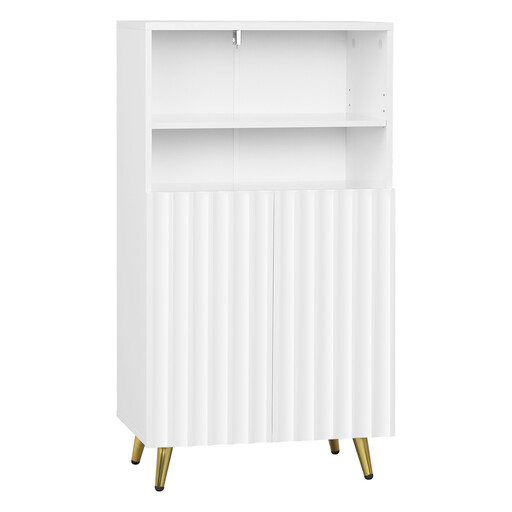
Why this product suits the profile: Measuring 50 × 30 × 93 cm, this cabinet combines a shallow depth with additional vertical storage. Two doors, open compartments and adjustable shelves are suitable for toiletries and smaller household items.
The shelves behind the doors can be adjusted or removed in 6.4 cm increments, while the open compartments can be adjusted in 3.2 cm increments. An L-shaped anti-tip device is specified.
MDF with a water-based finish, two open compartments and a stated maximum load capacity of 40 kg.
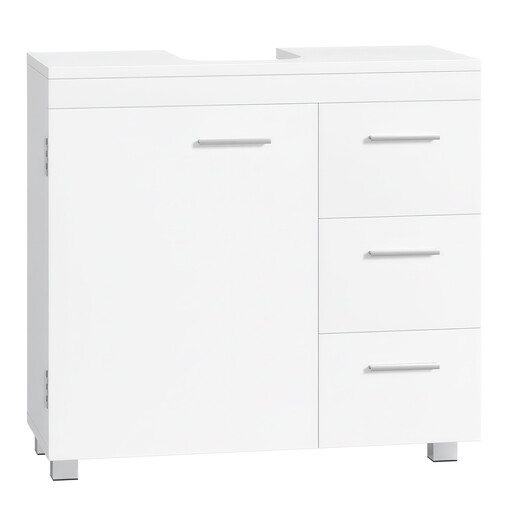
Why this product suits the profile: This washbasin vanity unit is designed with a width of 70 cm, three drawers and one compartment behind the door. It is aimed at households that want to keep toiletries and smaller bathroom textiles organised separately.
The combination of drawers and an adjustable shelf avoids a rigid storage layout. Before ordering, check the siphon, washbasin shape and the stated dimensions of 30 × 70 × 64 cm.
MDF and chipboard, feet, three drawers, two compartments behind the door and an included anti-tip kit; maximum static load capacity: 36.2 kg.
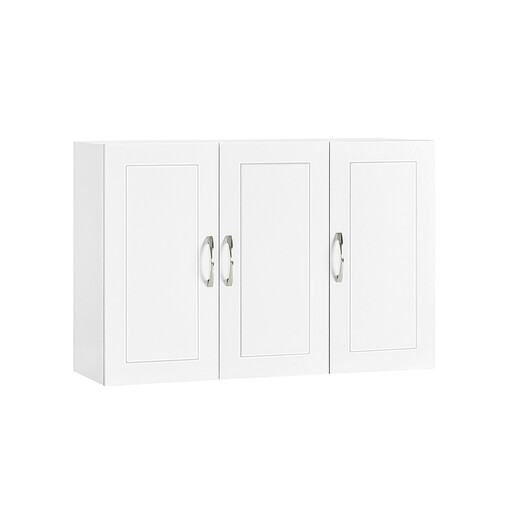
Why this product suits the profile: The 90 cm-wide wall-mounted cabinet is suitable for households that want to keep the floor clear and store towels, bottles or supplies in one central place. It can also be used outside the bathroom.
The height-adjustable internal shelf prevents a completely rigid compartment layout. The specified anti-tip strap supports safe use, but does not replace checking the condition of the wall.
E1 MDF, dimensions of 90 × 30 × 60 cm, doors and a stated total load capacity of 36 kg.
Place a freestanding bathroom cabinet on a level, dry surface. Tall or heavily loaded furniture should be secured using the included anti-tip device in accordance with the instructions. In rented homes, check before drilling whether the wall plugs and wall type are suitable and whether the landlord’s permission is required.
Wipe away splashes with a soft cloth and do not use harsh abrasive cleaners unless the manufacturer states otherwise. Heavy items should be placed in the lower compartments. After installation, check that the doors are hanging straight and that all screw connections are secure.
We have put together a complete, regularly updated list of products that fully meet these strict selection criteria and the safety regulations applicable in the EU.
MDF and other engineered woods are common choices for bathroom furniture. What matters is a properly sealed surface, protected edges and sufficient distance from standing water. Moisture-resistant does not mean that the furniture is designed for direct or prolonged contact with water.
Place it on a level surface and secure it to a suitable wall using the designated anti-tip device. Before drilling, check the wall material, the location of any pipes and cables, and the installation instructions. The stated maximum load should not be exceeded.
That depends on what you want to store. Doors conceal larger compartments and are suitable for towels or supplies. Drawers make it easier to access small toiletries. A combination of both often provides a more flexible layout, but requires more space for opening and pulling out the drawers.