Easy dip maker
You regularly turn cooked beans into dip and want a blender that’s comfortable to use and easy to clean afterwards.


A stick blender is a sensible starting point for making white bean dip if you usually blend cooked beans in a suitable container and don’t need extra functions. A mini blender may suit you if you also make drinks in the cup and the container is the right size for your usual portion. A compact food processor is worth considering if you’d also like to slice, chop or grate ingredients. Compare what’s included, how easy it is to clean and whether the container suits the quantity you normally make, rather than focusing on wattage alone.
You regularly turn cooked beans into dip and want a blender that’s comfortable to use and easy to clean afterwards.
You tend to make single portions of dip or drinks, so it’s especially important to choose a container that suits the amount you usually prepare.
You’d like to slice, chop or grate vegetables and herbs as well as make dip, and want to compare what each model can actually do.
A good fit if: You mainly want to blend cooked beans directly in a suitable container.
Worth weighing up: Whether you can chop or grate ingredients depends on what’s included with the specific model. CHIP’s tests of stick blenders assess factors including blending quality, splash protection and ease of cleaning.
A good fit if: You often make drinks in the cup as well as dip, and the container suits your usual dip portion.
Worth weighing up: Philips lists dips and smoothies among the uses for the HR2600/80. This is a manufacturer’s claim, not independent evidence that it can make thick white bean dip.
A good fit if: After a trip to the weekly market, you regularly want to chop, slice or grate ingredients as well as make dip.
Worth weighing up: Kenwood describes these functions for the MultiPro Go FDP22.140GY. Extra attachments may mean more to clean and store.
| Priority | What to look for | Who it matters most to |
|---|---|---|
| Dip consistency | Compare the controls, blending foot and container. A high wattage alone doesn’t guarantee a finer texture. | If I want to blend beans to the consistency I like, texture is my main priority. Around 33% of consumers would put dip consistency at the top of their list. |
| Easy cleaning | Check the cleaning instructions for the blending foot or blade assembly. Bosch lists a detachable blending foot for the MSM4W410, but that doesn’t mean every part is dishwasher-safe. | If I make dip regularly, I want to clean the parts without unnecessary effort. Around 27% of consumers would put easy cleaning ahead of other buying priorities. |
| Suitable portion size | Check the container shape and the manufacturer’s guidance on fill levels. The stated capacity alone won’t tell you the minimum suitable quantity. | For single portions, I need a container that works with the ingredients and the appliance. Around 20% of consumers would mainly look for a container that suits the amount they usually make. |
| Other market ingredients | Check which blades and discs are included with the exact version on offer. Extra functions mean extra parts. | If I also want to slice vegetables or chop herbs, the attachments actually included matter to me. Around 20% of consumers would put additional food-preparation functions first. |
Wattage is a product specification. CHIP also assesses tested stick blenders against criteria such as blending quality, ease of use, splash protection and cleaning.
Compare the results and handling of the exact model. Wattage alone won’t reliably tell you what consistency your dip will have.
According to Braun’s product listing, the MultiQuick 7 MQ7045X set includes a chopper and a whisk. That doesn’t mean other versions in the range come with the same attachments.
Check the full model number and the contents of the specific set on offer.
Philips lists dips as one of the uses for the HR2600/80, but this doesn’t tell you the minimum quantity for your recipe.
Check the manufacturer’s guidance on fill levels and thick mixtures for the exact model.
Braun offers stick blender sets with different attachments. What’s included depends on the specific version.
Bosch stick blenders vary by model, including in their controls and attachments.
Philips describes the HR2600/80 mini blender as suitable for smoothies, shakes and dips.
Kenwood describes the compact MultiPro Go FDP22.140GY food processor as handling a range of tasks beyond blending.
The following Joybuy products include choppers, blenders and stick blenders. Check each model’s specifications and container to make sure they suit your usual dip portion and how you plan to use the appliance.
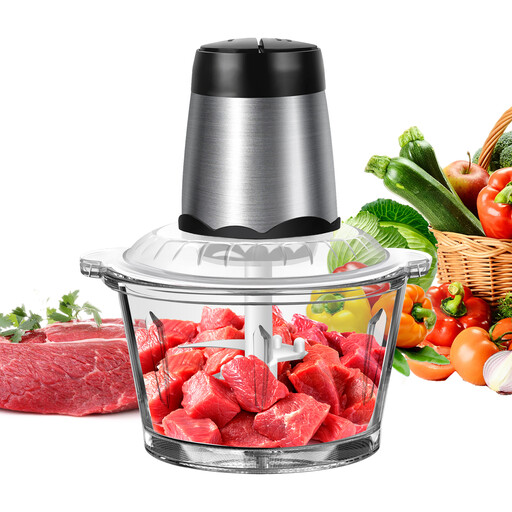 No image available
This chopper may suit you if you want to process beans in a suitable container; check that the bowl size is right for your portion.
The product name specifies a 2-L glass bowl and stainless steel blades.
 No image available
This blender may suit you if you’re looking for a countertop appliance to process your ingredients. Before buying, check whether the container and the manufacturer’s guidance on thick mixtures suit your dip.
The product name specifies 600W, a 1.5L jug and three speed settings.
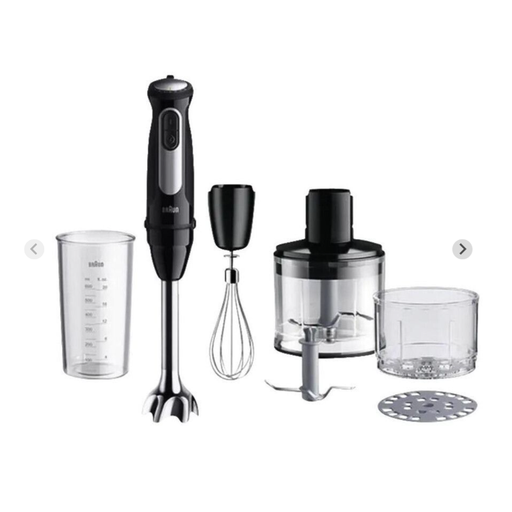 No image available
This stick blender may be a good option if you want to blend beans in a suitable container; check what’s included with the specific version.
Also check the cleaning instructions for the parts you can remove after use.
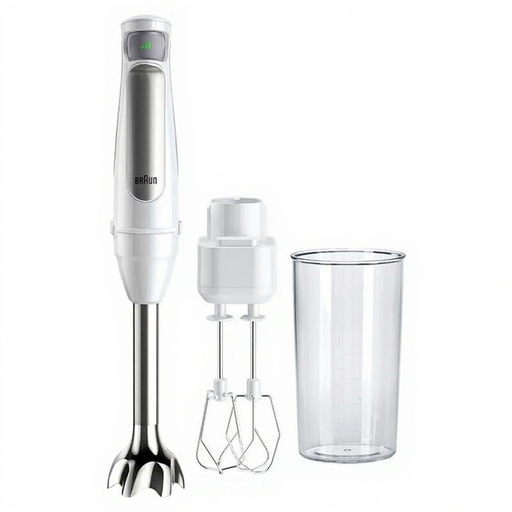 No image available
This model may suit you if you want to blend beans in a suitable container using a stick blender.
Before buying, check the full contents and cleaning instructions for this exact version.
 No image available
The two stated bowl sizes may be useful for preparing different quantities; check whether either suits the portion you usually make.
The product name specifies two glass bowls, 2L/8Cup and 0.6L/2.5Cup, and 300W. According to the product information, the bowl and lid are not heat-resistant; avoid temperature changes of more than 50 °C.
Yes. Dried beans need to be soaked and cooked before you blend them. The German Federal Institute for Risk Assessment recommends soaking dried pulses for at least five hours, discarding the soaking water and cooking them thoroughly in fresh water. According to the German Federal Centre for Nutrition, tinned or jarred beans are already cooked; a blender doesn’t replace cooking.
Follow the instructions for your specific appliance and separate the motor unit from any removable parts. Bosch lists a detachable blending foot for the MSM4W410. Check whether individual parts are dishwasher-safe for the model you have.
Keep prepared leftovers chilled. The German Federal Institute for Risk Assessment recommends storing leftovers in the fridge and eating them within two to three days. Divide larger quantities of hot food between shallow containers to help them cool. This is general advice, not a specifically tested storage life for this dip recipe.
If you buy from a business seller in the EU, European Union consumer information states that you have a legal guarantee of at least two years against the seller, starting when you receive the goods. A voluntary manufacturer’s guarantee is separate; the rules described here don’t apply to private sales.
Electrical appliances covered by the relevant EU rules must carry the CE marking. It is the manufacturer’s declaration of conformity, not approval by a central EU testing body. For mains-powered models, check the marking and the regulations that apply to the appliance. The Low Voltage Directive applies to electrical equipment rated between 50 and 1,000 V AC; you can’t assume it applies to a battery-powered appliance based on the product type alone.