For smaller portions of dip, a mini chopper with an explicitly stated purée function may be enough. For larger batches, or if you regularly chop and grate ingredients, it’s worth comparing it with a food processor. Check the recipe quantity against the permitted working capacity of the specific appliance: bowl volume doesn’t automatically tell you how much dip it can process at once, and extra attachments need space to store and time to clean.
Who are the different appliances suitable for?
Families making a larger batch of dip
If you want to avoid having to refill the appliance, compare the recipe quantity with the working capacity of the specific model – not just its stated bowl volume. Rommelsbacher lists a 1.5-litre bowl for the MZ 500; Kenwood distinguishes between a 1.3-litre bowl size and a 0.75-litre working capacity for the FDP23.140GR.
If you want control over the dip’s texture
If you want to control the texture when blending, check the blade, purée function and controls on the exact model. KitchenAid lists two speed settings and a pulse function for the 5KFC3516; these specifications alone don’t guarantee a particular result with white beans.
Family cooks with other food-preparation jobs
If you regularly chop or grate ingredients as well as making dip, a food processor with suitable discs may be a good option. Also consider whether you’ll actually use the extra parts and how much space they’ll take up when storing and cleaning them.
What should you look for when buying?
| What to consider |
What to check before buying |
Who this matters most to |
| Amount of dip per batch |
Compare the recipe quantity with the permitted working capacity for the specific model and ingredients. |
If I want to make as much dip as possible in one go for a family meal, I check the actual working capacity. Around 31% of consumers make this a priority when buying. |
| Controlled blending |
Check the purée function, blade, pulse control and guidance for soft, cooked ingredients. |
If I want to control the texture, I look at the appliance’s purée function and controls. Around 31% of consumers put this level of control at the top of their list. |
| Cleaning |
Check the cleaning instructions for every part you’ll use regularly on the exact model variant. |
If I want to keep cleaning up after a meal to a minimum, I check how each part can be cleaned. Around 23% of consumers make this a priority. |
| Other kitchen tasks |
Check the items included, storage space needed and the chopping or grating tasks you actually plan to do. |
If I want to use the appliance for other ingredients for family meals, I look for suitable attachments and consider where to store them. Around 15% of consumers prioritise this versatility. |
Which buying and usage mistakes should you avoid?
-
Assuming the stated bowl volume is the amount of dip it can process
A large bowl doesn’t automatically mean that the appliance can process that amount at once. For example, Kenwood lists a 1.3-litre bowl size and a 0.75-litre working capacity for the FDP23.140GR.
Compare your recipe quantity with the working capacity and processing instructions for the specific model and ingredients.
Extra bowls and attachments need storage space and must be cleaned after use.
Which brands offer suitable types of appliance?
KitchenAid
The 5KFC3516 mini chopper is a compact option for smaller batches of dip; the brand also offers larger food processors.
- KitchenAid lists an 830 ml bowl, a multi-purpose blade, two speed settings and a pulse function for the 5KFC3516.
- The bowl size isn’t a confirmed working capacity for bean dip. The IMTEST hummus test covered a 2.1-litre food processor, not this mini chopper or white bean dip.
Rommelsbacher
The MZ 500 is a larger multi-purpose chopper for households that want to make purées but don’t need slicing and grating discs.
- Rommelsbacher lists a 1.5-litre glass bowl and puréeing among the appliance’s uses. The manufacturer states that removable parts are dishwasher-safe.
- The bowl capacity doesn’t confirm the permitted working capacity for dip; check the guidance for the specific model.
Kenwood
The MultiPro Go FDP23.140GR combines a puréeing blade with discs for other food-preparation tasks.
- Kenwood distinguishes between a 1.3-litre bowl size and a 0.75-litre working capacity for the FDP23.140GR.
- According to the manufacturer, only certain parts are dishwasher-safe; check the cleaning instructions in the manual.
Bosch
The MultiTalent 3 MCM3200W is worth considering if you regularly want to chop or grate as well as make dip.
- Bosch lists a universal blade as well as slicing and grating discs for this model.
- The stated 2.3-litre bowl size doesn’t confirm a permitted working capacity for dip or guarantee a particular texture.
Cuisinart
The Expert Prep Pro FP1300BE is designed for households planning to make both small and large batches, as well as prepare a range of vegetables.
- Cuisinart lists a 0.95-litre inner bowl and a 3-litre main bowl. IMTEST gave the Expert Prep Pro a positive rating for hummus.
- IMTEST rated its setup and ease of use as satisfactory only. The hummus result doesn’t automatically guarantee a particular result with white beans.
Joybuy products for dips and food preparation
The following mini choppers and compact food processors are described in their product listings as suitable for puréeing or making purées from cooked ingredients. Before buying, check the instructions and permitted working capacity for the specific variant.
 No image available
IAGREEA MS-25JM08 mini chopper, 350 W
The product description states that the 1.8-litre bowl is suitable for purée and cooked ingredients.
It lists three stackable stainless steel bowls with capacities of 2.5, 2.2 and 1.8 litres, plus a two-speed pulse control. For pulse operation, the description specifies a maximum of 30 seconds per cycle.
View at Joybuy
 No image available
Bear QSJ-D03Q1 mini chopper, 300 W
The product description lists puréeing and two speed settings, including one for soft ingredients.
According to the product information, the model comes with 2-litre and 0.6-litre glass bowls. The bowls and lids aren’t heat-resistant, and temperature changes of more than 50 °C should be avoided.
View at Joybuy
 No image available
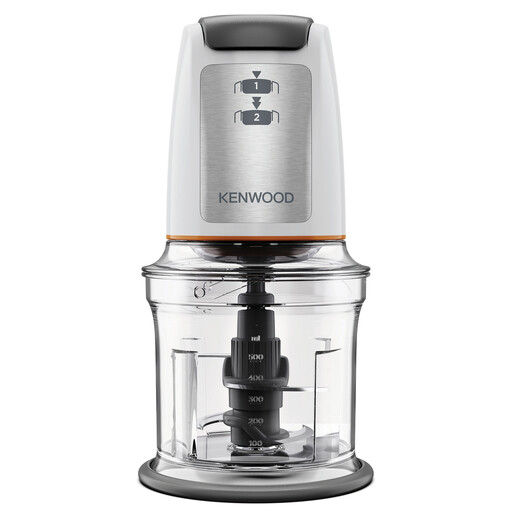
KENWOOD Easy Chop CHP61.100WH
The product information lists dips and sauces among its uses.
It lists a 0.5-litre bowl, two speed settings and 500 W. The description also mentions puréeing.
View at Joybuy
 No image available
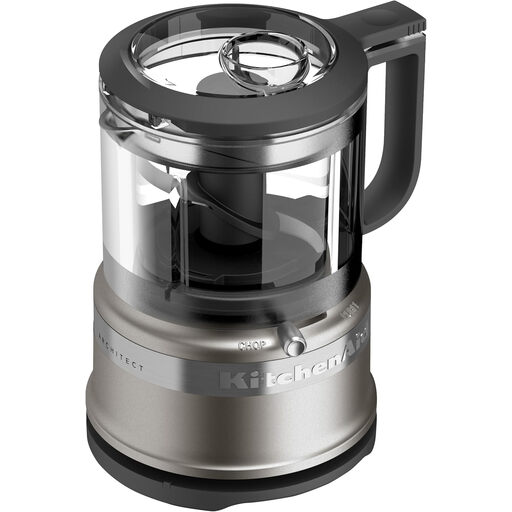
KitchenAid 5KFC35616ECU mini food processor, 240 W
The product description lists a purée function and a pulse function for controlling the processing.
It lists a 0.83-litre work bowl, two speed settings and a stainless steel multi-purpose blade. The description says the blade is very sharp, so take care when fitting, removing and cleaning it.
View at Joybuy
 No image available
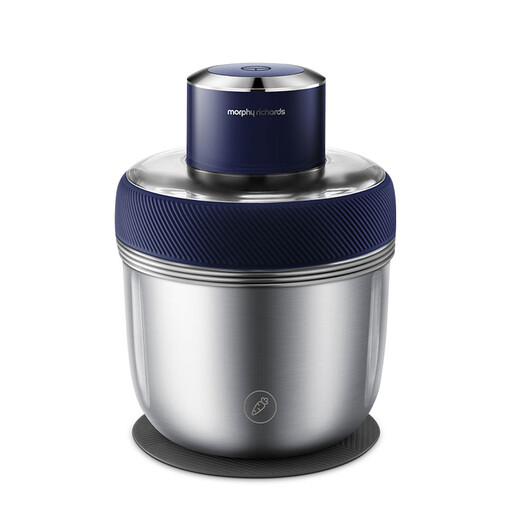
Morphy Richards food processor chopper with 3 stainless steel bowls
The product description lists puréeing sauces and chopping among its uses. The product title states that it comes with three stainless steel bowls.
View at Joybuy
Frequently asked questions
Do I need to cook dried white beans before puréeing them?
Yes. The Federal Centre for Nutrition recommends soaking dried pulses for at least five hours, then cooking them. There’s no need to soak pre-cooked beans; follow the instructions on the packaging.
How should I store prepared bean dip?
The German Federal Institute for Risk Assessment recommends keeping leftovers in the fridge and eating them within two to three days. Larger quantities of hot food should be cooled to below 7 °C within a few hours, for example by dividing them between shallow containers.
Is the CE marking an independent safety test?
No. Your Europe, the European Union’s information portal, explains that CE marking is only required for products covered by relevant EU rules that require it. It declares the manufacturer’s conformity and isn’t an independently awarded quality mark. Check the marking and manufacturer’s information for the specific appliance.
What happens if a product develops a fault: statutory consumer rights or a manufacturer’s guarantee?
Statutory consumer rights generally apply against the seller and are separate from a voluntary manufacturer’s guarantee. According to the Verbraucherzentrale, for sales contracts from 31 July 2026, the statutory period may be extended once by twelve months if you choose a repair.


