
Lieferung heute & morgen

Qualitätsgarantie

Willkommens-Angebote freischalten: KOSTENLOSE Lieferung | Bis zu 80 % RABATT | Kostenlose 30-Tage-JoyPlus-Testphase
App herunterladen
A white bedspread can instantly give a room a bright, clean, and stylish atmosphere. However, the search for the perfect model often ends in disappointment. Many products that seem impressive at first reveal their weaknesses after a short time. Before you make a decision, it helps to know the most common pitfalls to avoid a regrettable purchase.
The problem often lies in exaggerated marketing claims. Two typical frustrations are:
A careful look at a few key features will help you bypass these problems and find a product that delivers on both aesthetics and functionality.
To find a durable and suitable white bedspread, you should check three central aspects: the material, the size and construction, and the specific care instructions.
Most modern bedspreads, especially in the easy-care segment, are made of polyester microfibre. This material offers several objective advantages:
Look for the 100% Polyester Microfibre label to ensure you get the full benefits of the material.
The right size is crucial for the overall look. Measure your bed (width and length) and add enough overhang on the sides and at the foot to allow the cover to drape beautifully. For example, a 220x240 cm quilt is well-suited for a double bed that is 180 cm wide.
The construction is just as important. A quilted bedspread is more than just a design feature. The quilt stitching secures the filling, if any, and prevents it from clumping or shifting. This increases longevity and ensures the blanket remains even, even after washing.
The term "machine-washable" alone is not enough. Check the details:
To make your choice easier, we have matched a few products to different user profiles.
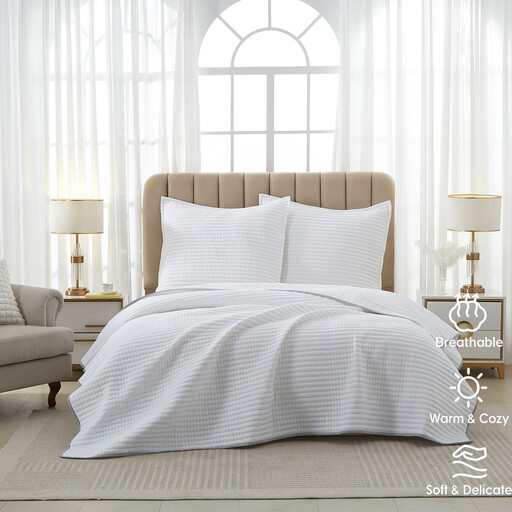
Why it's a great fit: Ideal for single beds, teen rooms, or a first apartment. This set provides a stylish and functional foundation without breaking the bank. It's designed as a complete set with a matching pillowcase.
The 100% polyester microfibre material is explicitly described as wrinkle-resistant, pilling-resistant, and colourfast. The square quilting secures its shape, counteracting the "false easy-care" trap.
Multi-functional use: as a lightweight blanket in summer or as a protective cover. The reinforced edges increase its durability.
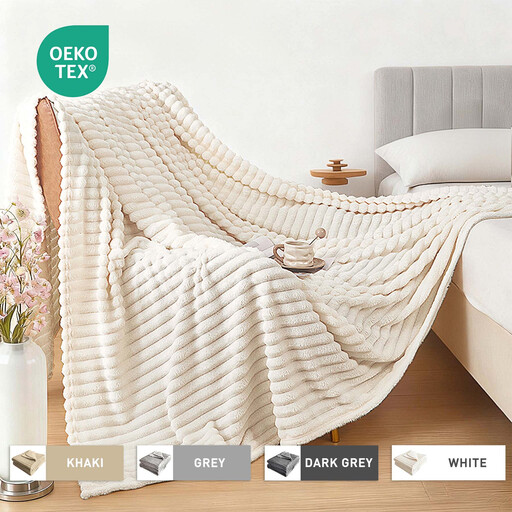
Why it's a great fit: For anyone looking for a true cosy home throw. The soft flannel texture is designed for comfort, making it perfect for the sofa, a reading chair, or as an extra layer of warmth on the bed.
This product is clearly positioned as a soft, warm blanket, not just a decorative throw. It delivers on the promise of a fluffy feel, thus avoiding the material mix-up.
The polyester flannel provides warmth without being heavy. The neat seam finishing suggests good durability with proper care.
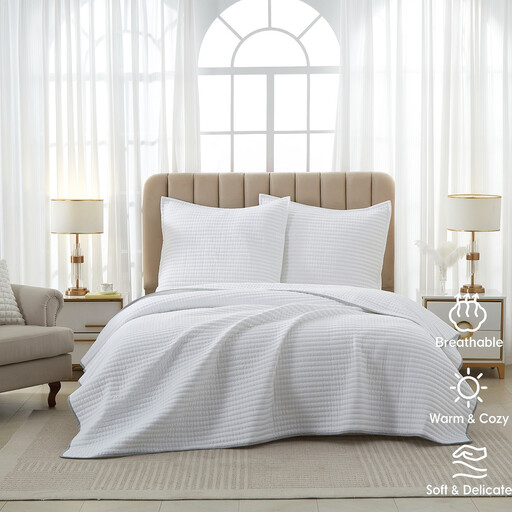
Why it's a great fit: The generous 240x220 cm size completely covers large double beds. Its robust, machine-washable material is ideal for family life, where durability and easy cleaning are top priorities.
The continuous square quilting reliably prevents the filling from clumping, a common problem with large blankets. This ensures the blanket remains uniform and holds its shape, even after washing.
The set includes matching pillowcases, creating a cohesive look. The reinforced edges contribute to its long-term durability.
We have compiled a complete, up-to-date list of products that meet these strict selection criteria and comply with current regulations.
The key is proper care. Always wash white textiles separately from colours. Use a detergent suitable for the material and avoid chlorine bleach, as it can damage and yellow polyester fibres. Drying at a low temperature or air-drying will also protect the fabric.
A bedspread (or coverlet) is primarily a decorative element that makes the bed look tidy during the day and protects the bedding from dust. It is often thinner. A quilt is usually more thickly filled and serves as the primary blanket for sleeping, similar to a comforter. However, the terms are sometimes used interchangeably, so pay close attention to the product description regarding filling and weight.
A simple rule of thumb: Measure the width of your mattress. Add twice the height of the mattress plus the desired overhang on both sides (e.g., 20 cm per side). Example for a 160 cm wide bed with a 25 cm high mattress: 160 cm + (2 x 25 cm) + (2 x 20 cm) = 250 cm width. A blanket measuring 240x260 cm would be a good choice here.