
Lieferung heute & morgen

Qualitätsgarantie

Willkommens-Angebote freischalten: KOSTENLOSE Lieferung | Bis zu 80 % RABATT | Kostenlose 30-Tage-JoyPlus-Testphase
App herunterladen
A white bookcase suits many homes in Germany: it can make rooms feel brighter, works with a range of interior styles and provides space for books, decorations, toys or folders. But an attractive product photo doesn’t automatically mean you’re making the right choice. The key factors are dimensions, load capacity, how it is fitted and where you plan to use it.
As a Joybuy Product Recommendation Officer, I’ve picked out the most important things to consider and matched suitable models to different needs.
The phrase ‘generous storage space’ doesn’t tell you much if the compartments are too short for larger coffee-table books, folders or storage boxes. Before you buy, check not only the overall dimensions but also the compartment height, width and depth.
A narrow bookcase can be a good choice for a hallway or small home office. However, its usable depth may not be enough for a large book collection. Remember to account for skirting boards, doors and radiators when deciding where to put it.
Books put a constant strain on a shelf because of their weight. For a bookcase, the maximum load per shelf is more useful than a vague description such as ‘sturdy’. With wall shelves, the type of wall matters too: fixing a shelf to a solid wall is different from mounting it on plasterboard or a cavity wall.
Never exceed the stated load limit. Where possible, place heavy books on the lower shelves to keep the centre of gravity low.
A white freestanding bookcase should stand on a level surface. Tall furniture can be dangerous if pulled or tipped, so depending on its design, it may also need to be secured to the wall. Proper fixing is especially important for a floating bookcase.
Before you buy, look for:
White shelving units are often made from MDF, chipboard, solid wood, metal or plastic. MDF has a smooth, even surface and is often coated or painted. The Atmosphera model is listed as MDF E1. This classification describes the formaldehyde emission class for wood-based panels, but it doesn’t replace checking the individual product details or ensuring the room is well ventilated.
For kitchens, bathrooms or damp rooms, check that the product is specifically listed as suitable. A standard bookcase for a living room, bedroom or office isn’t necessarily designed for consistently high humidity.
A tall freestanding unit makes efficient use of wall space, but needs to stand securely and may also require fixing to the wall. The 5Five model measures 134 × 34.5 × 32 cm and has four open compartments. Its 32 cm depth may work well for many books and decorative items, but check the dimensions of the books you plan to store.
A children’s bookcase should be easy for little ones to reach. Low shelves with a front edge can help stop books or games from falling out easily. With a narrow bookcase, the width is important too: a difference of just a few centimetres can determine whether it fits beside a desk or into an alcove.
The WOLTU wall shelf has a maximum load capacity of 15 kg per shelf. The set includes three shelves, each measuring 40 × 12 × 10 cm. This limit applies only when the shelves are fitted as specified. For a wall-mounted bookcase, the wall material, wall plugs, screws and even distribution of the load all need to be suitable.
For a child’s bedroom, wall shelves should also be fitted out of reach to prevent children from climbing on them. Always follow the manufacturer’s assembly instructions and safety advice.
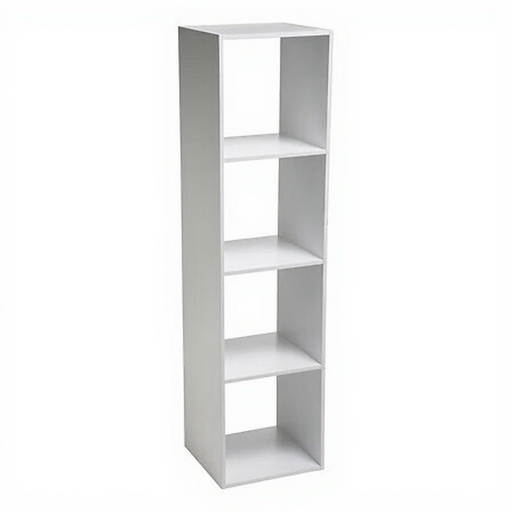
Why this product suits this need: With four compartments, this freestanding unit offers a practical storage solution for the living room, bedroom or office. Use it for books alongside decorations and everyday essentials.
The overall dimensions of 134 × 34.5 × 32 cm and four compartments make it easier to plan where it will go and how much it can hold. Assembly instructions are provided.
Four open compartments, a white finish and easy cleaning with a soft, damp cloth.
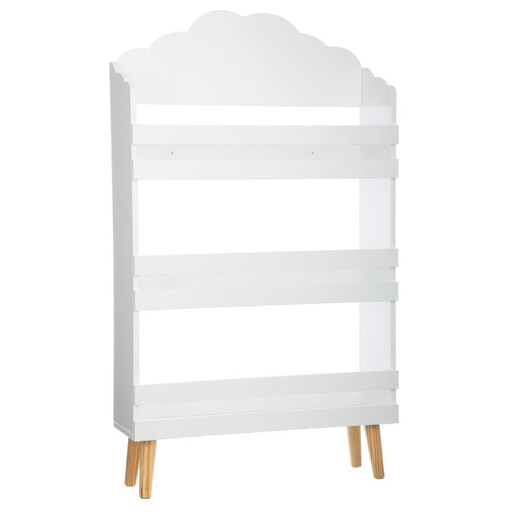
Why this product suits this need: This low children’s bookcase has three shelves designed for books and board games, making it easier for children to reach their things.
The product details specify a maximum load of 15 kg, an assembly time of around 60 minutes and a front edge on the shelves.
MDF E1, three shelves, overall dimensions of 58 × 18 × 100 cm and an FSC statement in the product details.
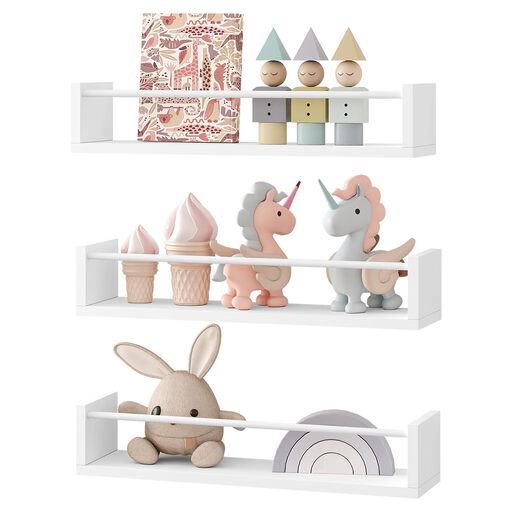
Why this product suits this need: This three-piece wall shelf set is a good fit for small rooms, hallways or above a desk when you want to keep the floor clear.
Each shelf has a stated maximum load capacity of 15 kg. The fitting instructions specify a solid wall and recommend checking the screws regularly.
Three shelves that can be combined, each measuring 40 × 12 × 10 cm, with metal rails and the option to arrange them horizontally or vertically.
Open shelves are ideal for storing books in the living room when you want your books and decorations on display. In a home office, larger compartments are useful for folders and boxes. A bookcase for a child’s bedroom should be lower down and must not be used for climbing. Wall-mounted models save floor space, but need to be fixed to a suitable wall.
Clean white surfaces with a soft, slightly damp cloth. Abrasive cleaners can damage the finish. Before loading the shelves, make sure all the fixings are fully tightened and check that the unit is stable.
We’ve put together a complete, regularly updated list of products that meet these strict selection criteria and fully comply with the safety regulations in force in the EU.
For many paperbacks and standard novels, a shallower shelf will be enough. Coffee-table books, folders and larger books need more room. Measure the books you have and compare them with the stated usable shelf depth, not just the overall depth of the unit.
Use wall plugs and screws suited to both the wall material and the intended load. With wall shelves, every fixing point must be secure. Don’t drill based on the shelf’s position alone: first check for cables and pipes, and make sure the wall can support the load. Always follow the assembly instructions for the specific model.
A soft, damp cloth is usually enough to remove dust and light marks. Avoid abrasive cleaners, and test stronger cleaning products on an inconspicuous area first. Don’t leave water standing on MDF or coated surfaces.