
Lieferung heute & morgen

Qualitätsgarantie

Willkommens-Angebote freischalten: KOSTENLOSE Lieferung | Bis zu 80 % RABATT | Kostenlose 30-Tage-JoyPlus-Testphase
App herunterladen
A white chest of drawers is more than just a piece of furniture; it's a solution for creating order and a bright, welcoming atmosphere in your home. However, the search for the right model can quickly become overwhelming. Many options look good at first glance but soon prove to be a poor investment. As your Joybuy Product Recommendation Officer, I'm here to help you identify the key features and avoid common pitfalls.
Before you make a decision, you should be aware of the typical weaknesses that often only become apparent after the purchase.
small cabinet with drawers doesn't automatically fit into every corner. Often, the external dimensions are provided, which don't reflect the actual usable internal storage space. A chest intended for a niche might turn out to be too deep or too wide.To avoid these problems, focus on three objective criteria. These will help you objectively assess the quality of a model.
The foundation of any durable chest of drawers is its material. Look for the following specifications:
white bathroom cabinet, such a coating is almost essential to prevent the wood from swelling.Practical usability depends on the mechanical components.
mobile office pedestal used to store heavy binders. A stated load capacity of 5 kg or more per drawer indicates a stable construction.side cabinet with drawers on castors is a great choice. Ensure that at least two of the castors are equipped with brakes to ensure stability.Measure the intended space precisely (width, height, depth) before you order. Also, account for baseboards or power outlets. There are suitable solutions for specific requirements:
Here are some models tailored to specific needs that meet the quality criteria mentioned above.
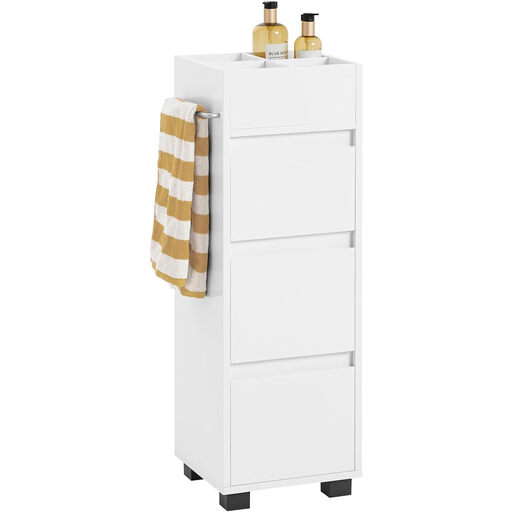
Why This Fits Their Persona: Ideal for those looking to fill an unused niche in the bathroom, hallway, or kitchen with a functional, slim piece of furniture without sacrificing storage space.
The lacquered MDF (E1) construction is designed for humid environments and is more resistant to swelling than unsealed particleboard. The specified total load capacity of 40 kg indicates a stable build.
Combines drawers, open compartments, and a towel rail on a very small 30x30 cm footprint. The towel rail can be flexibly mounted on the left or right.
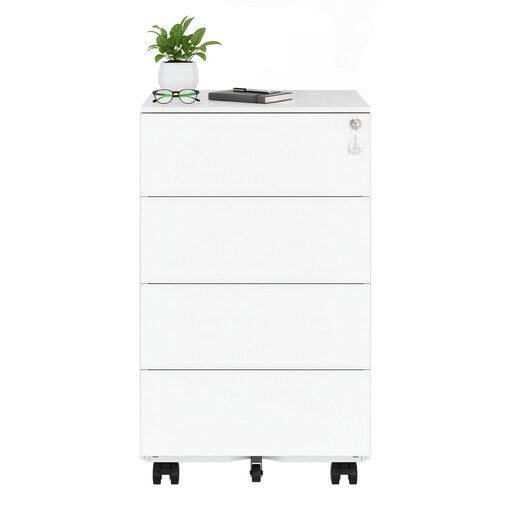
Why This Fits Their Persona: Perfect for home office users who need a robust, mobile, and secure storage solution for documents and office supplies that can be flexibly positioned under or next to a desk.
The steel construction and a load capacity of 15 kg per drawer directly counter the pitfall of unstable design. As the cabinet is delivered pre-assembled, it also eliminates assembly errors and frustration.
Very robust steel construction, lockable for added security, and ready for immediate use as only the castors need to be attached. The full-extension slides allow for easy access.
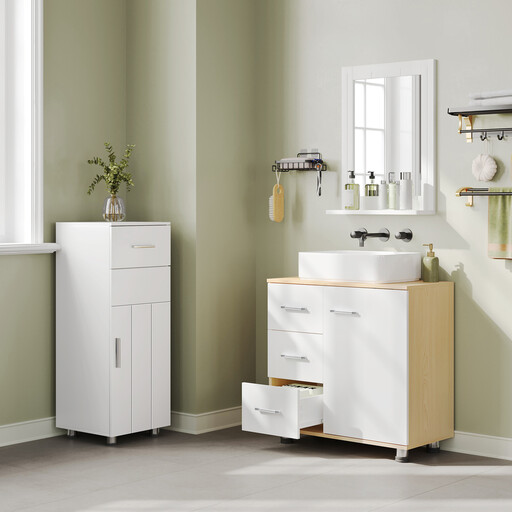
Why This Fits Their Persona: Designed for anyone who wants to make smart use of the often-wasted space under the sink and store bathroom essentials neatly out of sight.
The water-resistant melamine surface and moisture-resistant metal feet specifically address the pitfall of delicate surfaces in damp rooms. The E1-grade wood material is a mark of quality.
Features a siphon cut-out for easy installation. The combination of drawers and a cabinet section with an adjustable shelf offers flexible storage options.
We have compiled a complete, up-to-date list of products that fully meet these strict selection criteria and rigorous safety standards.
To prevent yellowing, you should not expose the chest to constant direct sunlight. For cleaning, a soft, slightly damp cloth is usually sufficient. Avoid harsh chemical cleaners or abrasive agents, as they can damage the surface.
MDF stands for "medium-density fibreboard." The "E1" designation refers to the European Emission Class 1. It confirms that the board releases only a very small amount of formaldehyde into the ambient air. This is a standard for a healthy living environment.
Measure the width, depth, and height of the alcove at several points (e.g., at the top and bottom). Compare the smallest measured values with the product dimensions. Plan for one to two centimetres of clearance on the sides and at the back to make positioning the furniture easier and to ensure adequate air circulation.