
Lieferung heute & morgen

Qualitätsgarantie

Willkommens-Angebote freischalten: KOSTENLOSE Lieferung | Bis zu 80 % RABATT | Kostenlose 30-Tage-JoyPlus-Testphase
App herunterladen
The search for the right white ergonomic office chair for your home or workplace often leads through a maze of marketing claims. While many models combine appealing aesthetics with the "ergonomic" label, their practical shortcomings quickly become apparent, hindering your workday rather than improving it. An unsuitable chair can not only reduce productivity but also lead to long-term postural problems.
This guide is here to help you navigate the options. We'll highlight the most common purchasing pitfalls and explain the technical specifications that truly matter, enabling you to make an informed decision for a durable, health-promoting desk chair.
Before you make a purchase, it's crucial to understand common issues that often only become obvious after a few weeks of use.
To avoid these pitfalls, you should base your selection on objective criteria. The following three parameters are crucial for any chair designed for long periods of sitting.
An effective lumbar support is the centrepiece of any ergonomic chair. Its purpose is to support the natural S-curve of the lower spine, thereby preventing back muscle fatigue. Ensure that the support is not only present but also adjustable in height and, ideally, in depth. This is the only way it can be precisely tailored to your lumbar region. A rigid, integrated curve fits only a few users and, in the worst case, can exert pressure in the wrong place. A good chair with lumbar support thus offers customisable support.
The mechanism determines how the seat and backrest move.
The choice of upholstery material directly impacts seating comfort, especially during long workdays.
Based on these criteria, we have curated a selection of models suitable for various user profiles and requirements.
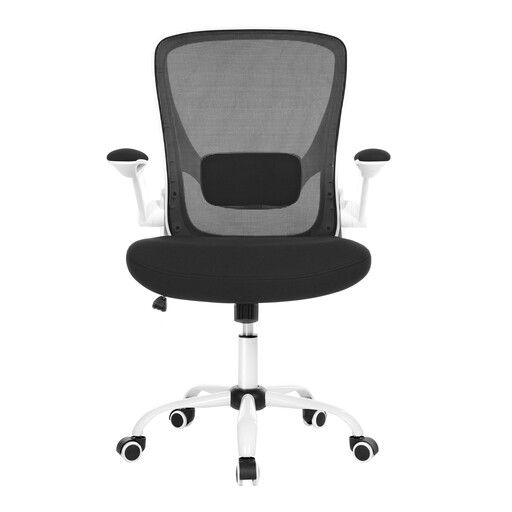
Why it's a good fit: Ideal for students or a first home office with limited space and budget. It offers fundamental ergonomic features, and the flip-up armrests are a practical touch for sliding the chair under a desk to save space.
This model offers a height-adjustable lumbar support instead of just a rigid curve, bypassing the "empty ergonomics" promise common in its price range.
Space-saving design thanks to flip-up armrests and a solid baseline of ergonomic features.
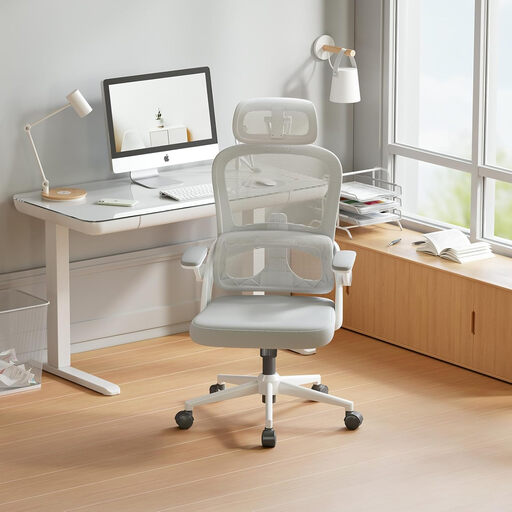
Why it's a good fit: A balanced solution for daily use in a *home office chair* setup. It's aimed at users who spend several hours at their desk and need reliable, adjustable support without investing in the premium tier.
With a separately adjustable lumbar support (6 cm range) and a high weight capacity of 136 kg, it addresses the pitfalls of poor adjustability and inferior components.
Comprehensive adjustment options, including a headrest, lumbar support, and 3D armrests for a personalised fit.
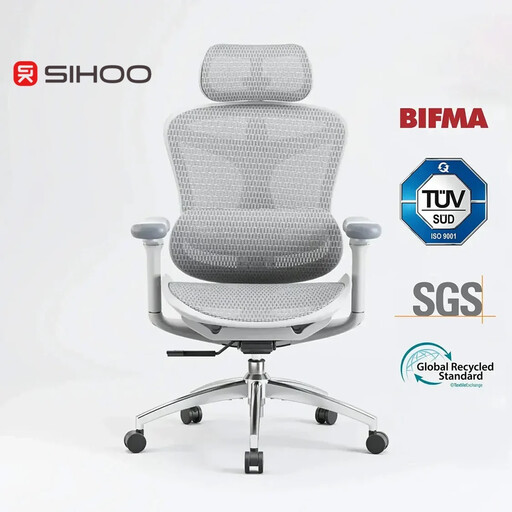
Why it's a good fit: For users who sit for many hours daily and demand the highest standards of ergonomics and design. This *white designer office chair* combines modern aesthetics with advanced, self-regulating technology.
The self-adaptive lumbar support and intelligent weight sensor go beyond manual settings, offering dynamic adjustment to the body. Certifications (e.g., T?V, EN1335) provide objective proof of its material and safety standards.
Dynamic, automatic adjustment of the lumbar support to the user's movements and certified, durable components.
We have compiled a complete, up-to-date list of products that fully meet these strict selection criteria and rigorous safety standards.
Proper adjustment is crucial to get the full ergonomic benefit. Follow this checklist:
The quality of a gas lift is often indicated by its safety class. Class 3 or Class 4 are indicators of higher load capacity and durability. Additionally, certifications from independent testing institutes like T?V or SGS provide an objective measure of the component's tested safety and quality.
Yes, a high-quality mesh backrest is very well-suited for long periods of sitting. The main advantage is its breathability, which ensures comfort, especially in warmer environments. Good mesh fabric also offers flexible yet firm support that conforms to your back. However, with cheaper models, there is a risk that the fabric will lose its tension over time. In comparison, padded backrests offer more cushioning but are less breathable. The choice ultimately comes down to personal preference and environmental conditions.