
Lieferung heute & morgen

Qualitätsgarantie

Willkommens-Angebote freischalten: KOSTENLOSE Lieferung | Bis zu 80 % RABATT | Kostenlose 30-Tage-JoyPlus-Testphase
App herunterladen
Choosing the right white PLA filament can be a challenge. The market offers a vast array of options that differ in printing speed, surface finish, and material properties. Inconsistent quality, nozzle clogging, or messy print results are common problems that can make the printing process frustrating.
This buyer's guide is designed to provide clear guidance. We will introduce different types of white PLA filament and explain their specific properties to help you make an informed decision for your next 3D printing project.
To find the right material for your needs, a few basic criteria should be considered. These will help ensure compatibility with your printer and achieve the desired print quality.
Not all white PLA is the same. The most common variants have different properties:
The aesthetics of the final print are largely determined by the filament's surface.
The most common size for desktop 3D printers is 1.75mm white PLA filament. Crucial for a smooth printing process is dimensional accuracy, i.e., the tolerance of the filament diameter. A tight tolerance, for example, +/- 0.02 mm, ensures a consistent material feed and minimises the risk of nozzle clogging.
Here is a selection of products with different specialities, suitable for various applications and printer types.
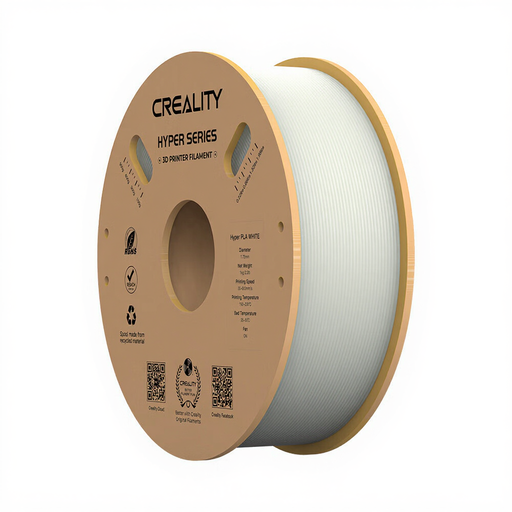
Why it stands out: This filament was specifically developed for high-speed printing. According to the manufacturer, it supports speeds of up to 600 mm/s, which can significantly reduce printing time for large models.
Advantages:
Who it's for: Users of high-speed 3D printers like the Creality K1 series or other models who want to maximise their printing efficiency without compromising on stability.
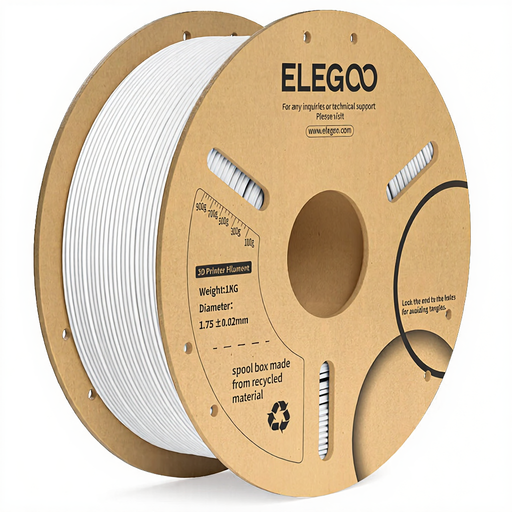
Why it stands out: Elegoo combines the improved mechanical properties of white PLA+ with more eco-conscious packaging. The spool is made of cardboard, making it a practical alternative to traditional plastic spools.
Advantages:
Who it's for: Eco-conscious makers and hobbyists looking for a reliable 1kg white 3D printer filament with enhanced material properties for functional prints.
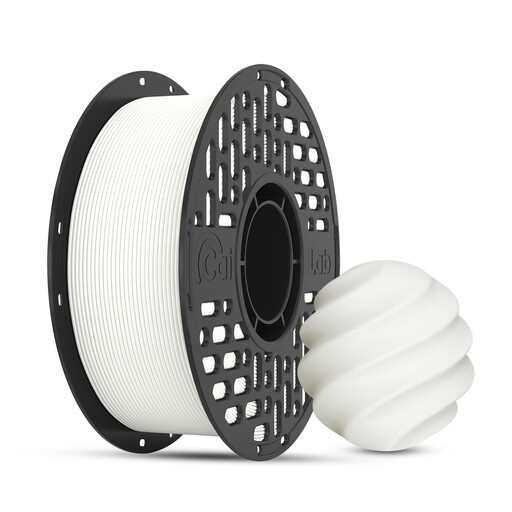
Why it stands out: This filament is distinguished by its distinct matte surface. It was developed to minimise layer lines and give prints a high-quality, non-glossy finish, ideal for aesthetic applications.
Advantages:
Who it's for: Creatives, designers, and model makers who want a professional, non-plastic-like appearance for their art objects, figurines, or prototypes.
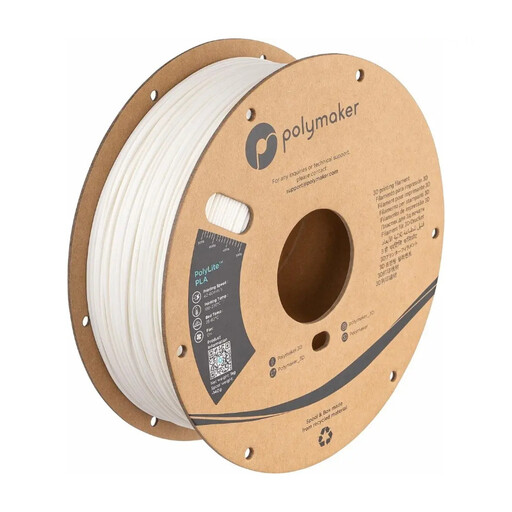
Why it stands out: Polymaker is known for its high material consistency and reliability. The PolyLite PLA is based on the Ingeo 3D850 raw material and uses a patented technology that, according to the manufacturer, increases the filament's heat resistance before melting to prevent clogging caused by heat creep.
Advantages:
Who it's for: Beginners and professional users looking for a highly reliable and easy-to-print everyday filament with consistent quality for a variety of projects.
This selection covers some of the most common needs. However, if you're looking for other colours, special material blends, or more brands, you can find an even larger selection in our comprehensive white PLA filament category.
1. What is the difference between PLA and PLA+? PLA+ is a modified version of PLA. The addition of additives typically makes the material tougher, more impact-resistant, and less brittle than standard PLA. This makes white PLA+ a good choice for mechanical parts or objects that are subjected to higher stress.
2. Can I use any white PLA filament for my printer? Most filaments for FDM printers on the market use the standard 1.75 mm diameter. As long as your printer is designed for 1.75mm white PLA filament, it should be compatible. However, it is always advisable to check your 3D printer's specifications, especially regarding supported materials and filament diameter.
3. How do I store PLA filament correctly to maintain its quality? PLA is hygroscopic, meaning it absorbs moisture from the air. Improper storage can lead to brittle filament, bubbling during printing, and poor print quality. Therefore, store your 1kg white 3D printer filament in a cool, dry place, and ideally in a resealable bag or a dedicated dry box along with a desiccant (silica gel).