
Lieferung heute & morgen

Qualitätsgarantie

Willkommens-Angebote freischalten: KOSTENLOSE Lieferung | Bis zu 80 % RABATT | Kostenlose 30-Tage-JoyPlus-Testphase
App herunterladen
A sideboard in white and oak combines two central elements of modern living: the bright, space-enhancing effect of white and the natural warmth of wood-effect finishes. These pieces of furniture serve as functional storage solutions and as stylish accents in your living space. Selecting the right model depends on specific requirements for dimensions, storage configuration, and material properties. This guide analyses the key technical criteria and presents a selection of recommended models.
Your decision should be based on a careful analysis of the material, construction, and functional details. These parameters determine the furniture's longevity, practical utility, and how well it integrates into your existing living space.
Most modern sideboards are constructed from engineered wood, such as MDF or particleboard. These materials offer excellent stability and durability. The visual quality is largely determined by the surface finish. Common options include:
The choice of material affects not only the appearance but also the maintenance requirements and resistance to scratches and moisture.
The external dimensions determine how the piece fits into your room. A 150 cm wide sideboard is a standard size for medium-sized living rooms. The internal layout is equally important:
Additional features can significantly enhance practical utility:
The following models illustrate different design approaches and functional priorities within the "white and oak sideboard" category.
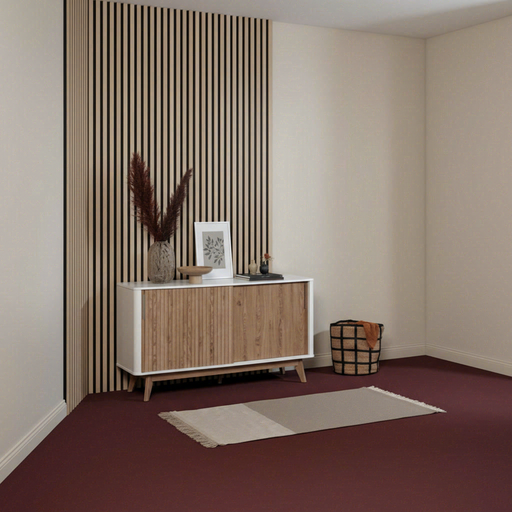
Why we recommend this product The WAVE model from Jahnke stands out with its elegantly sculpted, wave-textured fronts. The 3D-printed surface creates a realistic wood structure. Its construction with sliding doors makes it a practical solution for rooms with limited space.
Pros
Who it's for This sideboard is perfect for those seeking a modern living room sideboard with a striking design. Thanks to its sliding doors, it is especially well-suited for environments where space in front of the cabinet is limited.
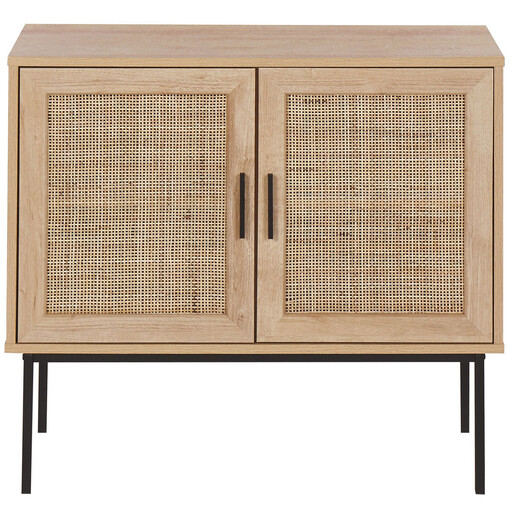
Why we recommend this product The PASCO sideboard from Beliani combines a light wood look with Viennese cane (rattan) doors. This material combination gives the furniture an airy and natural aesthetic that pairs well with Scandinavian or nature-inspired interior styles. The solid rubberwood legs ensure stability.
Pros
Who it's for This model is an excellent choice for those who prefer a Scandinavian-style sideboard or a white wood credenza with natural textures. It is ideal for storing items that benefit from light ventilation, such as textiles.
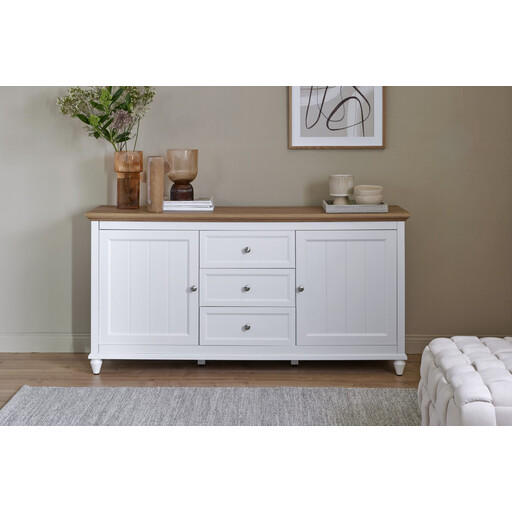
Why we recommend this product The COTTAGE model from Jahnke, at 150 cm wide, offers a comprehensive storage solution with its combination of doors and drawers. The drawers are equipped with a soft-close mechanism, enhancing user comfort. The design, featuring a Montana oak-effect top and a white body, is inspired by the timeless farmhouse style.
Pros
Who it's for This sideboard is designed for users who need maximum and versatile storage space. It works well as a modern take on a living room cabinet and is also suitable for dining rooms or hallways where both small and large items need to be stored.
The combination of white surfaces and oak-effect finishes is available in numerous variations and styles. From minimalist designs to rustic interpretations, the market offers a wide range of solutions. You can find a broader selection of designs in our wooden sideboards category.
1. What is the difference between a sideboard and a chest of drawers? A sideboard is typically longer and lower than a classic chest of drawers. While a modern chest of drawers is often equipped primarily with drawers and is commonly found in the bedroom, a sideboard usually combines doors and drawers and is typically used in the living or dining room as a credenza, buffet, or TV stand.
2. How do you care for a sideboard with a white and oak-effect finish? For cleaning foil-laminated surfaces, a slightly damp, lint-free cloth is usually sufficient. Avoid using harsh cleaning agents, as they can damage the surface. Afterwards, wipe the surface dry. Always follow the specific care instructions provided by the manufacturer with the product.
3. What is the ideal height for a TV sideboard? The ideal height for a TV sideboard depends on the seating height of your sofa and the size of your television. As a rule of thumb, the centre of the TV screen should be at eye level for a person who is seated. Sideboards with a height between 50 cm and 80 cm are well-suited for most living situations.