
Lieferung heute & morgen

Qualitätsgarantie

Willkommens-Angebote freischalten: KOSTENLOSE Lieferung | Bis zu 80 % RABATT | Kostenlose 30-Tage-JoyPlus-Testphase
App herunterladen
A white office cabinet can keep documents, stationery and tech neatly organised. However, product images and general marketing claims don’t always help you make the right choice. The key considerations are dimensions, weight capacity, locking mechanism and intended use.
A white filing cabinet may look spacious in a product photo, even though its shelves, doors or drawers take up a lot of room. Before you buy, check:
For smaller rooms, a slim office cabinet or an office pedestal is often more practical than a wide freestanding model.
For a metal office cabinet, the maximum load per shelf and on the top should be stated. With engineered wood, it’s also important to know whether the load needs to be distributed evenly. A printer, ring binders and piles of paper can quickly weigh more than individual decorative items.
Look for clear assembly instructions and an anti-tip device, too. A tall lockable office cabinet should be secured to the wall if its design calls for it, particularly in homes with children or if the contents may be unevenly distributed.
Castors make a cabinet easier to move, but can affect its stability. Check whether at least two castors have brakes and whether the unit remains stable when a drawer is open. A mobile filing cabinet suits flexible workspaces; for confidential documents, a lockable model with a sturdy locking mechanism is a sensible choice.
A lock helps prevent people from quickly accessing your documents, but it doesn’t replace other measures such as secure passwords, data protection policies or a suitable room layout.
An office pedestal under your desk should have enough room for A4 ring binders, paper and work essentials. For a freestanding office cabinet, adjustable shelves are useful because you can tailor the layout to fit binders, boxes or smaller devices.
As a guide:
A metal office cabinet stands up well to everyday scratches and can be cleaned with a lightly damp cloth. For coated engineered wood, use a dry or barely damp cloth to protect the edges and finish.
Look for specific details such as:
An office cabinet with drawers makes it easier to organise smaller items, while doors conceal larger ring binders and devices. For a printer cabinet on castors, make sure the capacity of the whole unit is suitable for the size of your printer.
A lockable filing cabinet is suitable for personal papers, bills or internal documents when the lock, number of keys and locking mechanism are clearly described. Check whether all compartments lock or just one section.
The condition it arrives in can also influence your choice: a pre-assembled office pedestal means less work, while a flat-pack cabinet may be easier to carry through narrow stairwells. Before ordering, measure the space and check whether you can secure the cabinet to a wall.
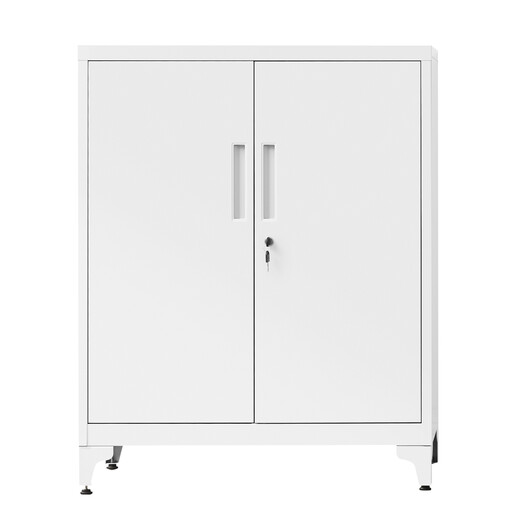
Why it suits this profile: Measuring 80 × 40 × 90 cm, this metal cabinet provides storage for documents and office supplies, and works well in a home office or living space. Two adjustable shelves let you customise the layout.
The product details give specific load limits for the shelves and top: 25 kg per shelf and 30 kg on the top. The anti-tip kit supplied highlights the need to secure the cabinet to the wall.
Steel construction, water-resistant finish, two lockable doors and two keys. The cabinet is assembled using the numbered parts and instructions supplied.
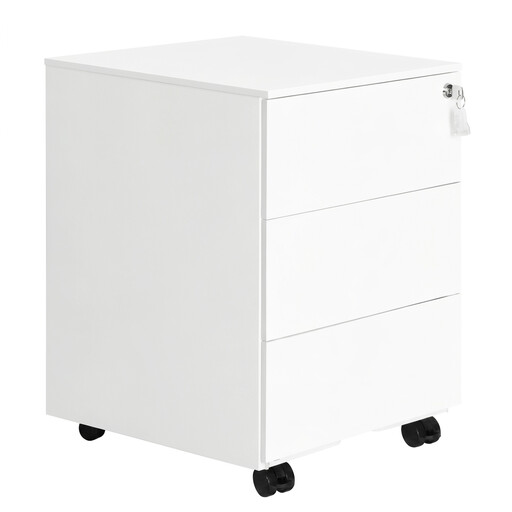
Why it suits this profile: Measuring 45 × 39 × 55 cm, this mobile pedestal makes use of the space right by your workstation. Three drawers keep documents, stationery and smaller devices organised.
The castors are more than just a mobility feature: two of the four have brakes. According to the product details, each drawer can hold up to 15 kg.
Steel frame, lockable drawers, full-extension runners and pre-assembled delivery. You only need to attach the four castors before use.
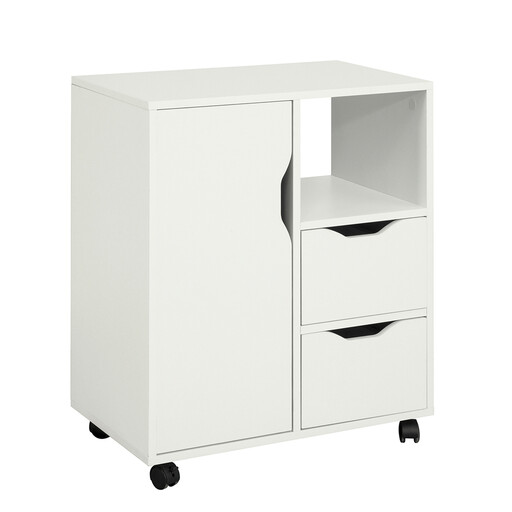
Why it suits this profile: Measuring 60 × 35 × 70 cm, this mobile unit combines a printer stand, open shelf, cupboard and two drawers. It can be placed under or beside a desk.
The maximum total load is stated as 50 kg, so you don’t have to rely on the product image alone to judge whether it’s suitable for a printer. The unit is assembled as a freestanding piece of furniture, following the instructions.
Two drawers, one door, two shelves and castors. This combination is suitable for storing a printer, paper, ring binders and other office supplies.
We’ve put together a complete, regularly updated list of products that meet these strict selection criteria and fully comply with the safety regulations in force in the EU.
Place your office cabinet on a level surface and store heavier files as low down as possible. For a tall metal cabinet, use the anti-tip device supplied. Don’t pull several drawers all the way out at once unless the manufacturer explicitly says it’s safe to do so.
A soft cloth is usually all you need for cleaning. Harsh cleaning products can damage paintwork, edges or plastic parts. Check the fixings and castors after a few weeks, particularly on a frequently moved printer cabinet on castors.
It depends on how many documents you have and the size of your ring binders. For A4 documents, measure the internal width and shelf height to make sure they suit the binders you use. You’ll also need room for the doors to open or the drawers to pull out.
A lock makes it harder for people to access your documents directly, but it doesn’t provide complete data protection. Keep sensitive documents in a locked compartment and make sure the room is secure and access to the keys is controlled.
An office pedestal or mobile filing cabinet can be moved under a desk or elsewhere when needed. A freestanding model usually offers more vertical storage. Your choice should depend on the available floor space, how many documents you have, the weight capacity you need and how easily you want to move it.