
Lieferung heute & morgen

Qualitätsgarantie

Willkommens-Angebote freischalten: KOSTENLOSE Lieferung | Bis zu 80 % RABATT | Kostenlose 30-Tage-JoyPlus-Testphase
App herunterladen
A white shelving unit can keep books, ornaments, shoes and household items neatly organised. However, many models look similar in product photos, yet differ considerably in their dimensions, assembly and weight capacity. If you choose based only on colour and price, you may not spot important limitations until you start putting it together.
Three common buying pitfalls are:
That’s why it’s best to start with the needs of your room, rather than the design.
Measure the intended space in three places: width, height and depth. In a hallway, you’ll also need to allow for doorways, radiators and clear walkways. For a space-saving shelving unit in a bedroom or home office, depth is often more important than overall width.
A white freestanding shelving unit also needs a level floor. For taller furniture, check whether an anti-tip kit is included or needs to be fitted separately. Compact models or a wall shelf may be worth considering for rented homes, provided the wall and the supplied or required fixings are suitable.
A shelving unit with compartments is ideal for books, storage boxes and ornaments, as long as the shelf heights suit what you plan to store. Adjustable shelves are useful if you need to make room for shoes, boots, ring binders or storage boxes of different sizes.
A corner shelf makes use of unobtrusive alcoves in the living room, hallway or home office. Before buying, though, check how the back and base are designed. A cube-style unit can be easily paired with baskets or boxes, but you’ll still need a suitably sized space on the wall or floor.
For furniture made from coated engineered wood, the edges, finish and stated weight capacity are important points to compare. Don’t assume the stated capacity applies to the whole unit if no per-shelf limit is given.
With a white bookcase, it’s important to distribute weight evenly. Ideally, place heavier books on the lower shelves. Coated surfaces can usually be cleaned with a soft, slightly damp cloth; avoid leaving them wet for too long. In a utility room, make sure there’s enough ventilation too.
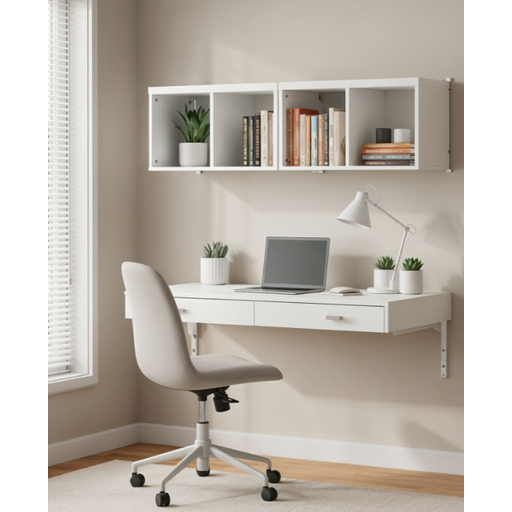
Why it suits this shopper: With two open compartments, this compact piece of furniture is ideal for smaller spaces in the bedroom, living room or utility room. It measures 59,94 × 35,56 × 37,85 cm.
The clearly stated external dimensions make it easier to check the available floor space before buying. It should not be attached directly to the wall; a suitable metal bracket, which is not included, is required.
Two open cube compartments, a white finish and the option to combine it with other units.
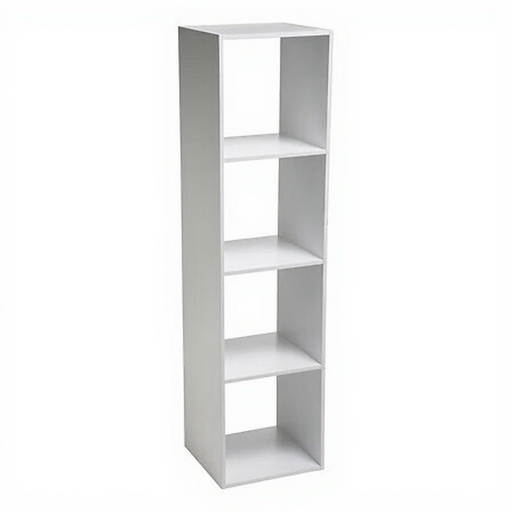
Why it suits this shopper: This freestanding shelving unit has four compartments and is designed for books, ornaments, storage boxes and everyday items in living or working spaces.
Its height of 134 cm, width of 34,5 cm and depth of 32 cm are clearly specified. This makes it easier to plan how it will fit into an alcove or against a wall.
Four compartments, a white design, suitable for living rooms and offices, and easy to clean with a soft, slightly damp cloth.
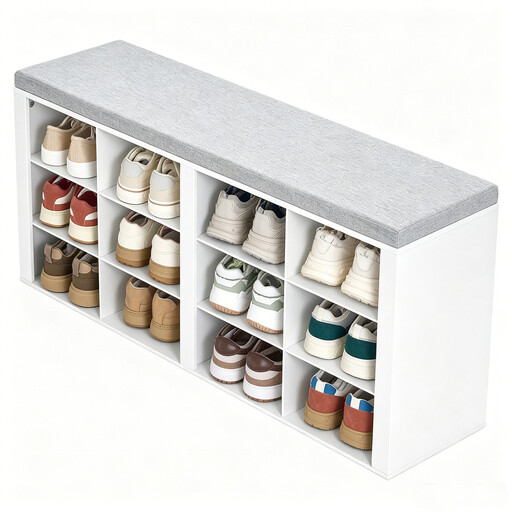
Why it suits this shopper: This combination of a bench and shoe storage is a good fit for family hallways, bedrooms or entranceways. It measures 104,5 × 30,5 × 49,5 cm.
The twelve compartments and height-adjustable shelves cater for different types of footwear. The seat covers are removable and can be cleaned separately.
Stated weight capacity of 150 kg, adjustable shelves, removable seat covers and illustrated assembly instructions.
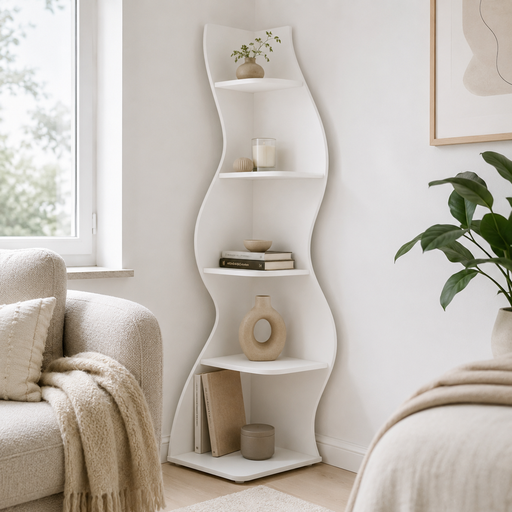
Why it suits this shopper: This white corner shelf makes use of vertical space for plants, books or smaller ornaments in the living room or home office.
The five tiers provide clearly separated storage. Before fitting it, check that the chosen corner has enough space and that you have suitable wall fixings.
Five shelves, a compact corner design and a white finish to suit a range of living and working spaces.
We’ve put together a complete, regularly updated list of products that meet these strict selection criteria and fully comply with the safety regulations in force in the EU.
A freestanding shelving unit should be placed on a level surface. Depending on its design, taller furniture may also need to be secured to the wall. For a wall shelf, the wall material, wall plugs, screws and intended weight capacity all need to be compatible. Always follow the assembly instructions; if you’re unsure, ask a qualified person for help.
Its lifespan depends on the material, assembly, load and care. Distributing weight evenly, protecting it from prolonged damp and avoiding overloading can help keep it in good condition. Without specific details about the product and how it will be used, it’s not possible to give a reliable general estimate of its lifespan.
A shelving unit won’t usually add to your day-to-day energy bills, as it doesn’t run on electricity. Possible extra costs include wall fixings, storage boxes, cleaning accessories or, where needed, assembly. Factor these expenses into your buying decision.