
Lieferung heute & morgen

Qualitätsgarantie

Willkommens-Angebote freischalten: KOSTENLOSE Lieferung | Bis zu 80 % RABATT | Kostenlose 30-Tage-JoyPlus-Testphase
App herunterladen
A white sideboard can bring order to your living room, bedroom, hallway or kitchen while adding valuable extra storage. However, it's often only after assembly that you discover whether a model truly suits your home. The deciding factors aren't just fluted fronts, gold-coloured handles or integrated lighting – dimensions, weight capacity, internal layout and the ability to secure it safely all matter just as much.
A sideboard that's 120 cm or 140 cm wide needs more than just floor space for the cabinet itself. You also have to account for doors, drawers and walkways. With a depth of 40 cm, check before buying that there's enough room to move around in front of the furniture. In a hallway, the combination of the sideboard's width, door swing and passageway can already cause problems.
A sideboard with LED lighting adds a decorative touch, but it doesn't automatically hold more items. Check whether the lighting can be controlled via remote control, app or button, and whether there's a power socket nearby. Electrical components should be protected from liquids. This is especially important if you're placing the sideboard in a kitchen or dining area.
A fixed shelf can be impractical for files, crockery or tall decorative objects. A sideboard with adjustable shelves can be better adapted to different items. Also pay attention to the weight capacity of the drawers and the top panel. An attractive front doesn't tell you much about how it will perform day to day.
For compact living spaces or smaller bedrooms, a 120 cm sideboard can offer plenty of storage without dominating an entire wall. A 140 cm sideboard is better suited to longer walls and can serve as a central cabinet for the living room, bedroom or hallway.
Height affects how you use it:
Many white sideboards are made from particle board or MDF with coated surfaces. What matters are the stated weight limits, not just the material name. A top panel rated for 30 or 50 kg isn't automatically suitable for heavy aquariums or other point loads. Drawers should only be loaded within the manufacturer's specified limits.
A freestanding piece of furniture should sit on a level surface. In homes with children or pets, wall-mounted anti-tip protection is a key safety measure. Children should not be able to climb on drawers or hang from doors. Before assembly, check whether the supplied fixings are suitable for your wall type; plasterboard may require appropriate wall plugs.
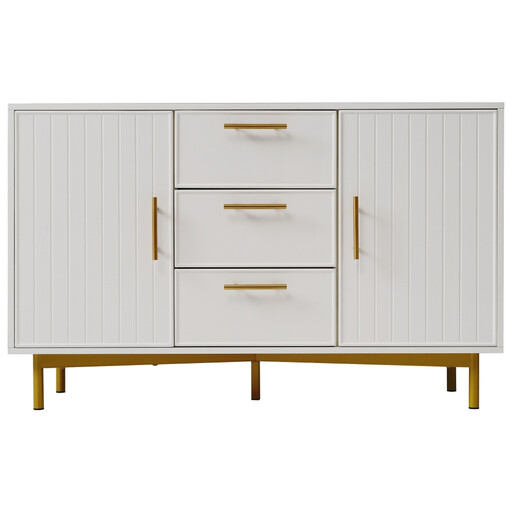
Why this product fits the profile: At 120 × 40 × 75 cm, this white sideboard offers a compact footprint and combines three drawers with two doors. It's ideal for buyers who need different types of storage and can do without an LED feature.
The shelves behind the doors are adjustable to three positions with 5 cm increments. An adjustable centre foot can compensate for uneven floors.
Three drawers, two doors, 14.5 cm clearance underneath and a stated top surface weight capacity of 45 kg.
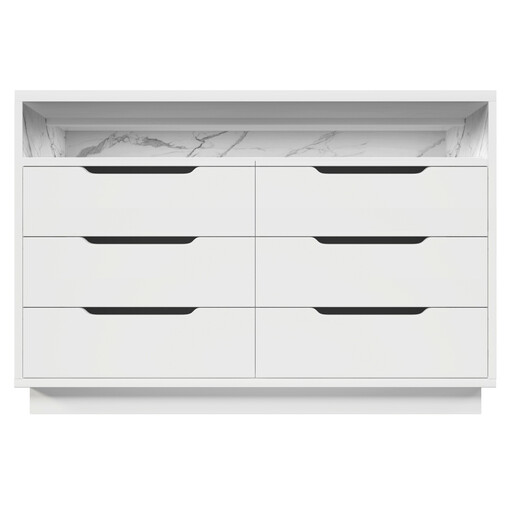
Why this product fits the profile: This model combines six drawers with an open compartment and LED lighting. The layout suits users who frequently access smaller items and want a modern storage piece with an extra lighting element.
The six drawers keep smaller items neatly organised. A supplied anti-tip device is intended for wall mounting and should be used, especially in homes with children or pets.
LED modes with adjustable brightness and speed, six drawers with soft-close runners, and 8 cm clearance underneath.
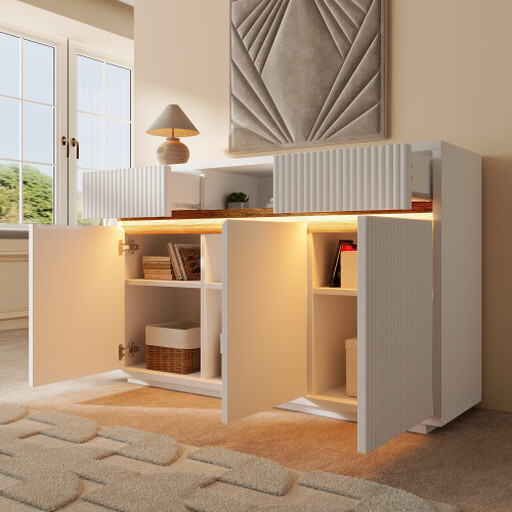
Why this product fits the profile: At 140 × 40 × 85 cm, with three doors, two drawers and an open centre compartment, this model is designed for longer walls and works well as a hallway cabinet or kitchen unit.
The shelves are removable and adjustable in 6 cm increments. Adjustable metal hinges allow for more precise door alignment.
LED control via remote, app or button, two drawers, three doors, open compartment and a stated top surface weight capacity of 50 kg.
A chest of drawers is useful when you need quick access to smaller items like keys, cables, textiles or documents. A sideboard with doors conceals larger or less decorative items. Open compartments are great for books, picture frames or frequently used objects, but they do require tidy styling.
As a living room cabinet, the piece should complement your TV, sofa and existing surfaces. As a bedroom cabinet, closed compartments are practical for clothing or bedding. In a hallway, both width and depth matter so that the walkway stays clear. A white sideboard reflects light and often makes rooms feel calmer, though it does show dust or fingerprints more easily on glossy fronts.
Before ordering, we recommend this quick checklist:
We've put together a full, regularly updated list of products that meet these strict selection criteria and comply with EU safety regulations.
Place the furniture on a level floor and adjust any levelling feet. If anti-tip fittings are included, secure the sideboard to the wall following the assembly instructions. This safety measure should not be skipped, especially if you have children or pets.
The consumption depends on the LED power, usage time and brightness. An accurate estimate is only possible using the power rating stated on the product. Timer functions can help prevent the lighting from being left on unnecessarily. Power adapters and cables must not be damaged or exposed to liquids.
It's not possible to give a reliable general lifespan. It depends on factors including the material, assembly, load, humidity and daily use. By sticking to the stated weight limits, not overloading drawers, protecting the furniture from moisture and checking the fittings regularly, you can reduce typical everyday wear and tear.