
Lieferung heute & morgen

Qualitätsgarantie

Willkommens-Angebote freischalten: KOSTENLOSE Lieferung | Bis zu 80 % RABATT | Kostenlose 30-Tage-JoyPlus-Testphase
App herunterladen
A white storage shelf seems like a simple purchase. It's functional, matches almost any interior design style, and creates order. But in practice, the difference in quality quickly becomes apparent. Many models only reveal their weaknesses after assembly or a few months of use. Before you make a decision, it's crucial to know the common pitfalls that often lead to disappointment and unnecessary expense.
As your Joybuy Product Recommendation Officer, I'm here to help you navigate the maze of options and make an informed choice.
To avoid these traps, you should check three core aspects. These define the durability, safety, and functionality of your new shelf.
The material description provides insight into the stability and health safety of the product.
The type of finish determines its resilience in everyday use.
Safety is non-negotiable, especially with a tall white standing shelf or a toy shelf in a child's room.
Here are some recommendations tailored to specific user profiles that meet the quality criteria mentioned.
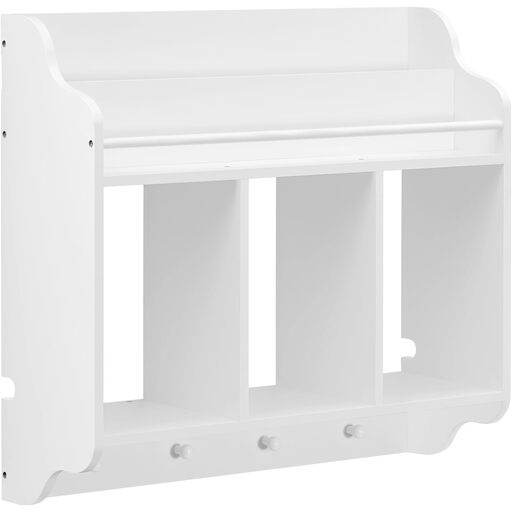
Why This Fits Their Persona: This modern wall shelf is specially designed for a child's room. It saves floor space and keeps books and toys at a child-friendly height. The integrated hooks provide additional space for bags or jackets.
The sturdy wall mounting prevents any wobbling or tipping. All corners are rounded to prevent injuries. According to the manufacturer, the painted surface is waterproof and easy to clean, thus avoiding the trap of a poor-quality finish.
Combination of book storage, open compartments, and hooks; child-safe design with rounded corners and a rod that prevents books from falling.
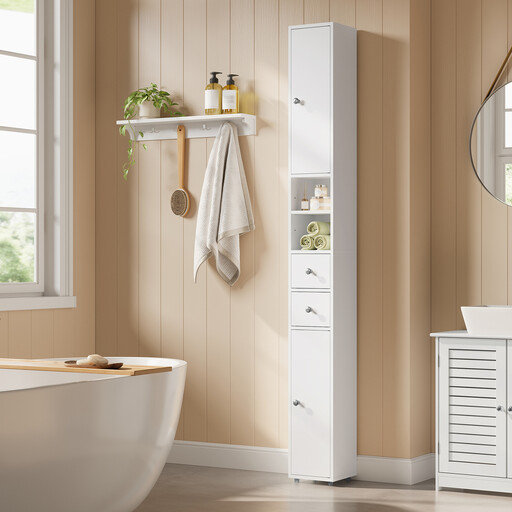
Why This Fits Their Persona: With a footprint of just 20x20 cm, this tower cabinet is the solution for narrow bathrooms, alcoves, or small hallways. It makes optimal use of the room's height and offers versatile storage with drawers, open compartments, and doors.
The design is specifically engineered for maximum space efficiency, thus avoiding the trap of impractical dimensions. The melamine coating on the E1 MDF board is moisture- and scratch-resistant, ideal for the bathroom. The included anti-tip device ensures stability.
Extremely space-saving design; moisture-resistant material; a combination of open and closed storage for a tidy look.
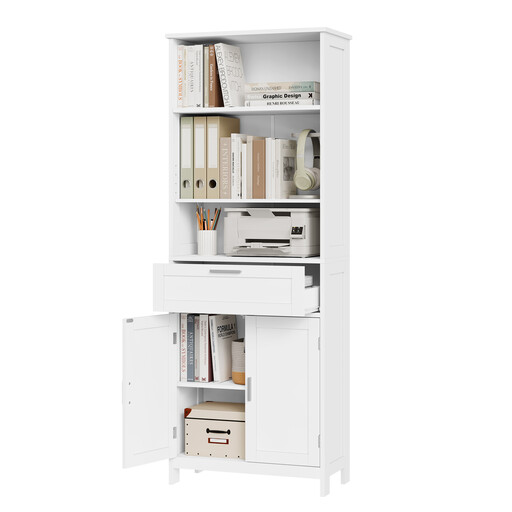
Why This Fits Their Persona: This cabinet is an all-rounder for the bathroom, hallway, or even the kitchen. It combines open compartments for quick access with a drawer and a closed cabinet section for items you want to keep out of sight.
The trap of impractical compartments is avoided here with multiple adjustable shelves. The shelves in both the open compartments and the cabinet section can be adjusted to the height of the items. The E1 engineered wood material with a melamine veneer is robust and water-repellent.
High adaptability thanks to adjustable shelves; a mix of open and closed storage spaces; includes an anti-tip kit for stability.
We have compiled a complete, up-to-date list of products that fully meet these strict selection criteria and relevant safety regulations.
Every tall shelf should come with an anti-tip device. This usually consists of a bracket or a strap and the appropriate screws. Attach one end to the shelf and the other to the wall. Before drilling, check the type of wall you have. You will need different wall anchors for solid concrete or brick walls than for plasterboard. Correctly installing the anti-tip device is the most important step in ensuring stability and safety.
MDF (Medium-Density Fibreboard) is an engineered wood product made from finely shredded wood fibres pressed with a binder. The E1 Class is a European standard that sets the limit for the emission of formaldehyde, a component in many binders. E1-certified boards release only a very small, non-hazardous amount and are therefore the standard for indoor furniture, especially in sensitive environments like a child's room.
The tendency to yellow depends heavily on the surface quality. As a general rule: avoid prolonged, direct sunlight. Do not clean the surface with harsh chemical cleaners or abrasive agents. A soft, slightly damp cotton cloth is sufficient in most cases. Surfaces with a melamine resin coating are generally much more resistant to yellowing and scratches than simply painted surfaces.