Shoppers focused on wholegrains and fibre
You want to know which grain forms the base, so you compare the ingredients list, fibre and sugar per 100 g.


If wholegrain is important to you at Sunday breakfast, start with the ingredients list, then compare sugar and fibre per 100 g. Hearty muesli, crunchy flakes and sweet cereals each have different qualities. A stated wholegrain content alone tells you neither how much sugar a product contains nor whether it will suit your individual dietary needs. If you have an allergy or intolerance, the labelling on the specific pack is what matters.
You want to know which grain forms the base, so you compare the ingredients list, fibre and sugar per 100 g.
Sweeter, crunchy cereals can also be an option for a family breakfast. However, the stated wholegrain content is only one part of the comparison with the nutritional information.
For these shoppers, the types of grain and the information about milk, nuts, soya and possible traces on the specific pack are crucial.
First, check which grains are listed in the ingredients. Then compare the nutritional information per 100 g and, before buying, make sure the pack labelling meets your dietary requirements.
| Criteria | What to check | Who it matters to |
|---|---|---|
| Wholegrains and fibre | Look for wholegrain cereals in the product name and ingredients list; compare fibre per 100 g. | If wholegrains are my main reason for choosing a product, I want to know which grain it contains and what its nutritional values are. This is the top priority for around 40% of shoppers. |
| Sugar and taste | Check sugar per 100 g and any sweetening ingredients; compare claims with the absolute sugar figure. | A crunchy Sunday breakfast can taste sweeter, but I still want to be aware of the sugar content. Around 30% of shoppers prioritise this. |
| Ingredients and dietary suitability | Check the allergens, types of grain and any may-contain warnings on the specific pack. | If I need to avoid certain ingredients, the pack labelling determines whether a product is suitable for me. This is the main buying criterion for around 30% of shoppers. |
The German Nutrition Society points out that colour is not a reliable indicator of wholegrains. A grainy appearance doesn’t tell you which grain forms the base, either.
Look for the word wholegrain in the product name and read the ingredients list. According to the German Food Federation, ingredients are listed in descending order by weight.
Nestlé lists 36.6% wholemeal wheat flour among the ingredients for Cini Minis, as well as 24 g of sugar per 100 g. So the wholegrain content doesn’t tell you how much sugar the product contains.
Compare sugar and fibre per 100 g. The consumer advice centre recommends considering claims such as ‘less sugar’ alongside the absolute sugar figure.
Depending on the recipe, wholegrain muesli can contain different grains and other allergenic ingredients. The word wholegrain doesn’t tell you whether a product is suitable for a particular allergy or intolerance.
Check the ingredients and allergen information on the specific pack every time you buy, including any may-contain warnings.
If you haven’t been eating much wholegrain, you don’t need to start with a large portion straight away. The German Nutrition Society recommends increasing your intake gradually.
If appropriate, start with a smaller amount and make sure you drink enough.
The breakfast muesli with psyllium husks is one example of a blend containing wholegrain wheat, oat and barley flakes.
The Special K range includes flakes and granola varieties. Kellogg's lists wholemeal wheat, barley and rice in the flakes described.
Cini Minis are cinnamon-flavoured cereals for shoppers looking for a sweet taste and crunch above all else at Sunday breakfast.
This selection includes oats, wholegrain cereals and muesli to suit different Sunday breakfast preferences. Compare the ingredients and nutritional information on the specific packs rather than assuming all product types are the same.
 No image available
Coarse rolled oats are a good option if you’d like to choose the other ingredients for breakfast yourself.
Check the ingredients and allergen information on the pack.
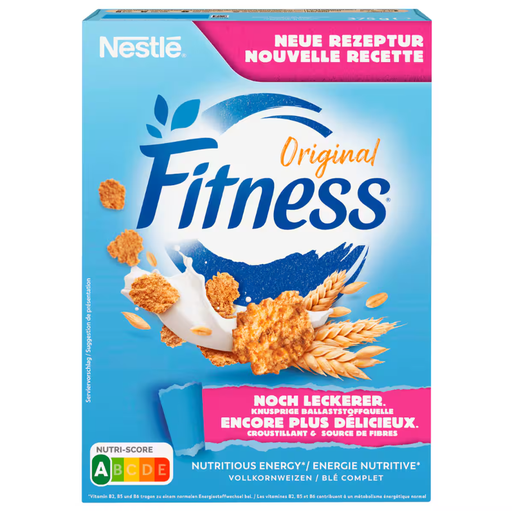 No image available
These wholegrain cereals are an option if you’re looking for flakes rather than traditional muesli.
Compare the wholegrain content, sugar and fibre using the information on the pack; also check the ingredients and allergen information.
 No image available
This crunchy muesli is worth considering if texture is important to your breakfast.
The Less Sweet variety name doesn’t replace comparing the sugar per 100 g; check the allergen information, too.
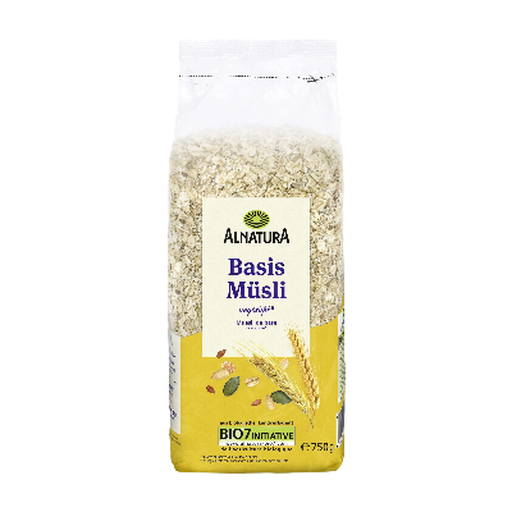 No image available
This basic muesli with cornflakes is an option if you’re looking for muesli with crunchy ingredients.
Read the ingredients list and compare the wholegrain content, sugar and fibre on the pack.
 No image available
This crunchy oat muesli is an option if you’d like to compare varieties with different levels of sweetness.
Consider the Less Sweet label alongside the sugar per 100 g, and check the ingredients and allergens on the pack.
Check the product name and ingredients list, not just the colour or grainy appearance. According to the German Food Federation, ingredients are listed in descending order by weight. This can help you understand the role of the wholegrain cereal named in the list.
No. Nestlé lists both 36.6% wholemeal wheat flour and 24 g of sugar per 100 g for Cini Minis. So, alongside the wholegrain content, check the sugar figure in the nutritional information.
Yes, if you need to avoid certain ingredients. Wholegrain describes how the grain is processed, not whether it suits your individual dietary needs. Check the labelled allergens and any may-contain warnings on each specific pack.
If you don’t currently eat much wholegrain, you can gradually increase the amount rather than switching completely straight away. The German Nutrition Society recommends doing this and making sure you drink enough.