Shoppers keeping an eye on wholegrains and fibre
You want to know which grains are included as wholegrains and compare fibre per 100 g, rather than relying on product names or pack colours.


If you want to know exactly what wholegrains are in your cereal, choose based on the specific wholegrain ingredients listed and compare fibre and sugar per 100 g. Sweet, crunchy cereals can contain wholegrains too, so when ordering online, check the ingredients and allergens for the particular variety you want rather than relying on a wholegrain claim alone.
You want to know which grains are included as wholegrains and compare fibre per 100 g, rather than relying on product names or pack colours.
You’re looking for crunchy or sweet cereals, but want to weigh up the flavour you’re after alongside the ingredients list and sugar content.
Before ordering online, it’s important to check whether the particular variety contains any ingredients or declared allergens you need to avoid.
First, check the wholegrain ingredients in the cereals or muesli you want. Then compare the nutrition information on the same basis and make sure the ingredients meet your requirements before you order.
| What to check | What to look for when buying | Who it matters most to |
|---|---|---|
| Wholegrains and fibre | Specific wholegrain ingredients and fibre per 100 g; colour isn’t a reliable way to choose. | If the grains matter more to me than the packaging, I want to know which wholegrain ingredients I’m buying. This is the top priority for around 33% of shoppers. |
| Sugar and recipe | Sugar per 100 g and the ingredients list for the specific variety; don’t compare serving values with per-100 g values. | I enjoy crunchy cereals, but want to understand how the sweetness fits with the rest of the recipe. Around 27% of shoppers put this consideration first. |
| Allergens and ingredients | Grains, nuts, sesame and any other ingredients relevant to you, as well as the allergen information for that variety. | If I need to avoid certain ingredients, their labelling determines whether a product is suitable for me. This is the main concern for around 20% of shoppers. |
| Online product information and delivery | Read the ingredients and nutrition information for the item being offered; check the packaging and best-before date after delivery. | Before ordering, I want to be able to assess the variety that will actually arrive. This is a priority for around 20% of shoppers. |
The German Nutrition Society advises against identifying wholegrain products by their colour.
Look for the word ‘wholegrain’ and check which grain ingredients are actually listed.
Nestlé Cerealien lists wholemeal wheat flour as an ingredient in Cini Minis, while also stating that it contains 24 g of sugar per 100 g. So a wholegrain ingredient doesn’t tell you everything about the recipe.
Compare sugar per 100 g and check the ingredients list too, especially for sweetened or flavoured varieties.
For its #583 mix, Seitenbacher lists wheat, oats, barley, hazelnuts, almonds, cashews and sesame, among other ingredients.
If you have an allergy, check the ingredients and allergen information for the exact variety you want to order.
If you need a product with a particular best-before date, you can’t rely on the other information on the product page alone.
Check the date and the condition of the packaging after delivery.
Seitenbacher’s individual recipes are worth considering if you want to compare classic muesli mixes with clearly listed wholegrain flakes.
A cinnamon-flavoured cereal for households who want to weigh up taste alongside ingredients and nutrition information.
The Oaties range is an option if you’re considering oat-based cereals.
The brand offers a range of muesli lines, so it’s worth comparing their recipes individually.
This selection includes wholegrain wheat cereals, crunchy mueslis, a fruit muesli and oats. The type of product can help you narrow down your choice; compare the information for each variety to check sugar, fibre and allergens.
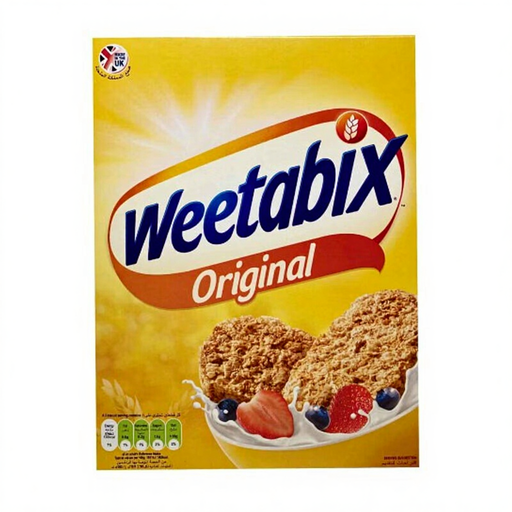 No image available
An option for shoppers looking for wholegrain wheat cereal in biscuit form. Before ordering, check the ingredients, nutrition information and allergens for the pack on offer.
 No image available
This crunchy muesli is worth considering if you’d prefer a crunchy mix to a plain flake blend. Check the sugar per 100 g to see what ‘Less Sweet’ means, and review the ingredients and allergens.
 No image available
This crunchy oat muesli is for shoppers looking to compare a crunchy mix. Check the pack you want for the listed grain ingredients, sugar content and allergens.
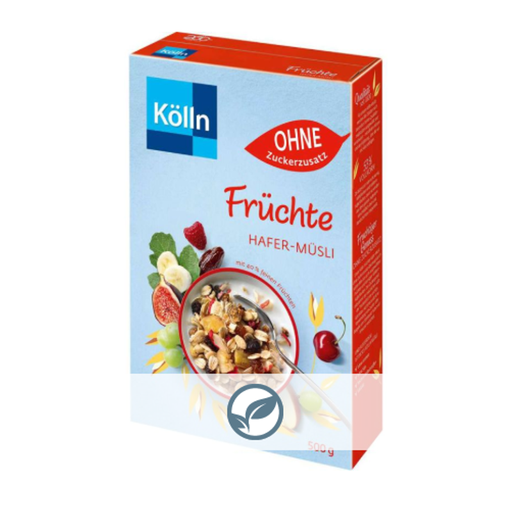 No image available
If you’re looking for a fruit muesli, pay particular attention to the ingredients and the stated sugar content per 100 g for this variety. ‘No Added Sugar’ doesn’t mean the muesli contains no sugar.
 No image available
Fine oat flakes are a different type of product from sweetened or crunchy muesli mixes. Check the ingredients and nutrition information for this variety if you’re comparing it with ready-made cereals.
Look for wholegrain ingredients clearly named in the ingredients list. The German Nutrition Society advises against judging whether a product is wholegrain by its light or dark colour alone. You can also compare fibre and sugar per 100 g to help choose between varieties.
Before ordering, check the ingredients list and allergen information for the exact variety on offer. Lebensmittelklarheit points out that relevant allergens must also be declared for food sold online. When your order arrives, check the information on the pack too.
Check the best-before date on the packaging after delivery. Don’t place an order on the assumption that the date will already be shown on the product page.