People prioritising wholegrains and fibre
You want a sweet breakfast where wholegrains and fibre matter more than a strong dessert-like taste. Compare the wholegrain ingredients and fibre information for the specific products you’re considering.


When choosing cereal or muesli for a sweet breakfast, don’t rely on the wholegrain claim alone. Compare the sugar and fibre per 100 g, as well as the ingredients list. Seitenbacher says its Spezial-Müsli 2 contains just 1 g of sugar per 100 g and describes it as not too sweet. If you’re mainly looking for cinnamon flavour, Cini Minis offer a different taste, but Nestlé says they contain 24 g of sugar per 100 g. For crunchy or chocolate varieties, check the information for the specific product you choose.
You want a sweet breakfast where wholegrains and fibre matter more than a strong dessert-like taste. Compare the wholegrain ingredients and fibre information for the specific products you’re considering.
You enjoy muesli or cereal, but want to know how much sugar it actually contains. The Verbraucherzentrale points out that descriptions such as “less sweet” don’t replace the sugar content figure.
You’re looking for cinnamon, chocolate or crunchy pieces, while also wanting to check the wholegrain content, nutritional information and allergen details for the variety you choose.
First decide whether wholegrains, a comparable sugar figure or flavour matters most to you. Then check the nutritional information per 100 g and, if needed, the ingredients and allergens listed for the specific pack.
| Criteria | What to check | Who it matters to |
|---|---|---|
| Wholegrains and fibre | Check the wholegrain ingredients and stated wholegrain content; compare fibre per 100 g. | If I want a breakfast bowl with plenty of wholegrains, the cereal ingredients matter more to me than getting the sweetest possible flavour. This is the top priority for around 36% of consumers. |
| Sugar | Compare the “of which sugars” figure per 100 g; don’t treat a description of sweetness as a sugar content figure. | I want a sweet breakfast, but I also want to be able to gauge its sugar content before buying. This is the priority for around 29% of consumers. |
| Flavour and crunch | Choose the cinnamon, chocolate or cluster variety you want, then check its own nutritional information. | If cinnamon, chocolate or crunchy pieces are what sway me, I may be happy with different nutritional values than I’d get from a less sweet muesli. This flavour preference is the most important criterion for around 21% of consumers. |
| Ingredients and allergens | Read the ingredients list, highlighted allergens and, where relevant, precautionary allergen statements on the current pack. | If I need to avoid certain ingredients, I want to be able to rely on the labelling for that specific variety. Clear ingredient information is the main priority for around 14% of consumers. |
Wholegrain content and sugar content describe different things. Nestlé says Cini Minis contain 33% wholegrain and 24 g of sugar per 100 g.
Compare the wholegrain claim with the “of which sugars” figure and fibre information per 100 g.
Kellogg’s “30% less sugar” claim for its Crunchy Oat Granolas is based on an average for comparable granolas. It doesn’t tell you the sugar content of an individual variety.
For each variety you’re considering, compare the “of which sugars” figure per 100 g.
An image is no substitute for the ingredients list or allergen labelling on the variety you buy. If you need to avoid an allergen, information about possible traces is relevant too.
Read the current pack labelling, and don’t assume a product has the same ingredients as other products from the same brand.
The familia Choco Crunch product page refers to Swiss retailers. That doesn’t mean the same variety is available in German shops.
If you find it on sale, check the exact variety and pack size, then compare its ingredients and nutritional information with those of the product described.
Spezial-Müsli 2 is an option for a breakfast with several cereal flakes and a subtle sweetness.
The varieties mentioned cater to different tastes, from cinnamon flavour to crunchy clusters.
The Special K range includes flakes and Crunchy Oat Granolas with different recipes.
Choco Crunch combines chocolate and crunchy muesli. The information applies to this product, not to every familia variety.
This selection includes muesli and breakfast cereals to suit different priorities for a sweet breakfast: crunchy mixes, a chocolate variety and wheat cereal biscuits. Check the pack information for the variety you choose rather than assuming its wholegrain or sugar content from the product name alone.
 Image unavailable
A crunchy option if you’re looking for muesli described as less sweet. To help you choose, compare the actual sugar content per 100 g and read the allergen information on the pack.
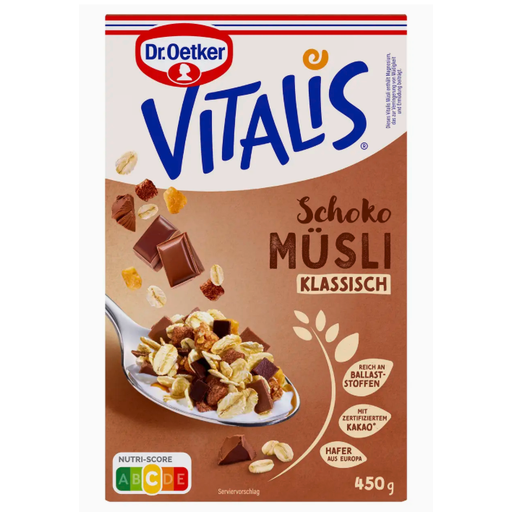 Image unavailable
For a breakfast with chocolate in your muesli. If you’re comparing it with other wholegrain varieties, check the sugar and fibre per 100 g, as well as the ingredients and allergens listed for the specific pack.
 Image unavailable
Another crunchy option if you’d like to compare oat muesli with other mixes. Check the sugar content per 100 g and the ingredients list; “Less Sweet” alone doesn’t tell you how much sugar it contains.
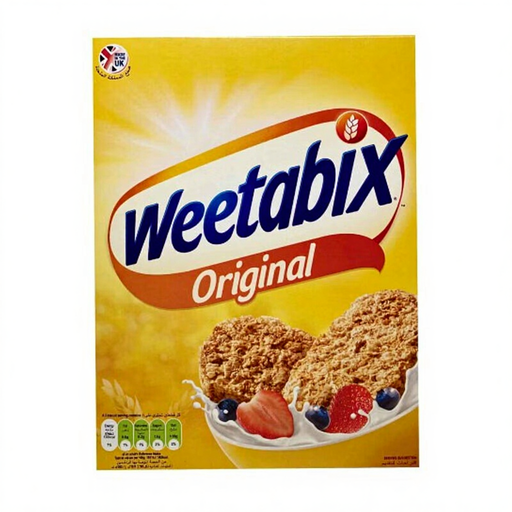 Image unavailable
Wheat cereal biscuits are an alternative to loose muesli. If you prefer a noticeably sweet flavour, check the nutritional information as well as the product description. And if needed, read the information about gluten-containing cereals.
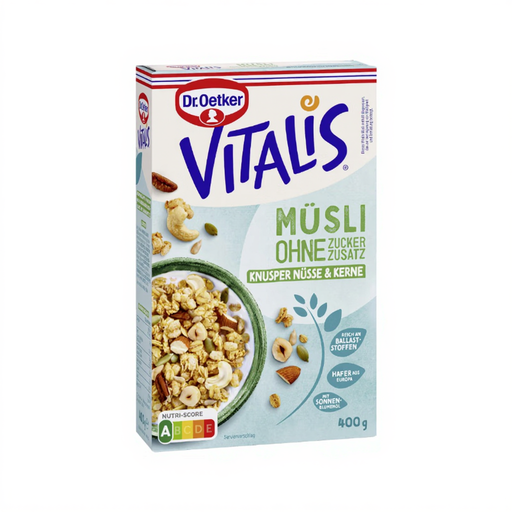 Image unavailable
A crunchy nut variety for anyone who wants to compare ingredients and sugar content carefully. The “No Added Sugar” claim is no substitute for checking the “of which sugars” figure or the nuts and other allergens listed on the pack.
Look for ingredients explicitly described as wholegrain and read the ingredients list for the specific variety. According to Lebensmittelverband Deutschland, ingredients are listed in descending order by weight; stated wholegrain percentages also make products easier to compare.
The description alone doesn’t give you a specific sugar figure. The Verbraucherzentrale recommends checking the “of which sugars” nutritional information per 100 g when you see wording like this. That way, you can compare varieties on the same basis.
Check the highlighted allergens in the ingredients list and, where relevant, any precautionary allergen statements on the current pack. Different varieties may contain different grains, milk ingredients or nuts; a brand description doesn’t necessarily apply to every variety.
Follow the instructions on the specific pack. For example, REWE advises storing Seitenbacher Spezial-Müsli II in a cool place in a tightly sealed pack. This isn’t a general storage instruction for all cereals.