If wholegrain is important at breakfast for a large family, check the labelling of the specific variety – don’t rely on the name ‘cornflakes’ alone. Compare wholegrain content, fibre and sugar using the nutritional information per 100 g; unsweetened cornflakes aren’t automatically wholegrain. Taste, ingredients and pack size may also influence your choice.
Who this choice matters to
Families looking for wholegrain options
You want to choose products explicitly labelled as wholegrain for regular breakfasts, rather than assuming what’s in them from the name ‘cornflakes’. The German Nutrition Society includes wholegrain products among foods that contain fibre.
Families with different tastes
When several people eat the same cereal, taste matters as well as wholegrain content. Compare cinnamon-flavoured varieties and less sweet flakes using the nutritional information for each one.
Households with specific ingredient requirements
If you need to take allergens or gluten into account, check the ingredients list and labelling on the specific pack before letting taste or pack size sway your decision.
What to look for when shopping
Start by checking the ingredients that matter to your household. Then compare wholegrain content and nutritional values per 100 g. For a family shop, you’ll also want to choose a suitable pack size.
| Criteria |
What to check when buying |
Who it matters most to |
| Wholegrain and fibre |
Look for an explicit wholegrain label and, if stated, the percentage; compare fibre per 100 g. |
If wholegrain is a priority at our family breakfast, a dark colour or the word ‘flakes’ isn’t enough for me. This is the main priority for around 33% of consumers. |
| Taste and sugar |
Compare the specific variety and its sugar content per 100 g, not just the brand or wholegrain claim. |
When tastes differ, we want a variety everyone enjoys at the breakfast table, without losing sight of its sugar content. This is the top priority for around 27% of consumers. |
| Allergens and gluten |
Read the ingredients and allergen information on the pack. If you need a gluten-free diet, look for the relevant labelling. |
If certain ingredients aren’t suitable for our household, the pack labelling needs to narrow down our choice first. This is the main priority for around 20% of consumers. |
| Pack size |
Check the pack weight, best-before date and expected rate of use together. |
When shopping for several people, I want to choose a pack size that matches how much we’ll actually use. This is the main consideration for around 20% of consumers. |
Classic cornflakes, porridge oats and cereal biscuits are different products. If you’re looking for the crunchy texture of cornflakes, don’t assume a wholegrain alternative will be an equivalent substitute just because it contains wholegrain.
Common misconceptions
-
‘Unsweetened’ means ‘wholegrain’
REWE’s product information says that REWE Bio Unsweetened Cornflakes contain less than 0.5 g of sugar per 100 g; however, no wholegrain content is listed on the product page. Sugar and wholegrain content answer different shopping questions.
If wholegrain is what you’re looking for, first check for an explicit wholegrain claim, then compare the nutritional values.
-
A wholegrain claim is all you need to compare varieties
REWE’s product information lists 37% wholegrain and 24 g of sugar per 100 g for Nestlé Cini Minis. For the Nestlé Fitness variety described there, it lists 58% wholegrain and 8.8 g of sugar per 100 g. These figures apply to the specific varieties, not every product from those brands.
Compare wholegrain content, sugar and fibre using the same 100 g reference amount.
-
Corn as the main ingredient is enough to tell if a product is gluten-free
Processed cereals may contain other grains too. The main ingredient alone doesn’t tell you whether a specific pack is suitable for a gluten-free diet.
Check the full ingredients list and, if needed, look specifically for a ‘gluten-free’ label.
-
A large pack is automatically right for a family shop
A larger pack is only practical if the variety meets your household’s needs and you’ll use it in time. Pack size is no substitute for checking the ingredients and nutritional information.
Before stocking up, compare the pack weight with the best-before date and how much you usually use. The information on the specific pack is what counts.
Brands and product ranges to consider
The details below refer to specific varieties. Ingredients and nutritional values can vary between products from the same brand.
Kölln
Knusprige Haferfleks Klassik are worth considering if you’re looking for crunchy flakes explicitly labelled as wholegrain oats.
- Kölln states that this variety contains 72% wholegrain oats.
- Haferfleks aren’t classic cornflakes.
Nestlé
The Fitness and Cini Minis varieties described by REWE have different wholegrain content and flavour profiles.
- For the Fitness variety described, REWE lists 58% wholegrain, 10.3 g of fibre and 8.8 g of sugar per 100 g.
- For the Cini Minis variety described, REWE lists 37% wholegrain and 24 g of sugar per 100 g. The figures for the two varieties shouldn’t be treated as the same.
REWE Bio
Unsweetened Cornflakes are a cornflake option for households looking for a variety without a stated wholegrain focus.
- REWE states that this variety contains 99% corn and less than 0.5 g of sugar per 100 g.
- The product page described doesn’t list any wholegrain content.
Kellogg’s
Corn Flakes are an option if your family prefers classic cornflakes.
- Kellogg’s lists corn, barley malt, sugar and salt as ingredients in Corn Flakes.
- If you’re specifically looking for wholegrain, a variety labelled accordingly is easier to identify.
EDEKA GUT&GÜNSTIG
The cornflakes described are aimed at households looking for classic cornflakes in a 500 g pack.
- EDEKA lists corn, sugar, barley malt extract and salt as ingredients in the variety described.
- The ingredients list described doesn’t include any wholegrain ingredient. Check the details on the pack you buy.
Products at Joybuy to consider
This selection includes wholegrain breakfast cereals as well as oats as an alternative to cornflakes. Cereal biscuits and oats aren’t the same shape or used in the same way as ready-to-eat cornflakes, so choose according to the kind of breakfast your household prefers.
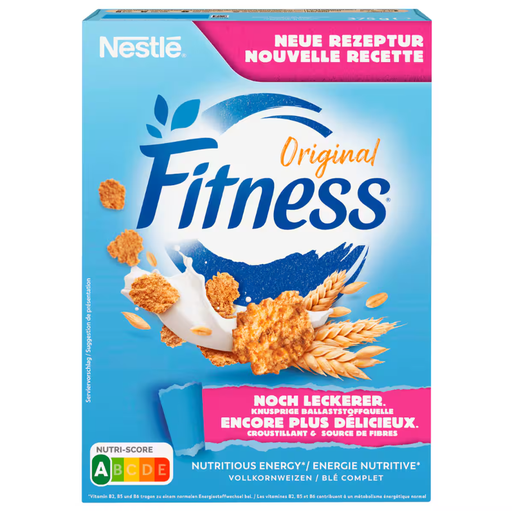 Image unavailable
Nestlé Fitness Original wholegrain breakfast cereal, 375 g
For families looking for wholegrain breakfast cereal in flake form. The pack contains 375 g; if you’re stocking up, compare it with how much your household uses and check the ingredients and allergens on the specific pack.
View at Joybuy
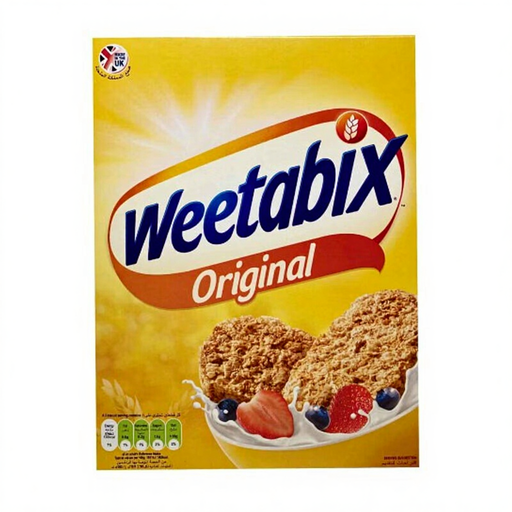 Image unavailable
Weetabix Original wholegrain wheat cereal biscuits, 430 g
An option if wholegrain wheat matters more to you than the shape of classic cornflakes. The 430 g pack contains cereal biscuits rather than cornflakes. If you have requirements around gluten or other ingredients, check the pack labelling.
View at Joybuy
 Image unavailable
Jeden Tag coarse rolled oats, 500 g
For households that would like to have coarse rolled oats for breakfast instead of crunchy cornflakes. The pack contains 500 g; make sure the different texture suits how you plan to prepare them.
View at Joybuy
 Image unavailable
Kölln fine rolled oats, 500 g
For families planning to have fine rolled oats rather than ready-to-eat cornflakes. The pack contains 500 g; bear in mind that oats are prepared and eaten differently from crunchy cornflakes.
View at Joybuy
 Image unavailable
Kölln coarse rolled oats
An alternative for families who prefer coarse rolled oats for breakfast and aren’t looking for classic cornflakes. Check the pack size on the specific product before stocking up.
View at Joybuy
Frequently asked questions
How can I tell if a cereal is wholegrain?
Look for an explicit wholegrain label and check whether a wholegrain percentage is given. You can also compare fibre per 100 g. The German Nutrition Society points out that colour alone isn’t a reliable way to identify wholegrain products.
Are unsweetened cornflakes automatically wholegrain?
No. ‘Unsweetened’ doesn’t tell you how much wholegrain a product contains. REWE’s product information says that REWE Bio Unsweetened Cornflakes contain less than 0.5 g of sugar per 100 g, but the product page doesn’t list any wholegrain content.
Is corn as an ingredient enough if I need gluten-free cereal?
No. For processed cereals, you need to check the full ingredients list on the specific pack. If you need a gluten-free diet, also look for a ‘gluten-free’ label rather than assuming that the finished product is gluten-free because its main ingredient is corn.
What should I check on a cereal pack if I have allergies?
Check the ingredients list for the relevant highlighted allergens, and look for any warnings about possible traces if applicable. Read the information on the specific pack even if you already know another variety from the same brand.


