Barbecue hosts who are mindful of fibre
If you’re planning to serve crispbread as a side, you can compare the wholegrain claims and fibre content per 100 g across different packs. How much fibre you actually get depends on the amount eaten.


For a summer barbecue, wholegrain crispbread with a clearly stated grain base is a good starting point if you want to compare fibre content. Whether plain rye crispbread or a seeded variety is a better fit for your platter also depends on the toppings, salt content and allergens you need to consider for your guests.
If you’re planning to serve crispbread as a side, you can compare the wholegrain claims and fibre content per 100 g across different packs. How much fibre you actually get depends on the amount eaten.
When several people are sharing a barbecue platter, it’s important to check the grains, sesame and any ‘may contain’ warnings on the specific pack. This is especially important before serving crispbread alongside dips and toppings.
If you want to pick up a wholegrain variety during your regular food shop, compare the recipe and nutritional information for each product. A brand name or organic label is no substitute for checking the specific variety.
First decide whether you’d prefer a simple rye recipe or seeded crispbread for your barbecue platter. Then compare the information on the specific packs using the same serving size.
A good fit if: you prefer a simple rye recipe to go with savoury toppings.
Keep in mind: rye contains gluten, and salt content varies between products.
A good fit if: you’d like seeds to be part of the crispbread recipe for serving with dips or toppings.
Keep in mind: check for sesame and the types of grain in particular. Fat and energy content also vary between products.
| What to check | Check when buying | Particularly important for |
|---|---|---|
| Wholegrains and fibre | Read the product name and ingredients list; compare fibre per 100 g. | If I want crispbread to contribute to the wholegrain content of my barbecue meal, I’d like to choose a clearly labelled variety with comparable nutritional information. This would be the main reason to buy for around 40% of consumers. |
| Ingredients, allergens and salt | Check the types of grain, highlighted allergens and ‘may contain’ warnings; compare salt per 100 g. | When catering for guests with different dietary requirements, I need to know what’s going on the table before serving. Around 30% of consumers would prioritise checking ingredients and allergens. |
| Variety and shopping habits | Check whether the recipe suits your planned toppings, along with the organic label and pack information for the specific variety. | For my barbecue platter, I’m looking for a wholegrain variety that goes with dips or savoury toppings and suits my usual shop. This would be the main consideration for around 30% of consumers. |
Appearance alone doesn’t tell you which parts of the grain have been used.
Read the product name and ingredients list, and compare the fibre content per 100 g on packaged crispbread.
Rye and wheat are grains that contain gluten; seeded varieties may contain sesame. Ingredients also vary between products with similar names.
If any guests have allergies, check the label on the specific pack and, if needed, have a separate suitable alternative ready for them.
Fibre content tells you nothing about salt or other nutritional values. For example, the organic wholegrain seeded crispbread listed by REWE contains 19.5 g of fat and 448 kcal per 100 g.
Compare fibre, salt, fat and energy per 100 g, and read the ingredients list too.
Moisture affects crispbread. The Consumer Advice Centre recommends protecting it from moisture and storing it separately from other bread.
Seal the pack after opening and store the crispbread somewhere dry.
These examples showcase a range of recipes. Ingredients and nutritional information apply to the specific variety named, not to a brand’s entire range.
EDEKA24 lists a range of Wasa products, including wholegrain, rye sourdough and seeded varieties.
Finn Crisp Original is a thin wholegrain rye crispbread made with sourdough.
The organic crispbread listed by REWE uses wholegrain rye flour as its grain base.
The seeded wholegrain crispbread combines wholemeal wheat flour with sunflower seeds, sesame and linseeds.
According to the ingredients list, the wholegrain rye crispbread listed by EDEKA24 contains 94% wholegrain rye flour, as well as water and sea salt.
ALDI SÜD sells wholegrain crispbread under this own-label brand.
This selection includes rye crispbread and seeded varieties for a barbecue platter with toppings or dips. Check the ingredients and pack label to decide which variety is right for your guests.
 Image unavailable
A rye option for your barbecue platter if you’d like to serve crispbread with savoury toppings. Rye contains gluten, so check the other allergen information on the pack before serving.
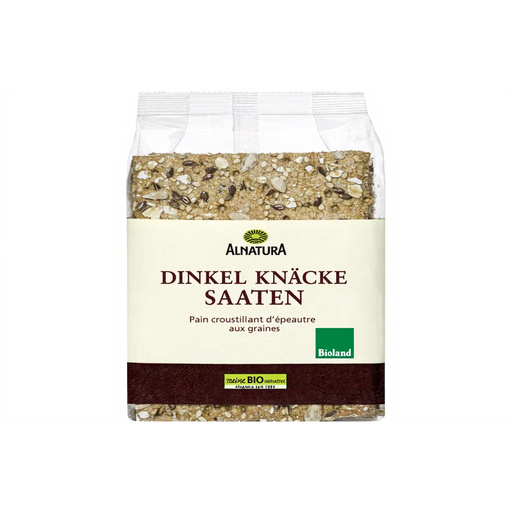 Image unavailable
A seeded spelt option if you’re planning to serve crispbread with dips or spreads. If any guests have allergies or dietary requirements, check the ingredients and allergen information on the specific pack.
 Image unavailable
An oat and sesame option if you’d like seeded crispbread for your barbecue. Sesame is an allergen; check the pack to see which other grains it contains too.
 Image unavailable
A sesame and linseed variety to serve with toppings or as part of a barbecue platter. If fibre content is a key factor in your choice, compare the amount per 100 g on the pack and check the allergen information too.
 Image unavailable
A rye sourdough option if you’re looking for crispbread to serve with barbecue toppings. Before choosing it for a group, check the fibre per 100 g and the full allergen information on the pack.
Look for a wholegrain claim and read the ingredients list; a dark colour or visible grains alone isn’t enough. Fibre per 100 g is also useful when comparing varieties.
No. Rye is a grain that contains gluten. If any guests need to avoid gluten-containing ingredients, check the grains and labelling on each pack rather than assuming a product is suitable because it says ‘wholegrain’.
Store crispbread somewhere dry and protected from moisture. The Consumer Advice Centre also recommends keeping it separate from other bread. Reseal an opened pack.
No, the best-before date isn’t an automatic ‘throw away’ date. According to the Consumer Advice Centre, food is often still safe to eat after this date if the packaging is unopened and it has been stored correctly. Check the condition of the crispbread and don’t serve it if it’s mouldy.
No. According to the Federal Centre for Nutrition, the Nutri-Score rates a food’s nutritional composition on a five-point scale. You should still check the ingredients and allergens on the pack. When comparing crispbread, look at fibre and salt per 100 g too.