For the start of the school year, crispbread with clearly stated wholegrain ingredients is a sensible choice if wholegrains are a priority in your household. When comparing similar varieties, check the fibre and salt content per 100 g, read the current packaging for allergen information, and choose a variety that will actually be eaten as part of your breakfast or lunchbox routine. The German Nutrition Society recommends choosing wholegrain versions of cereal products.
Who should take care when choosing?
Families focused on wholegrains
If you’d like to choose wholegrain cereals more often as the school year begins, compare the ingredients and fibre content of similar crispbread varieties. The German Nutrition Society lists wholegrain products among foods that contain fibre.
Families preparing lunchbox snacks
For breakfast and lunchboxes, taste, ease of use and suitable toppings matter just as much as the ingredients. Starting with a small pack can help you find out whether a variety works for your everyday routine.
Households that need to check allergens
If you need to avoid certain ingredients, check each current pack individually. Depending on the variety, you may need to look out for gluten-containing cereals such as rye and wheat, sesame, and product-specific precautionary allergen statements.
What should you look for when buying?
Start with the ingredients list, then compare the nutritional information for similar crispbread varieties. According to the Federal Office of Consumer Protection and Food Safety, ingredients are listed in descending order by weight.
| Criterion |
What to check |
Who it matters to |
| Wholegrain content |
Check the product name, the order of ingredients and, where stated, the wholegrain percentage; a claim on the front of the pack isn’t enough. |
If wholegrains are my main reason for buying, I want to know which cereal ingredients are actually included. For around 36% of consumers, this transparency is the top priority. |
| Fibre |
Compare the fibre content of similar crispbread varieties using the same measure: per 100 g. |
For lunchboxes, I’m looking for a variety whose fibre content I can compare with other products. Around 29% of consumers would make this comparison their top priority. |
| Allergens and salt |
Check the highlighted allergens and precautionary allergen statements on the current pack; also compare the salt content per 100 g. |
If my family needs to avoid certain ingredients, the information on the specific pack takes priority; I’m also interested in the salt content. This check is the main focus for around 21% of consumers. |
| Everyday lunchbox suitability |
Choose a variety with a taste and texture that work well in a lunchbox; assess the topping separately from the crispbread. |
If the crispbread comes home uneaten, suitable ingredients alone aren’t much use to me. That’s why everyday suitability is the most important selection criterion for around 14% of consumers. |
Common mistakes when choosing
-
Assuming a wholegrain claim on the front is enough
For Wasa Sesame & Wholegrain, the Verbraucherzentrale’s Lebensmittelklarheit documented 49% wholemeal wheat flour alongside 39% wheat flour, and found the packaging presentation misleading. So the claim alone doesn’t tell you the full cereal mix.
Check the product name, ingredients list and any stated percentages together.
-
Confusing wholegrain with gluten-free
Wholegrain rye or wheat is still rye or wheat. If you have an allergy or coeliac disease, information about other ingredients and possible traces may also be important.
Check the labelling on the specific pack rather than assuming that a product labelled “wholegrain” is suitable for you.
-
Looking only at the fibre content
The fibre content doesn’t tell you everything about the crispbread, let alone the whole lunchbox meal: salt and toppings need to be assessed separately.
Compare fibre and salt per 100 g for similar varieties, and consider your chosen topping separately.
-
Assuming online nutritional information never changes
ALDI SÜD notes that its GOLDÄHREN Wholegrain Crispbread may come from different suppliers, and that nutritional information can vary.
Check the ingredients and nutritional information on the current pack every time you buy it, especially if the variety regularly goes into a lunchbox.
Brands and product ranges to consider
The information below relates to specific documented varieties, not every product from each brand.
Wasa
Wasa offers a range of crispbread varieties, including wholegrain, rye and seeded options.
- You can choose between varieties based on their cereal ingredients and flavour.
- For Wasa Sesame & Wholegrain, the Verbraucherzentrale’s Lebensmittelklarheit documented 49% wholemeal wheat flour and 39% wheat flour. Check the wholegrain content of each variety individually.
Ryvita
On its UK website, Ryvita describes Dark Rye as rye crispbread containing 92 g of wholegrain rye flour per 100 g of product.
- The wholegrain rye content is clearly stated for this UK variety.
- If it’s sold in Germany, check the recipe and labelling on the pack actually being offered.
EDEKA Bio
EDEKA24’s product description for its organic rye wholegrain crispbread lists 94% wholegrain rye flour in the ingredients.
- The proportion of the main wholegrain ingredient is clearly stated for this variety.
- For allergen or salt comparisons, the information on the specific pack is also key.
GOLDÄHREN / ALDI SÜD
ALDI SÜD describes a GOLDÄHREN Wholegrain Crispbread and provides nutritional information for the variety on offer.
- You can use the ingredients and nutritional information to compare it with similar crispbreads.
- ALDI SÜD notes that different suppliers may be used and nutritional information may vary. The current pack is what matters.
Crispbread selection at Joybuy
This selection includes wholegrain rye crispbread as well as varieties with spelt, oats or seeds. For your school-day routine, compare the ingredients and nutritional information on each pack; the product name alone doesn’t determine the wholegrain content.
 No image available
Wasa Whole Grain Rye crispbread, 260 g
A wholegrain rye option for households that pay attention to the type of cereal in their lunchbox supplies. If needed, check the fibre content and allergen information on the current pack.
View at Joybuy
 No image available
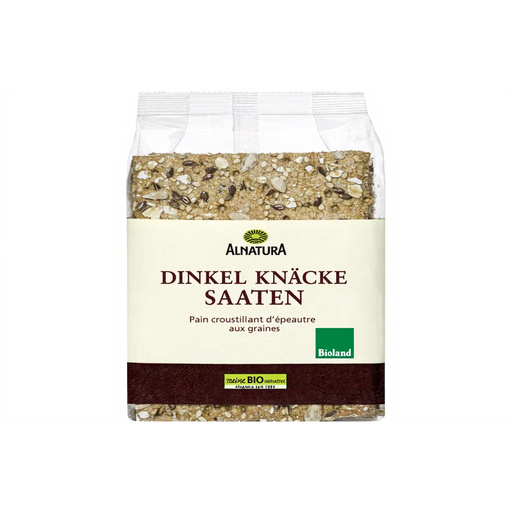
Alnatura Organic Spelt Crispbread with Seeds, 200 g
A seeded spelt option if you’re looking for an alternative to rye crispbread. If you need to avoid any ingredients, check the allergen information directly on the current pack.
View at Joybuy
 No image available
Wasa Delicate Crisp Oats & Sesame crispbread, 230 g
Oats and sesame set this variety apart from plain rye crispbread. If a high wholegrain content is your top priority, check the ingredients and any stated percentages on the pack.
View at Joybuy
 No image available
Wasa Sesame & Flaxseed crispbread, 210 g
A sesame and flaxseed variety for anyone who enjoys seeds in their crispbread. To compare fibre content, check the figure per 100 g on the pack.
View at Joybuy
 No image available
Wasa Sourdough Rye crispbread, 235 g
Rye and sourdough define this variety, making it a handy option for breakfast or lunchboxes. When comparing fibre or salt between varieties, use the nutritional information per 100 g on the current pack.
View at Joybuy
Questions about wholegrain crispbread
How can I tell how much wholegrain crispbread contains?
Check the product name, ingredients list and any stated percentages rather than relying on the colour or claims on the front of the pack. According to the Federal Office of Consumer Protection and Food Safety, ingredients are listed in descending order by weight.
Is wholegrain crispbread gluten-free?
No. “Wholegrain” doesn’t mean “gluten-free”: wholegrain rye and wheat are still made from gluten-containing cereals. If you have coeliac disease or an allergy, check the ingredients and labelling on the specific pack.
Is the Nutri-Score enough to compare crispbread?
No. The Nutri-Score is no substitute for checking the ingredients list, fibre, salt and allergens. The Federal Centre for Nutrition describes it as a five-level guide to nutritional composition. When choosing crispbread for the start of the school year, you should also compare similar varieties using their information per 100 g.
How can I keep crispbread crunchy throughout the school weeks?
Store crispbread in a dry place and seal the pack well after opening. Follow the storage instructions on the pack, and prepare lunchbox toppings separately if you want the crispbread to stay crunchy.


