Who is this selection relevant to?

Canteen diners focused on fibre

If you take crispbread as a wholegrain accompaniment, you can compare the fibre content per 100 g and the type of grain used. The German Nutrition Society recommends at least 30 g of fibre a day for adults; what matters is your overall diet, not a single piece of crispbread.

Canteen diners planning to add a topping

If you use crispbread as a base for a topping you bring from home, consider the protein, fat and ingredients in each variety alongside your planned topping. Seeded and protein varieties differ from plain rye crispbread.

People with grain or allergen requirements

If you need to avoid gluten or certain ingredients, check the labelling on every pack. Wholegrain rye is not gluten-free, and sesame and other declared allergens may also affect your choice.

What should you look for when buying?

First, think about whether the crispbread is mainly a wholegrain accompaniment or a base for toppings. Then compare the nutritional information and check the ingredients and allergens on the specific pack.

CriteriaWhat to checkWho it matters to
Fibre and wholegrains Compare the fibre per 100 g and the grains listed in the ingredients. If wholegrains are my priority, I want to know how much fibre my chosen variety actually contains. This is the top priority for around 36% of consumers.
Its role at lunchtime Decide whether the crispbread is an accompaniment or a base for toppings, and check the storage instructions. For my canteen lunch, I’m looking for an easy, crunchy addition, not an automatic meal replacement. This is the main concern for around 29% of consumers.
Protein, seeds and toppings Consider protein and fat per 100 g, along with the ingredients and your planned topping. If I’m adding a topping to my crispbread, I want to combine protein, seeds and flavour in a way that works. Around 21% of consumers give this the greatest weight when choosing.
Gluten and allergens Read the ingredients, allergen labelling and any precautionary ‘may contain’ statements on the pack. I need to find a variety with ingredients that suit my specific requirements. This check comes first for around 14% of consumers.

Common selection mistakes

  • Assuming wholegrain means gluten-free

    Wholegrain rye and wheat products contain gluten. So a wholegrain claim does not tell you whether a crispbread is suitable for a gluten-free diet.

    If you need to avoid gluten, look for an explicit gluten-free label and read the ingredients and allergen information on the specific pack.

  • Comparing only the fibre figure

    The fibre content alone doesn’t tell you everything about the recipe or your planned topping. Information about protein, fat, salt and allergens can influence your choice between rye, seeded and protein varieties.

    Compare these nutritional values per 100 g and decide which ingredients you want in your lunch.

  • Assuming online information applies to every pack

    ALDI SÜD notes that GOLDÄHREN products may vary because they can come from different suppliers; EDEKA says there may be differences between its product page and the packaging.

    Check the current nutrition table, ingredients list and allergen labelling when you buy.

  • Planning crispbread as a complete lunch on its own

    Crispbread can complement a meal, but its fibre content doesn’t tell you what the whole lunch or the rest of your day’s meals contain.

    Plan to have it as an accompaniment, or think about which toppings and other foods would work with your lunch.

Brands and product ranges to consider

Wasa

The range includes rye crispbread, a protein variety and a separate variety labelled gluten-free.

  • Wasa lists 20 g of fibre per 100 g for Rustikal and 20 g of protein per 100 g for Selection Protein+.
  • The rye and wheat varieties are not the same as the gluten-free variety; their recipes and nutritional values differ.

REWE Bio

The Naturland Vollkorn Knusperknäcke considered here combines wholegrain cereals and seeds.

  • REWE lists 11.4 g of fibre and 15.3 g of protein per 100 g for this variety.
  • The seeds, gluten-containing grains and sesame in the recipe need to suit your requirements.

EDEKA Bio

The rye wholegrain crispbread considered here is an option for shoppers looking for a short ingredients list.

  • EDEKA lists 94% wholegrain rye flour, as well as water and sea salt, for this variety.
  • Rye contains gluten. EDEKA also notes that the information on the packaging may differ from what’s shown online.

GOLDÄHREN

The ALDI SÜD variety considered here is a wholegrain crispbread.

  • ALDI SÜD lists 15.3 g of fibre per 100 g for the variety considered here.
  • Nutritional values may vary because different suppliers may be used; always go by the current pack.

Leicht & Cross

The wholegrain product considered here is crispbread and not the same product type as traditional Knäckebrot.

  • The product information at REWE lists 14 g of fibre and 10 g of protein per 100 g.
  • This variety contains wholegrain rye and wheat flour. Follow the storage instructions on the pack after opening.

Crispbread available at Joybuy

These crispbreads could work as a wholegrain accompaniment or a base for toppings at lunchtime. Check whether the grains, seeds and allergens in the specific pack suit how you plan to use it.

Wasa Delicate Crisp Oats & Sesame Crispbread, 230 g

Wasa Delicate Crisp Oats & Sesame Crispbread, 230 g

A crunchy base made with oats and sesame, ready for you to add your favourite toppings at lunchtime. Check the pack labelling if you need to avoid gluten or sesame.

View at Joybuy
Wasa Whole Grain Rye Crispbread, 260 g

Wasa Whole Grain Rye Crispbread, 260 g

A wholegrain rye variety to enjoy as an accompaniment or with a savoury topping. Rye contains gluten; check the specific pack if you have other allergen requirements.

View at Joybuy
Alnatura Organic Sesame Crispbread, 250 g

Alnatura Organic Sesame Crispbread, 250 g

A sesame crispbread to enjoy alongside a dip or spread. Information about other allergens is inconsistent, so check the pack labelling to make sure it’s suitable before buying.
View at Joybuy
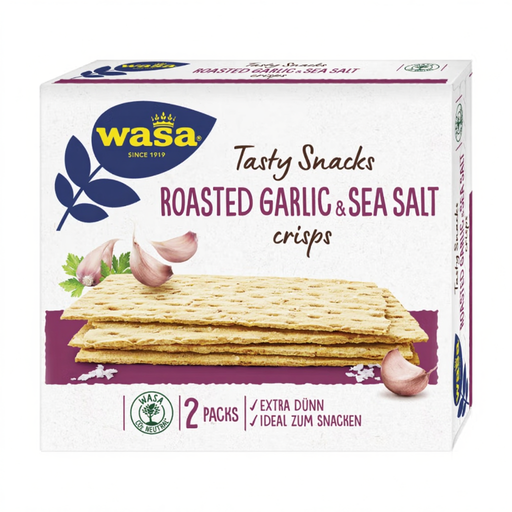
Wasa Round Crispbread Roasted Garlic & Sea Salt, 190 g

Wasa Round Crispbread Roasted Garlic & Sea Salt, 190 g

A seasoned variety from the Round Crispbread range that also works well with toppings. If salt content or allergens are important to you, compare the information on the pack.
View at Joybuy
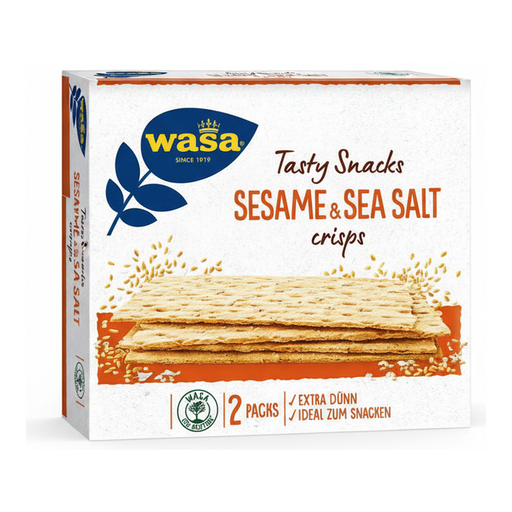
Wasa Round Crispbread Sesame & Sea Salt, 190 g

Wasa Round Crispbread Sesame & Sea Salt, 190 g

A sesame variety designed as a base for toppings. If you need to avoid sesame, gluten or other allergens, check the specific pack before buying.

View at Joybuy

Frequently asked questions

How do I compare the fibre content of different crispbreads?

Start by comparing the fibre figures per 100 g, then take into account how much you actually eat. The German Nutrition Society recommends at least 30 g of fibre a day for adults as a guideline for the overall diet.

Is wholegrain rye crispbread gluten-free?

No, rye is a gluten-containing grain. If you need to avoid gluten, choose a product explicitly labelled gluten-free and read the ingredients and allergen information on the specific pack.

What does ‘high fibre’ mean?

For a food to carry this nutrition claim, it must contain at least 6 g of fibre per 100 g or at least 3 g per 100 kcal, according to EU rules published on EUR-Lex. When choosing, it’s also worth checking the specific fibre content, ingredients and allergens.

How should I store opened crispbread for a canteen lunch?

Keep it dry and follow the instructions on the relevant pack. Leicht&Cross Vollkorn advises protecting the product from heat and eating it within a few days of opening.