For fakeaway night with dips and savoury toppings, crispbread specifically labelled as wholegrain is a good starting point. Then compare fibre and salt per 100 g, as well as ingredients and the texture you want. Plain rye crispbread and varieties with flakes or seeds offer different levels of crunch. Rye contains gluten, so it is not suitable if you need to follow a gluten-free diet for medical reasons.
Who should take care when choosing?
Fibre-conscious dip fans
If you’re serving hummus, bean dips or vegetable spreads, you can compare the fibre content of different wholegrain crispbreads per 100 g. Values vary by product; you can’t tell the exact amount from the word ‘wholegrain’ alone.
Fans of savoury toppings
For a snack platter with spreads and small toppings, the texture you want is key. A simple rye recipe and crispbread with added flakes or seeds have different ingredient profiles. How easy a topping is to eat also depends on how moist it is.
Households hosting several guests
If you’re shopping for several people, check the pack size and ingredients, and read the information on the pack you actually buy. ALDI SÜD notes that its GOLDÄHREN wholegrain crispbread may have different nutritional values depending on the supplier.
What should you look for when buying?
First, check whether the crispbread is described as wholegrain. Then compare nutritional information using the same measure and choose ingredients and texture to suit your planned toppings. If you have allergies, the labelling on the specific pack is what matters.
| What to consider |
What to check |
Who it matters to |
| Wholegrain and fibre |
Look for ‘wholegrain’ in the product description and compare fibre per 100 g. |
If a wholegrain base for my dips is particularly important to me, I want to compare the fibre content directly across packs. This is a priority for around 42% of consumers. |
| Texture for dips and toppings |
Check the ingredients for wholegrain flour, flakes and seeds. Add moist toppings shortly before serving. |
For my savoury snack platter, what matters most is whether I prefer a plain or crunchier bite. This texture consideration is the most important selection criterion for around 33% of consumers. |
| Ingredients and suitability |
Read the ingredients, highlighted allergens and ‘may contain’ information on the pack; rye is not gluten-free. |
If guests need to avoid certain ingredients, I check which packs are suitable for them before serving. For around 25% of consumers, checking ingredients and suitability comes first. |
Common misconceptions
-
A dark colour or visible grains prove it’s wholegrain
Appearance alone doesn’t tell you whether a crispbread is described as a wholegrain product.
Check the product description and ingredients, and compare fibre per 100 g as well.
-
‘Vegan’ also means ‘gluten-free’
These labels refer to different characteristics. The German Celiac Society lists rye as a gluten-containing grain.
If you need to follow a gluten-free diet for medical reasons, choose only products explicitly labelled as gluten-free and check the allergen information.
-
The nutritional values of a supermarket own-brand product never change
ALDI SÜD notes that its GOLDÄHREN wholegrain crispbread may vary because it can come from different suppliers.
Check the nutritional information and ingredients on the pack you’re actually planning to serve.
-
‘May contain’ information doesn’t matter on a shared snack platter
Depending on the product, information about sesame, milk or other allergens may matter to your guests. A warning on one crispbread doesn’t necessarily apply to other varieties.
Read each pack before serving, and provide separate, clearly labelled options when needed.
Brands and ranges to consider
These examples show different recipes and approaches to product ranges. Ingredient and nutritional information applies to the product named, not to the brand as a whole.
Wasa
Wasa Wholegrain Rye 260 g, stocked by REWE, is an example of crispbread with a short ingredients list.
- For this product, REWE lists wholegrain rye flour, salt and yeast, as well as 20 g of fibre and 1.2 g of salt per 100 g.
- It contains rye and, according to REWE, may contain traces of sesame. This information doesn’t apply to other Wasa varieties.
Ryvita
Ryvita Dark Rye is an example of rye crispbread on the brand’s international product page.
- Ryvita states that Dark Rye contains 92 g of wholegrain rye flour per 100 g of product.
- This information comes from the international product page. If you’re buying in Germany, check the details on the pack being sold.
REWE Bio
REWE stocks REWE Bio Naturland Wholegrain Crunchy Crispbread as an organic option.
- The product name makes clear that it is both wholegrain and organic.
- For comparisons based on fibre, salt or allergens, check the full labelling on the specific product.
GOLDÄHREN / ALDI SÜD
GOLDÄHREN wholegrain crispbread is an own-brand option for households comparing several packs.
- ALDI SÜD describes the wholegrain variety as a 250 g pack.
- ALDI SÜD notes that different suppliers may be used, which can mean nutritional values vary.
EDEKA / EDEKA24-Sortiment
The EDEKA24 category includes both branded crispbread and an organic variety with seeds.
- Products in the category include Wasa Wholegrain and EDEKA Bio 3 Seed Crispbread.
- A range listing doesn’t tell you the ingredients, nutritional values or allergen information for individual packs.
Crispbread for your snack platter at Joybuy
This selection includes rye crispbread and varieties with oats, sesame, linseed or spelt to suit different tastes for a savoury snack platter. If you have allergies, check the information on each pack carefully.
 No image available
Wasa wholegrain rye crispbread 260 g
A wholegrain rye option for savoury spreads. For Wasa Wholegrain Rye 260 g, REWE lists wholegrain rye flour, salt and yeast, as well as 20 g of fibre and 1.2 g of salt per 100 g. Rye contains gluten; if you have a sesame allergy, check the ‘may contain’ information on the pack too.
View at Joybuy
No image available
Wasa Delicate Crisp Oats & Sesame crispbread 230 g
An option for your snack platter if oats and sesame are high on your list. Check the ingredients and allergen information on the pack, especially if guests need to avoid sesame or certain grains.
View at Joybuy
 No image available
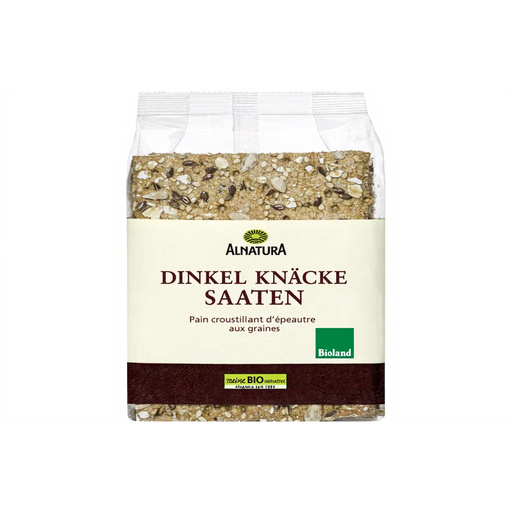
Alnatura organic spelt crispbread with seeds 200 g
A spelt option with seeds for anyone considering a different combination of ingredients alongside rye crispbread. If you have specific dietary requirements, check the ingredients and allergen information on the pack; don’t rely on a general description of the recipe alone.
View at Joybuy
 No image available
Wasa Sesame & Linseed crispbread 210 g
A seeded option for anyone who wants to include sesame and linseed in their selection. If fibre content is important to you, compare the value per 100 g on the pack. If you have allergies, check the ingredients and ‘may contain’ information too.
View at Joybuy
 No image available
Wasa sourdough rye crispbread 235 g
A rye option made with sourdough for anyone who likes this recipe with savoury toppings. Check the ingredients and nutritional information per 100 g to see whether it meets your wholegrain and fibre criteria; rye is not gluten-free.
View at Joybuy
Frequently asked questions
How can I identify wholegrain crispbread for fakeaway night?
Look for ‘wholegrain’ in the product description and read the ingredients, rather than relying on the colour or visible grains. The German Nutrition Society highlights the importance of the wholegrain description. Fibre per 100 g is also useful when comparing individual packs.
Is wholegrain rye crispbread gluten-free?
No. Rye contains gluten, as the German Celiac Society explains. If you need to follow a gluten-free diet for medical reasons, standard rye crispbread isn’t suitable. For alternatives, check for an explicit gluten-free label and read the allergen information.
When should I add toppings to crispbread if they’re moist?
Add them shortly before serving if you want to keep the crispbread crunchy. Follow the product’s instructions for storing both unopened and opened packs.
What should I check for when serving a shared snack platter to guests with allergies?
Check the ingredients, highlighted allergens and ‘may contain’ information on every pack you use. The Consumer Advice Centre describes ingredients and allergens as important information on packaged foods. On a snack platter, the warnings can vary from one variety to another.


