Households comparing fibre content
You’re looking for a wholegrain base for your coffee break and want to compare the fibre content of different crispbreads using the figures per 100 g.


If fibre is a priority for your coffee break, wholegrain crispbread with a clear ingredient list and comparable nutritional information per 100 g is a good place to start. Plain rye varieties and seeded crispbreads differ in their ingredients and nutritional values, so your preferred taste, toppings and the allergen information on the specific pack also matter.
You’re looking for a wholegrain base for your coffee break and want to compare the fibre content of different crispbreads using the figures per 100 g.
You prefer the taste of rye and a short ingredient list, so you can pair your crispbread with a range of sweet or savoury toppings. The plain rye varieties described by REWE contain wholegrain rye flour, salt and yeast.
You’d like to choose a seeded crispbread for your coffee break and compare not just the protein content, but also fat, energy and the declared allergens.
First, check which grains and other ingredients are included. Then compare the nutritional values per 100 g and, if you have an intolerance, read the information on the specific pack.
| What to check | What to look for | Who it matters most to |
|---|---|---|
| Wholegrain and fibre | Look for wholegrain cereals in the ingredients list and compare fibre per 100 g. | If fibre is my priority for a coffee break, I want to compare the figures on different packs directly. For around 36% of consumers, this is the most important factor when choosing. |
| Rye flavour and ingredients | Check the order of ingredients and the salt content per 100 g; decide between a plain rye variety and one with a heartier texture. | I want a rye flavour and a straightforward recipe to go with a variety of toppings. Around 29% of consumers put this first. |
| Seeds and texture | Check the ingredients list for seeds, and look at protein, fat and energy per 100 g. | If I want a heartier base to enjoy with coffee, texture matters more to me than a particularly simple recipe. This is the main priority for around 21% of consumers. |
| Allergens and labelling | Check which cereals and whether sesame are included, as well as any may contain warnings on the current pack. | If I have a relevant intolerance, I need to know which ingredients and allergen warnings apply to this product. Around 14% of consumers prioritise this. |
The label alone is no substitute for checking the nutrition information: REWE lists 20 g of fibre per 100 g for Wasa Vollkorn Roggen, compared with 11.4 g per 100 g for its Bio Naturland Vollkorn Knusperknäcke mit Saaten.
Compare the declared fibre content and, if relevant, the salt, fat and energy figures per 100 g too.
The Bio Naturland Vollkorn Knusperknäcke described by REWE contains seeds and provides 19.5 g of fat per 100 g, alongside 15.3 g of protein. One nutritional value on its own doesn’t tell you everything about the recipe.
Choose according to the taste and texture you want, and read the full nutrition information and ingredients list.
The rye and wheat products described contain cereals with gluten; seeded products may also contain sesame. May contain warnings should be distinguished from ingredients.
If gluten, sesame or other allergens are relevant to your choice, check the information on the current pack.
ALDI SÜD notes that its GOLDÄHREN Vollkorn-Knäckebrot may come from different suppliers and that its nutritional values can vary.
For this product, check the information on the pack you’re actually planning to buy.
Wasa Vollkorn Roggen is a plain rye option for coffee breaks with a variety of toppings.
Burger Das Landknäcke Vollkornkross has a wholegrain rye recipe.
Bio Naturland Vollkorn Knusperknäcke combines wholegrain cereals with sunflower seeds, sesame and linseeds.
GOLDÄHREN Vollkorn-Knäckebrot is a supermarket own-label option to compare with the information on the pack.
EDEKA describes its GUT&GÜNSTIG Knäckebrot Vollkorn as a wholegrain crispbread with a resealable pack.
This selection includes plain rye varieties as well as seeded crispbreads for your coffee break. Compare the ingredients list, nutrition information and allergen labelling for each product before choosing.
 No image available
An option if you’re looking for a variety made with oats and sesame to enjoy with your coffee.
Pack size: 230 g. Before buying, check the latest fibre information and the labelling for sesame and cereals containing gluten.
 No image available
A rye option for anyone who wants a plain base to pair with different toppings during a coffee break.
Pack size: 260 g. REWE lists wholegrain rye flour, salt and yeast as ingredients for Wasa Vollkorn Roggen, as well as 20 g of fibre per 100 g. The product contains rye.
 No image available
A sesame variety if you’d like to choose between plain crispbread and seeded options for your coffee break.
Pack size: 250 g. Compare the fibre content per 100 g and, if necessary, check the current allergen information.
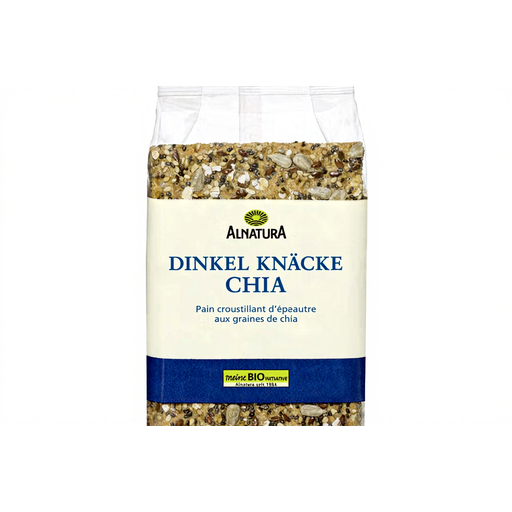 No image available
A spelt variety with chia seeds for anyone looking for a different combination of grain and seeds to enjoy with coffee.
Pack size: 200 g. If fibre or allergens are important to your choice, check the relevant information on the current pack.
 No image available
A seeded option for your coffee break if you prefer sesame and linseed to a plain rye recipe.
Pack size: 210 g. For a fibre comparison, and if you have any relevant allergies, the information on the current pack is what matters.
Read the types of cereal in the ingredients list and compare the declared fibre content per 100 g. According to the German Food Federation, using the same reference amount makes it easier to compare packaged foods.
Wholegrain crispbread isn’t automatically gluten-free: the rye and wheat varieties described here contain cereals with gluten. If you need to avoid gluten, check the ingredients and labelling on the specific pack rather than relying on the word “wholegrain”.
No, the presence of seeds alone doesn’t tell you that. REWE lists 11.4 g of fibre per 100 g for its seeded Bio Naturland Vollkorn Knusperknäcke, compared with 20 g per 100 g for Wasa Vollkorn Roggen. So compare the figures for the products you’re actually choosing between.
According to the German Food Federation, a may contain warning doesn’t mean the named allergen must be present in the food, but its presence cannot be ruled out with certainty. Distinguish the warning from the listed ingredients and, if you have an allergy, check the current pack information.
Store it in a dry place and reseal the pack securely after opening. Also follow the storage instructions on the individual pack.