Households keeping an eye on fibre
If you’re looking for wholegrain crispbread for a savoury breakfast, you can compare the fibre per 100 g. The term ‘wholegrain’ alone doesn’t tell you the exact amount.


Plain wholegrain rye crispbread is a natural base for a variety of savoury toppings, especially if you’re looking for a short ingredient list. If you’d prefer a stronger flavour and more crunch, try a seeded variety. To decide, compare the fibre and salt per 100 g, as well as the ingredients and allergen information on the specific pack.
If you’re looking for wholegrain crispbread for a savoury breakfast, you can compare the fibre per 100 g. The term ‘wholegrain’ alone doesn’t tell you the exact amount.
If gluten, sesame or other allergens affect your choice, check the information on the specific pack. Even a short ingredient list doesn’t replace this check.
Plain rye crispbread can work well with a range of savoury spreads. If you’d like seeds and a stronger flavour, check the fat content and ingredients of the variety you choose too.
First choose between a plain variety and one with seeds. Then compare the pack information that matters to your household.
| Criteria | What to check when buying | Who it matters most to |
|---|---|---|
| Wholegrain and fibre | Check the ingredient list for wholegrain ingredients and compare fibre per 100 g. | If fibre is a priority at breakfast, I want to know the exact amount rather than just the variety name. Around 42% of consumers put this first. |
| Ingredients and allergens | Read the current ingredient list, highlighted allergens and any ‘may contain’ statements. | If I need to avoid certain ingredients, I need a pack whose information meets my requirements. For around 33% of consumers, this check comes first. |
| Flavour and toppings | Choose between plain rye crispbread and a seeded variety; compare fat and salt per 100 g too. | Whether the bread should complement my savoury toppings or have a strong flavour of its own will shape my choice. Around 25% of consumers focus on this first. |
Fibre content varies from product to product: ALDI SÜD lists 15.3 g of fibre per 100 g for its GOLDÄHREN wholegrain crispbread, while REWE lists 19 g per 100 g for a Leksands wholegrain crispbread.
Compare the nutrition information per 100 g, and take the ingredients and salt into account too.
Seeds change the ingredient profile. According to its product information, a three-seed crispbread listed by REWE contains sesame, as well as 22 g of fat and 11 g of fibre per 100 g.
Choose based on the flavour you want and the information for the specific variety. Check the pack for sesame and any other relevant allergens.
EDEKA notes that online information may differ from what’s on the pack. ALDI SÜD says its crispbread may come from different suppliers, with corresponding variations in nutritional values.
For your final choice, check the ingredients and nutrition information on the pack you’re actually buying.
REWE lists Wasa Wholegrain Rye as wholegrain rye crispbread.
On its UK product page, Ryvita describes Dark Rye Crispbread as a rye variety.
EDEKA describes its wholegrain crispbread as containing 95% wholegrain rye flour, water and salt.
ALDI SÜD sells GOLDÄHREN wholegrain crispbread in a 250-g pack.
This selection includes plain rye, sesame and savoury seasoned crispbread to suit a range of breakfast toppings. Compare the information on each pack rather than assuming products have the same ingredients or nutritional values because they share a brand name.
 No image available
A savoury breakfast option if oats and sesame are what you’re looking for. If you have relevant allergies, check the ingredients and ‘may contain’ information on the current pack.
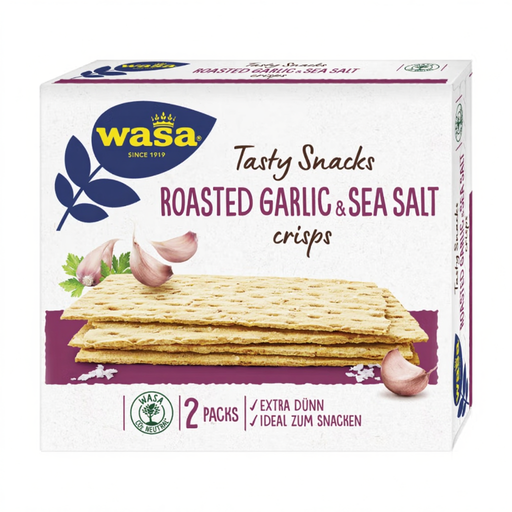 No image available
A seasoned option if you like garlic and sea salt with savoury toppings. Pay particular attention to the salt per 100 g and check the allergen information on the pack.
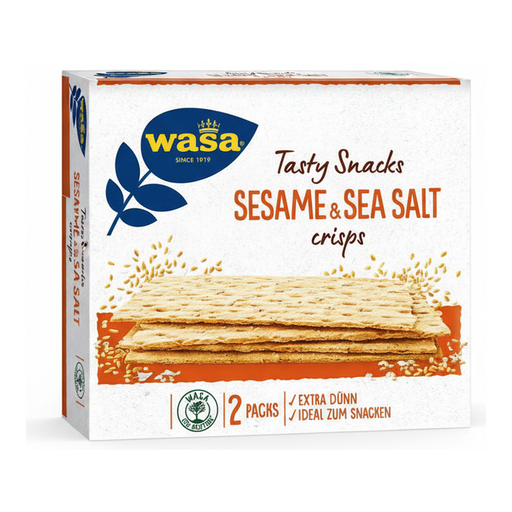 No image available
For anyone looking for a sesame variety to go with savoury toppings. Sesame is part of this named variety; also compare the fat and salt per 100 g using the pack information.
 No image available
A wholegrain rye option for a variety of savoury toppings. Rye contains gluten. For a fibre comparison, or if you have relevant allergies, check the information on the current pack.
 No image available
A sesame variety for savoury toppings if you’d like the crispbread’s own flavour to play a part. It isn’t suitable if you have a sesame allergy; check the pack for other ingredients and nutritional values.
No. Rye is a gluten-containing grain. If you need to avoid gluten for medical reasons, don’t choose rye crispbread; check the labelling of a suitable alternative instead.
Check the ingredients list and highlighted allergens on the specific pack. Prepacked foods in the EU must meet labelling requirements, and any additional ‘may contain’ statements may also matter to your choice.
No. Fibre content can vary between wholegrain varieties. Compare the nutrition information per 100 g and take salt, ingredients and allergens into account too.
Keep it dry and in a well-sealed container, and follow the instructions on the pack. REWE also recommends storing Wasa Wholegrain Rye away from light.