When choosing wholegrain crispbread for a toddler, your child’s individual ability to chew and swallow safely matters more than comparing fibre content. A wholegrain label does not mean that a child can safely manage its hard, crunchy texture. For the family breakfast, the key things to check on the specific pack are the wholegrain ingredients, nutritional values per 100 g, salt and allergens.
Who this choice is relevant to
Families looking at wholegrains and fibre
If you’re comparing crispbreads for a shared breakfast, you can compare their wholegrain ingredients and fibre values per 100 g. But this nutritional comparison alone won’t tell you whether a particular crispbread is suitable for your toddler.
Parents who need to consider texture
Before choosing a variety for your toddler, consider whether they can safely chew and swallow hard, crunchy crispbread. If your child has, or may have, swallowing difficulties, seeking professional advice is more important than relying on a product description.
Families focused on ingredients or allergens
If rye, other gluten-containing cereals or sesame are relevant to your choice, check the ingredients list and precautionary allergen information on the pack you’re actually buying. Similar product names are no substitute for checking the pack.
What to look for when buying
If you’re planning to offer the crispbread to a toddler, first consider their individual ability to chew and swallow safely. This comes before comparing wholegrain content and nutritional values. You can then narrow down your options using the information on the specific pack.
| Criterion |
What to check when buying |
Who it matters most to |
| Ability to chew and swallow |
Don’t assume the hard, crunchy texture is suitable based on wholegrain or nutritional information. Seek professional advice if your child has swallowing difficulties. |
If my toddler can’t yet safely manage hard pieces, I need to work this out before choosing any variety. This is the top priority for around 36% of consumers. |
| Wholegrains and fibre |
Look for wholemeal flour or wholegrain meal in the ingredients list, and compare fibre values using the same measure, such as per 100 g. |
For our family breakfast, I want to know which varieties actually contain wholegrain ingredients, rather than be swayed by a dark colour. Around 29% of consumers prioritise this. |
| Ingredients, allergens and salt |
Check the ingredients list, declared allergens, possible traces and salt value per 100 g on the specific pack. |
If certain cereals or sesame are relevant to us, I need the details for that exact pack. Checking ingredients and allergens is the priority for around 21% of consumers. |
| Pack size and availability |
Check the pack size, the variety you’ve chosen and the information on the pack in front of you. Bear in mind that own-label products may change suppliers. |
I want to be able to find a variety again and check its current packaging before breakfast. Around 14% of consumers prioritise this practical aspect of buying. |
Common comparison pitfalls
-
Assuming wholegrain means suitable for toddlers
A high fibre value doesn’t tell you whether a particular child can safely chew and swallow the hard, crunchy texture.
Assess your child’s individual ability to chew and swallow before offering it. Seek professional advice if they have, or may have, swallowing difficulties.
-
Taking a dark colour as proof that it’s wholegrain
The German Nutrition Society points out that the colour of cereal products can be misleading.
Look for the wholegrain label and wholemeal flour or wholegrain meal in the ingredients list.
-
Confusing ingredients with precautionary allergen information
Rye listed as an ingredient and a warning about possible traces of sesame describe different things. If you need to take allergens into account, read both separately.
Check the details on every pack you buy, rather than relying on a similar variety or a pack you bought previously.
-
Assuming own-label information never changes
ALDI SÜD notes that GOLDÄHREN Wholegrain Crispbread may come from different suppliers, and that nutritional values may vary.
Before buying, check the current ingredients list, allergen labelling and nutritional information, including salt.
Brands and product ranges to consider
The details below relate to specific documented varieties, not every product from each brand. For a toddler’s breakfast, the texture still needs to be assessed separately, regardless of these product features.
Wasa
Wasa Wholegrain Rye is a wholegrain rye variety with ingredient and nutritional information available.
- Wasa states that it is 100% wholegrain and contains 20 g of fibre per 100 g. The ingredients listed are wholegrain rye flour, yeast and salt.
- The variety is described as extra crunchy, contains rye and may contain traces of sesame according to the product information. This does not mean it is generally suitable for toddlers.
EDEKA Bio
This wholegrain rye crispbread is an organic variety sold in a 250-g pack.
- EDEKA24 lists 94% wholegrain rye flour, water and sea salt as ingredients, and DE-ÖKO-001 as its inspection body code.
- When checking allergens, bear in mind that it contains rye and may contain traces of sesame and other gluten-containing cereals. Use the nutritional information on the pack to compare fibre values.
GOLDÄHREN
GOLDÄHREN Wholegrain Crispbread is an own-label variety described by ALDI SÜD and sold in a 250-g pack.
- ALDI SÜD lists 15.3 g of fibre per 100 g for the variety described.
- According to ALDI SÜD, different suppliers may be used, so nutritional values can vary. Always check the specific pack you’re buying.
Linea Natura
REWE describes Linea Natura Organic Wholegrain Rye Crispbread as an organic variety sold in a 200-g pack.
- REWE lists DE-ÖKO-063 as the inspection body code for this variety.
- If you want to compare ingredients, allergens or fibre with other varieties, check the information on the specific pack.
Crispbread selection at Joybuy
This selection includes Wasa crispbreads with a wholegrain focus, as well as varieties whose wholegrain ingredients can be checked as part of your comparison. For a toddler, you’ll also need to make sure they can safely manage the specific crunchy texture.
 Image unavailable
Wasa Whole Grain Rye crispbread, 260 g
For comparing wholegrain rye crispbreads for a family breakfast, Wasa states that Wholegrain Rye is 100% wholegrain and contains 20 g of fibre per 100 g. The ingredients listed are wholegrain rye flour, yeast and salt. Before offering it to a toddler, consider the crunchy texture and check the labelling on the specific pack.
View at Joybuy
 Image unavailable
Wasa Delicate Crisp Oats & Sesame crispbread, 230 g
If you’re considering an oat and sesame variety, it’s particularly important to check the ingredients and allergen information on this 230-g pack. Read the nutritional values per 100 g before comparing fibre, and assess the crunchy texture separately for your toddler.
View at Joybuy
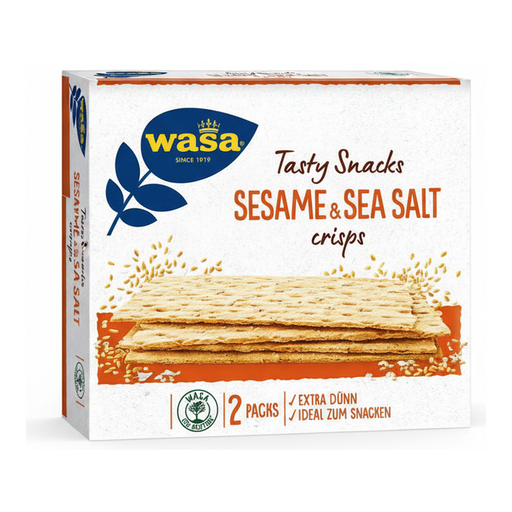 Image unavailable
Wasa Round Sesame & Sea Salt crispbread, 190 g
For this sesame and sea salt variety, check the wholegrain ingredients, salt value per 100 g and allergen labelling as part of your comparison. As with other varieties, the name alone can’t tell you whether the crunchy texture is suitable for a particular toddler.
View at Joybuy
 Image unavailable
Wasa Sesame & Flaxseed crispbread, 210 g
If you’re considering the sesame and flaxseed variety, check its wholegrain content, ingredients and allergens on the 210-g pack. For a fibre comparison, use the value per 100 g shown on the pack, rather than relying on the variety’s name.
View at Joybuy
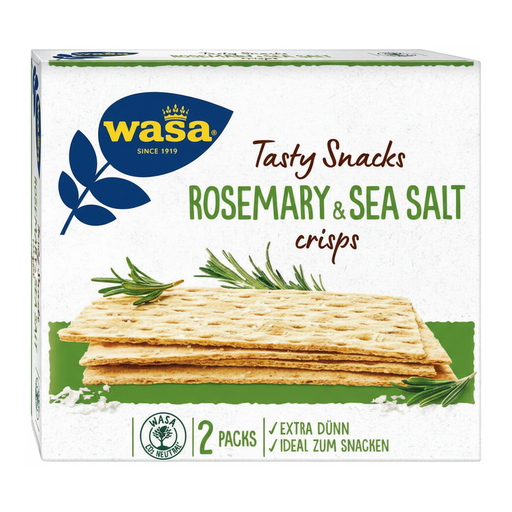 Image unavailable
Wasa Round Rosemary & Sea Salt crispbread, 190 g
For the rosemary and sea salt variety, compare the wholegrain ingredients and salt value per 100 g, particularly if you’re choosing it for a family breakfast. If your toddler will be eating it too, consider their individual ability to chew and swallow safely.
View at Joybuy
Frequently asked questions
How can I spot wholegrain crispbread when shopping?
Look for a wholegrain label and wholemeal flour or wholegrain meal in the ingredients list, rather than judging by colour alone. The German Nutrition Society notes that a dark colour can be misleading. Nutritional values per 100 g are also useful when comparing individual varieties.
What should I check for allergens on the pack?
Read the ingredients list and any precautionary allergen information separately. Rye is a gluten-containing cereal, while a warning about possible traces of sesame does not mean sesame has been deliberately added as an ingredient. For a diagnosed allergy or coeliac disease, follow the advice of your healthcare professional on which information is relevant.
How can I include wholegrains in a family breakfast?
Wholegrain products can be part of a varied family breakfast. If your diet has previously been low in fibre, the German Nutrition Society recommends increasing it gradually and drinking enough fluids. Whether hard crispbread is suitable for a toddler should be considered separately, based on their ability to chew and swallow.
How should I store crispbread after opening?
Keep it dry as directed on the pack and reseal the packaging once opened. Wasa and EDEKA recommend storing the varieties described in a dry place; additional storage instructions may vary by product.


