A breakfast with a clear wholegrain content
You want to compare wholegrain ingredients and fibre using the ingredients list and nutritional information, without spending ages preparing something in the morning.


For a quick breakfast, baked wholegrain granola is an option if you want something crunchy without any preparation; a wholegrain base muesli gives you more control over sweetness and ingredients. Don’t choose based on the word ‘wholegrain’ alone: compare the exact ingredients, nutritional information and, where necessary, the allergen advice on the pack.
You want to compare wholegrain ingredients and fibre using the ingredients list and nutritional information, without spending ages preparing something in the morning.
You’re looking for a ready-made topping for yoghurt or porridge, or a snack to take with you, and want to know how the mix is sweetened.
You pay particular attention to sugar, nuts, sesame, milk or gluten-containing cereals, so you check the information for the specific variety rather than relying on its name alone.
First, choose between a muesli you can customise and a ready-baked, crunchy mix. Then check the wholegrain ingredients, sweeteners and any information that matters particularly to your diet. A granola with kernels and seeds can also be one of the baked varieties.
| Criteria | What to check | Who it matters most to |
|---|---|---|
| Wholegrains and fibre | Which wholegrain ingredients are listed and their proportion; fibre per 100 g. | If wholegrains are a priority for your breakfast, you’ll want to be able to check their proportion on the pack. This is the main concern for around 36% of consumers. |
| Quick to enjoy | Whether the mix is ready to eat or works as a topping for your breakfast; storage instructions after opening. | If you don’t have time to soak or prepare anything, you’ll want something crunchy to take with you or quickly add to yoghurt. Around 29% of consumers value this most. |
| Sweetness and sugar | Sugar per 100 g and ingredients such as syrup or dried fruit; check sweetening claims for the specific variety only. | If you want to control the sweetness, you’ll need to distinguish between added sweeteners and sugar from fruit. This takes priority for around 21% of consumers. |
| Allergens and ingredients | Allergens in the ingredients list and any may-contain warnings on the current pack. | If you need to avoid certain ingredients, the labelling on the exact variety is what matters. Around 14% of consumers put this check first. |
Wholegrain content and sugar content describe different things. REWE states that Kölln Granola Früchte contains 75% wholegrain; the recipe also includes agave syrup.
Compare the stated wholegrain content with the sugar per 100 g and the ingredients list for the same variety.
Oats and sesame, among other ingredients, are relevant to EDEKA Bio Kerne & Saaten-Granola; possible traces of other allergens may also affect your choice.
If you have an allergy, check the ingredients and may-contain warnings on the current pack of the specific variety.
EDEKA states that its Bio Kerne & Saaten-Granola contains 556 kcal and 37.2 g of fat per 100 g. The amount you use as a topping also matters when considering your breakfast.
Compare the nutritional information per 100 g and calculate the values for the portion you actually eat.
The differences below relate to specific product types and varieties, not to a brand’s entire range.
Kölln offers both base muesli and baked granola. The key to choosing is deciding which type of product you’re looking for.
Its fruit muesli is an alternative if you’d prefer wholegrain flakes and dried fruit to baked granola.
Zuckerarm muesli is an option for a less fruity muesli base, rather than a substitute for crunchy granola.
Bio Kerne & Saaten-Granola is a variety with a high proportion of kernels and seeds, with nutritional information available.
The retailer stocks muesli, crunchy muesli and granola as different product types.
Brüggen is a relevant manufacturer to consider when comparing product types, as it produces breakfast cereals and own-label products.
This selection includes crunchy mueslis and a fruit muesli for a quick breakfast. The product type in the name can help you make an initial choice; compare the information on each pack for wholegrain content, nutritional values and allergens.
 No image available
A crunchy muesli for breakfast with milk or yoghurt. If ‘Less Sweet’ matters to your choice, compare the sugar and allergen information on the pack.
 No image available
A crunchy oat muesli for a quick and easy breakfast. If you’re looking for wholegrain ingredients or a particular level of sweetness, check the ingredients list and nutritional information for this variety.
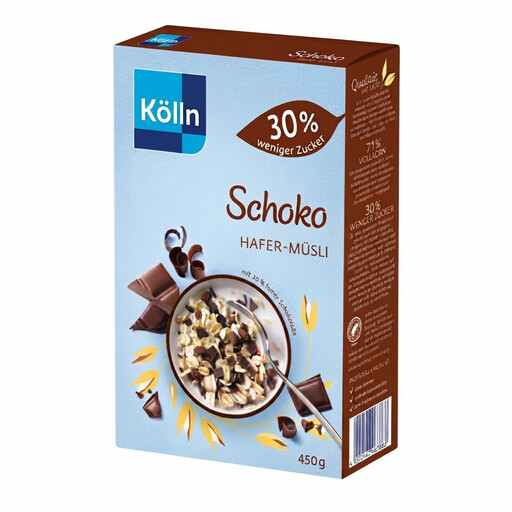 No image available
A chocolate oat muesli for when you fancy something crunchy in the morning. The ‘30% Less Sugar’ claim doesn’t replace checking the sugar per 100 g and the ingredients on the specific pack.
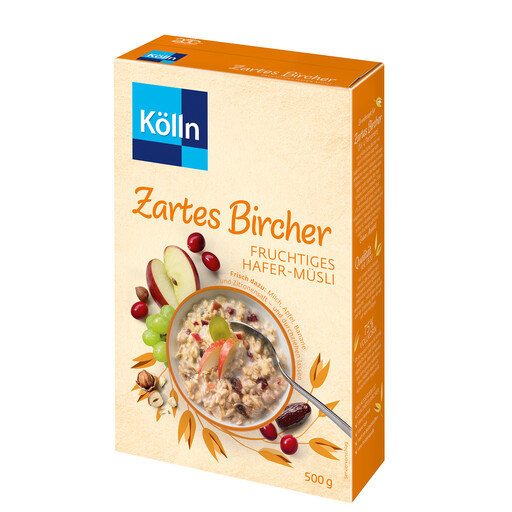 No image available
A fruit muesli for a quick breakfast with milk or yoghurt, if crunchy baked pieces aren’t what you’re after. For this variety, pay particular attention to the fruit ingredients, sugar content and allergen advice.
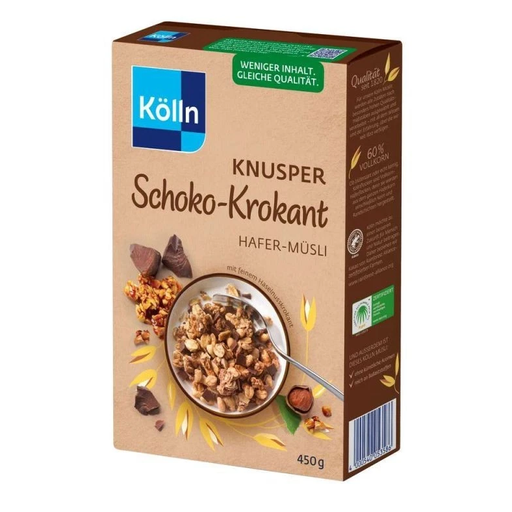 No image available
A crunchy oat muesli with chocolate and caramel for breakfast or as a snack. If sweetness influences your choice, compare the sugar content and ingredients with those of other varieties.
Look for wholegrain ingredients listed explicitly and, if stated, their proportion in the specific variety. The German Nutrition Society points out that the colour of a cereal product is not a reliable indicator of wholegrain content.
No. Wholegrain content and sugar content need to be considered separately. Compare the sugar per 100 g and check whether ingredients such as syrup or dried fruit are included.
Baked granola can be eaten without preparation if the specific variety is also intended as a snack. If you want to have it with yoghurt or a drink, remember to plan how you’ll carry and store those ingredients.
Check the specific pack for gluten-containing cereals, tree nuts, sesame, milk or soya, if these ingredients are relevant to you. Read any may-contain warnings too; the word ‘organic’ doesn’t replace these checks.
Follow the storage instructions on the pack and seal it well after opening. For Kölln Granola Früchte, the advice is to store it in a cool, dry place away from heat and keep the bag tightly sealed.