Who is this choice relevant to?

Breakfast planners who are watching their sugar intake

You want to start with a wholegrain base and add your own fruit, yoghurt or plant-based drink. To help you choose, compare the sugar per 100 g and the sweetening ingredients rather than relying on the front of the pack alone.

Fans of crunchy muesli

You want to add something crunchy to milk, yoghurt or a plant-based drink in the morning, without any extra preparation. With baked mixes, oil and sweetening ingredients are also part of your buying decision.

Shoppers with specific ingredient requirements

You may need to avoid certain grains, nuts or milk ingredients, or take possible traces into account. Claims such as ‘vegan’ or ‘wholegrain’ don’t replace checking the specific product’s ingredients and allergen information.

What should you look for when buying?

First, decide whether you want a muesli base you can customise or a baked, crunchy mix. Then compare the nutritional information per 100 g and the ingredients of the products you’re considering.

What matters to you What to check Who it matters to
Wholegrain and fibre Compare the stated wholegrain content and fibre per 100 g, and check which grains are used. If a clear wholegrain base matters more to me than extra flavour ingredients, I want to be able to identify its proportion. Around 42% of consumers would prioritise wholegrain and fibre.
Sugar and sweetening ingredients Check the sugar per 100 g and ingredients such as syrup, honey or dried fruit. When putting together my own breakfast, I want to know how much sugar is already in the mix. Around 33% of consumers would prioritise checking the sugar content.
Ingredients and allergens Read the ingredients list, highlighted allergens and, where applicable, trace warnings for the specific product. If I need to avoid certain ingredients, the composition determines whether a product is suitable for me. Ingredients and allergens would be the top priority for around 25% of consumers.

Common buying misconceptions

  • High wholegrain content means low sugar

    These need to be assessed separately. REWE’s product information for Kölln Granola Früchte lists 75% wholegrain oats, but also 9.8 g of sugar per 100 g and agave syrup as an ingredient.

    Compare the wholegrain content and sugar separately. Only then decide whether the baked, fruity mix suits your priorities.

  • A claim about fruit sweetness is no substitute for nutritional information

    Dried fruit and sweetening ingredients can contribute to the sugar content. A description of the flavour therefore doesn’t tell you how much sugar the product contains per 100 g.

    Read the nutritional information and the full ingredients list, even if the front of the pack highlights a particular type of sweetness.

  • Vegan means free from relevant allergens

    A vegan recipe may still contain, for example, gluten-containing grains or nuts. For Kölln Granola Cashewkerne, Mandeln & Saaten, REWE lists cashews and almonds, as well as possible traces of other nuts and milk.

    If you need to avoid certain ingredients, check the labelling on the specific pack, including any trace warnings. Don’t rely on the ‘vegan’ claim alone.

  • Treating granola and plain flake muesli as the same thing

    Baked granola and unbaked muesli mixes have different recipes. Brüggen says its crunchy muesli varieties are mixed with syrup before baking, but this doesn’t tell you the nutritional values of another product.

    For each mix, compare the information per 100 g and bear in mind how much you actually put in your bowl.

Brands and product ranges to consider

Kölln

Kölln offers both a wholegrain muesli base and baked granolas. The recipe of each product matters more than the brand name alone.

  • Kölln states that its Mühlenklassiker Vollkorn Basis-Müsli contains 88% wholegrain and has ‘no added sugar’. The Granola Früchte and Cashewkerne, Mandeln & Saaten products stocked by REWE have different wholegrain contents and ingredients.
  • A stated wholegrain content doesn’t tell you the sugar or fat content, or whether the product contains nuts. So compare the specific variant.

Seitenbacher

Müsli zuckerarm is a wholegrain-based breakfast mix that you can customise. It isn’t baked cluster granola.

  • According to Seitenbacher, this muesli contains 1 g of sugar, 9 g of fibre and 15 g of protein per 100 g.
  • The ingredients include almonds. If you need to avoid nuts or are specifically looking for baked clusters, bear these points in mind when choosing.

Alnatura

Alnatura Früchtemüsli combines wholegrain cereal flakes with dried fruit. It’s a fruit muesli, not baked granola.

  • Alnatura states that this product contains 40% dried fruit and has a vegan recipe.
  • The fruit content doesn’t indicate that the overall sugar content is low. Alnatura also notes possible traces of soya, milk, almonds, nuts, sesame and lupin.

Brüggen

Brüggen is included here as a manufacturer that provides insight into crunchy muesli recipes, not as a recommendation for a particular pack of granola.

  • Brüggen describes its crunchy muesli varieties as being made by mixing cereal ingredients with syrup before baking.
  • This production method doesn’t tell you the ingredients or nutritional values of an individual product, so always check the specific pack.

Muesli options to compare

This selection includes crunchy and fruity mueslis for a quick breakfast. If you’re specifically looking for baked granola or a wholegrain base with a simple ingredients list, check the exact product type and the information on each pack.

Dr. Oetker Vitalis Less Sweet Pure Crunchy Muesli, 600 g

Dr. Oetker Vitalis Less Sweet Pure Crunchy Muesli, 600 g

A crunchy muesli option for breakfast. Despite the ‘Less Sweet’ name, compare the sugar per 100 g and check the ingredients and allergen information on the pack.

View on Joybuy

Jeden Tag Less Sweet Crunchy Oat Muesli, 750 g

Jeden Tag Less Sweet Crunchy Oat Muesli, 750 g

For shoppers looking for a crunchy oat muesli. Check the stated wholegrain content alongside the sugar per 100 g, ingredients and any possible trace warnings.

View on Joybuy
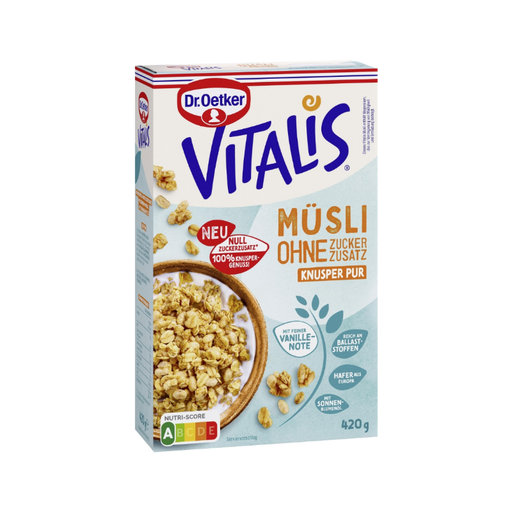
Dr. Oetker Vitalis No Added Sugar Crunchy Muesli, 420 g

Dr. Oetker Vitalis No Added Sugar Crunchy Muesli, 420 g

For a crunchy muesli where you want to compare the sugar information closely. The ‘No Added Sugar’ claim is no substitute for checking the sugar per 100 g or reading the full ingredients and allergen information on the pack.

View on Joybuy
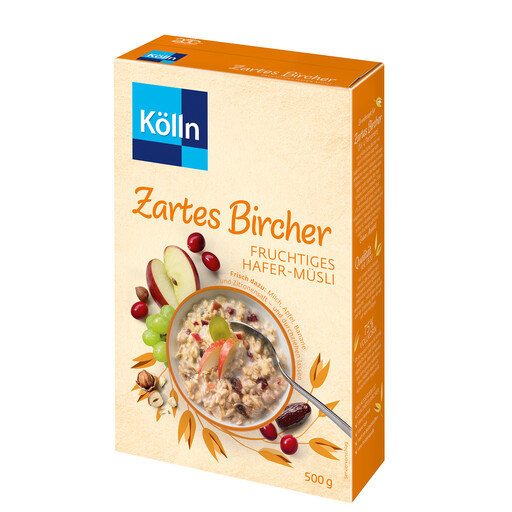
Kölln Bircher Fruit Muesli, 500 g

Kölln Bircher Fruit Muesli, 500 g

A fruity muesli option rather than explicitly baked granola clusters. Assess the sugar content separately from the wholegrain content, and check the pack for nuts and other allergens if needed.

View on Joybuy
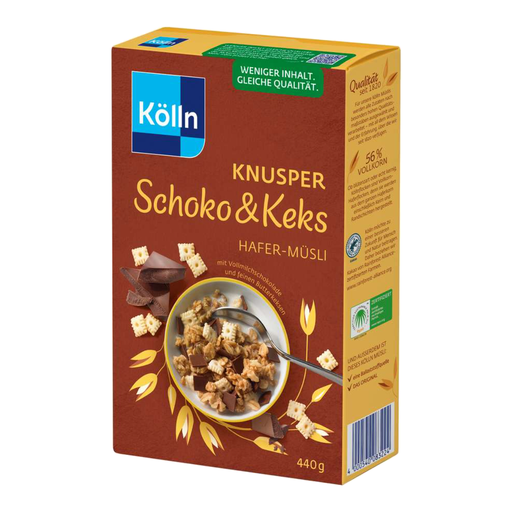
Kölln Crunchy Chocolate & Biscuit Oat Muesli, 440 g

Kölln Crunchy Chocolate & Biscuit Oat Muesli, 440 g

For shoppers looking for a crunchy muesli with chocolate and biscuit pieces. If sugar content or specific allergens affect your choice, check the nutritional information and labelling on the particular pack.

View on Joybuy

Frequently asked questions

How can I tell how much wholegrain a granola or muesli contains?

Look for a clearly stated wholegrain percentage and check the grains used in the ingredients list. For example, Kölln states that its Mühlenklassiker Vollkorn Basis-Müsli contains 88% wholegrain; according to REWE, Kölln Granola Früchte contains 75% wholegrain oats. These figures apply to those specific products, not every muesli made by the brand.

Does ‘no added sugar’ mean the same as a low sugar content?

No. The claim doesn’t replace the sugar figure in the nutrition table. Compare the sugar per 100 g and read the ingredients list when choosing between a muesli base and a fruity or baked mix.

Is a claim about sweetness from fruit enough when choosing fruit muesli?

No, it doesn’t tell you the total sugar content. Compare the nutritional information per 100 g and check which fruits and other sweetening ingredients are included.

What should I check for allergens in granola?

Check the ingredients and allergen information for the specific product, as well as any trace warnings. Especially in mixes containing grains, nuts and seeds, a claim such as ‘vegan’ doesn’t mean that other ingredients relevant to you have been excluded.

How should I store an opened pack for future breakfasts?

Seal the pack well after opening and follow the storage instructions on the product. Keeping it somewhere dry and away from heat is particularly useful for crunchy mixes.