Breakfast with your own choice of toppings
If you only decide on Sunday whether to add fruit, yoghurt, a plant-based drink or nuts to your bowl, a simple wholegrain base is a versatile starting point.


A simple wholegrain base is a good choice if you want to add your own fruit and other ingredients. If sugar content is your priority, compare the figures per 100 g. Fruit and crunchy mueslis can also contain wholegrains, but their ingredients and nutritional values vary, so check the specific mix and its allergen information.
If you only decide on Sunday whether to add fruit, yoghurt, a plant-based drink or nuts to your bowl, a simple wholegrain base is a versatile starting point.
If you want a crunchy mix, compare the sugar content per 100 g. Claims such as “low sugar”, “no added sugar” and “less sugar” don’t mean the same thing.
If dried fruit or organic ingredients matter to your Sunday breakfast, check the fruit content as well as the sugar level, ingredients and allergen information for the variety you choose.
Choose according to what matters most to you in your breakfast bowl, then compare the ingredients and nutritional information of specific products.
| Criterion | What to check | Who it matters to |
|---|---|---|
| Wholegrain base | Look for wholegrain flakes in the ingredients list and compare the stated wholegrain content of different products. | I want to add my own fruit and sweetness, starting with a clearly labelled wholegrain base. This is the top priority for around 36% of consumers. |
| Sugar content | Compare the sugar content per 100 g; for “no added sugar” products, check for dried fruit too. | I want a ready-made mix that fits my preferred sugar level, even if that means avoiding dried fruit. This is the main criterion for around 29% of consumers. |
| Fruit and recipe | Check the dried fruit content and ingredients; only rely on organic or vegan claims for the specific variety in question. | I want a muesli that’s already fruity, or I pay particular attention to organic ingredients or a vegan recipe when I shop. This takes priority for around 21% of consumers. |
| Crunchiness | For baked mixes, check the ingredients and sugar and fat content per 100 g alongside a flake-based mix. | A crunchy texture is part of my Sunday breakfast, even if the recipe is different from simple flakes. Around 14% of consumers put this first. |
The German Nutrition Society points out that you can’t reliably identify wholegrain products by their colour.
Look for flakes explicitly labelled as wholegrain and check whether a wholegrain percentage is stated.
Dried fruit naturally contains sugar. That means a mix with no added sugar can still have a sugar value listed in its nutritional information.
Compare the sugar content per 100 g and, for fruit muesli, check the ingredients list too.
Brüggen says that its crunchy muesli is made by mixing cereals with syrup before baking. A product’s ingredients and nutritional values depend on its recipe.
For the specific crunchy mix, check the sugar, fat and ingredients per 100 g rather than comparing only the wholegrain claim.
The types of grains, nuts and other ingredients vary between mueslis, even within the same brand.
If you need to avoid certain allergens, read the ingredients and any precautionary allergen information on the pack you’re actually buying.
The range includes simple oat and wholegrain mixes as well as baked crunchy mueslis.
Seitenbacher offers, among other options, a muesli specifically labelled as low sugar.
The range includes a variety of organic mueslis, including wholegrain and fruit mixes.
REWE sells a grape and nut wholegrain muesli under its ja! own-label range.
Brüggen makes a range of muesli styles, including crunchy mixes.
These Joybuy products offer fruity or crunchy muesli options for Sunday breakfast. If wholegrain content or sugar level is important to your choice, compare the ingredients and nutritional information on each pack.
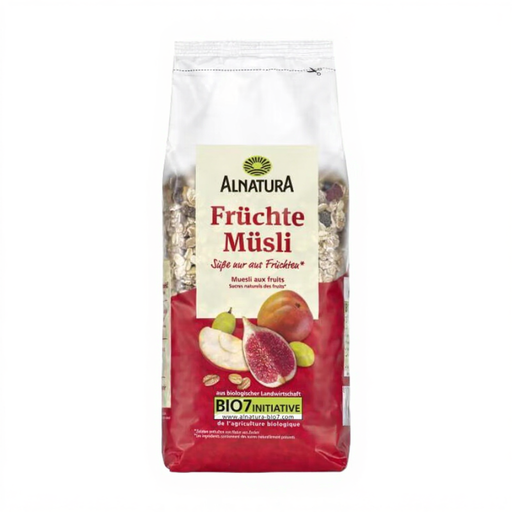 No image available
A fruity muesli option for Sunday breakfast. Check the ingredients on the specific pack, especially if the “4-Nut” part of the name or potential allergens matter to your choice.
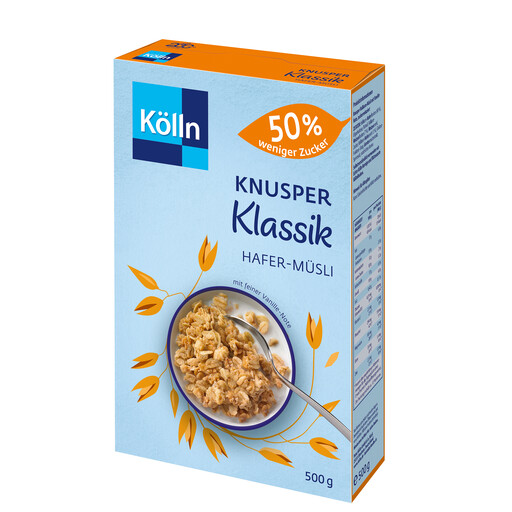 No image available
A crunchy option instead of a simple flake base. The sugar comparison in the product name doesn’t replace checking the actual sugar and fat content per 100 g.
 No image available
A crunchy mix for adding your own fruit to your breakfast bowl. Check the “Less Sweet” claim against the sugar content per 100 g and the ingredients list.
 No image available
A crunchy breakfast option if you want to compare sugar content carefully. Check the nutritional information and ingredients on the pack, as well as the product name.
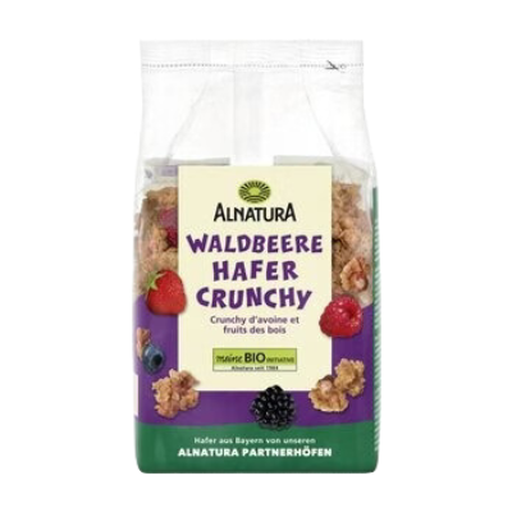 No image available
If you’re looking for a berry flavour and crunch in one mix, compare the actual fruit content with the sugar level per 100 g. As with any variety, check its ingredients and allergen information.
Check the product description and look for flakes explicitly listed as wholegrain in the ingredients. The German Nutrition Society points out that colour alone isn’t a reliable sign of wholegrain.
No. Ingredients such as dried fruit can contain naturally occurring sugar, even when no sugar has been added. The consumer advice centre explains that “low sugar” for solid foods means no more than 5 g of sugar per 100 g; always check the nutritional information when choosing a product.
Yes. If you need to avoid certain ingredients, check the labelling for the specific variety. The Federal Office of Consumer Protection and Food Safety explains how key allergens are labelled in the ingredients list; also check any precautionary allergen information on the pack.
If you don’t usually eat much wholegrain, the German Nutrition Society recommends increasing your intake gradually. For Sunday breakfast, start with a portion that suits your current eating habits.