For weekend mix-and-matchers
You like to combine wholegrain flakes with fresh fruit, yoghurt, nuts or spices. A base without dried fruit lets you choose exactly what goes into your bowl, including how sweet you want it.


If you’d like to choose your own fruit, yoghurt and other ingredients at the weekend, go for a simple wholegrain base without dried fruit. For a fruitier, softer bowl, try Bircher muesli. If you’re considering baked crunchy muesli, compare the sugar and fat per 100 g. Whichever type you choose, make sure the ingredients and allergen information meet your needs.
You like to combine wholegrain flakes with fresh fruit, yoghurt, nuts or spices. A base without dried fruit lets you choose exactly what goes into your bowl, including how sweet you want it.
You prefer a ready-made mix that can be left to soak in milk, yoghurt or a plant-based alternative. Fruit ingredients are part of the flavour you’re looking for.
You want a crunchy mix, but compare the sugar and fat per 100 g and check the ingredients in different varieties before choosing.
First, choose between a base you can mix yourself, a fruity, softer blend or crunchy muesli. Then compare the information on the specific pack. Any particular requirements you have for ingredients or allergens should take priority.
| What to consider | What to check | Who it matters to |
|---|---|---|
| Wholegrain base | Are wholegrain flakes near the top of the ingredients list? Should the mix contain dried fruit, or would you prefer a plain base? | If I want to add my own fruit and other ingredients, I need a base that’s easy to customise. This is the main priority for around 31% of consumers. |
| Sugar and crunch | Compare sugar and fat per 100 g across similar mueslis. A claim such as “less sugar” doesn’t replace checking the nutrition information. | I want a crunchy bowl, but also want to compare the sweetness of different varieties. This is also the main buying priority for around 31% of consumers. |
| Fruit and texture | Check the fruit ingredients and, if necessary, the soaking time needed for the Bircher consistency you want. | At the weekend, I want a fruity mix that softens in milk or yoghurt, rather than having to put each ingredient together myself. This is the top preference for around 23% of consumers. |
| Ingredient requirements | Check the specific variety for highlighted allergens, ‘may contain’ information and, if needed, an explicit gluten-free label. | If there are ingredients I need to avoid, the information on the pack determines my choice. For around 15% of consumers, this is the main buying criterion. |
A high wholegrain content doesn’t, on its own, tell you how much sugar a product contains. Kölln lists 65% wholegrain and 18 g of sugar per 100 g for Knusper Klassik; its “50% less sugar” variety contains 8 g of sugar per 100 g, according to Kölln.
Compare the nutrition information per 100 g and read the ingredients list, rather than relying on the front of the pack alone.
Dried fruit and other fruit ingredients can contribute to the stated sugar content. So the source of the sweetness doesn’t tell you how much sugar the finished muesli contains.
For fruit and Bircher muesli, check both the ingredients and the “of which sugars” figure per 100 g.
Multigrain mixes can contain ingredients such as wheat, barley, rye, nuts or sesame. A wholegrain or oat label is no substitute for checking the specific ingredients.
If you have particular requirements, read the highlighted allergen information and any ‘may contain’ warnings. For a gluten-free option, look for an explicit gluten-free label on the specific pack.
The oat mueslis featured here range from a base you can mix yourself to baked crunchy varieties.
The varieties featured here include ready-made multigrain and Bircher mueslis.
Bircher and fruit muesli are options for a fruity bowl that’s already been put together for you.
The 5-Grain Muesli featured here is a base mix that you can add your own ingredients to.
When comparing familia muesli, the specific variety is what matters for ingredients and nutritional values.
Brüggen makes muesli for supermarket own-label brands, among other products. This doesn’t mean these products all follow the same recipe.
This selection includes a fruity Bircher muesli, several crunchy mueslis and millet flakes as a base for mixing your own. Millet flakes are not a ready-made muesli.
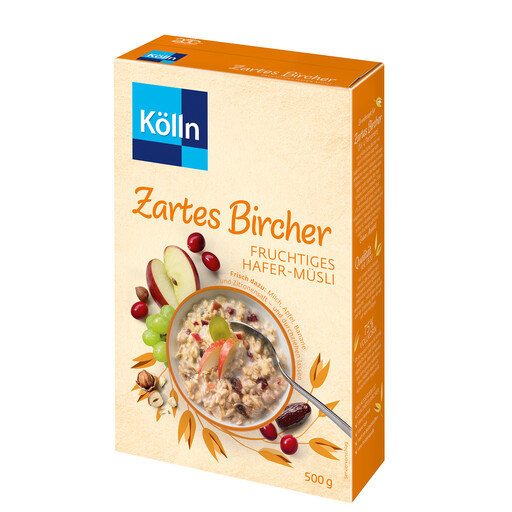 Image unavailable
For anyone looking for a fruity Bircher muesli that’s already been mixed. Check the ingredients, nutrition information and allergen details on the pack before choosing.
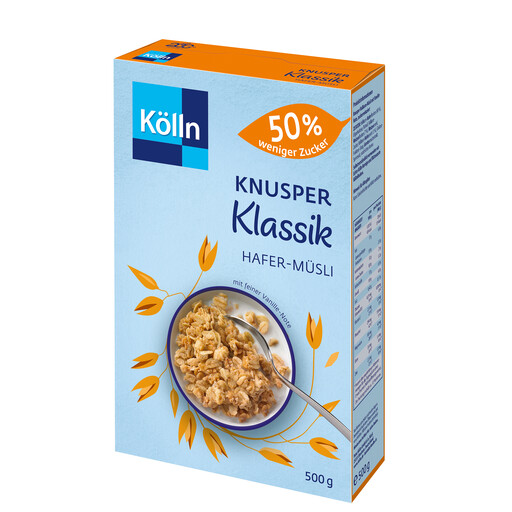 Image unavailable
For a crunchy breakfast bowl if you want to compare the nutritional values with other crunchy mueslis. Kölln states that this variety contains 70% wholegrain and 8 g of sugar per 100 g. “Less sugar” doesn’t mean sugar-free.
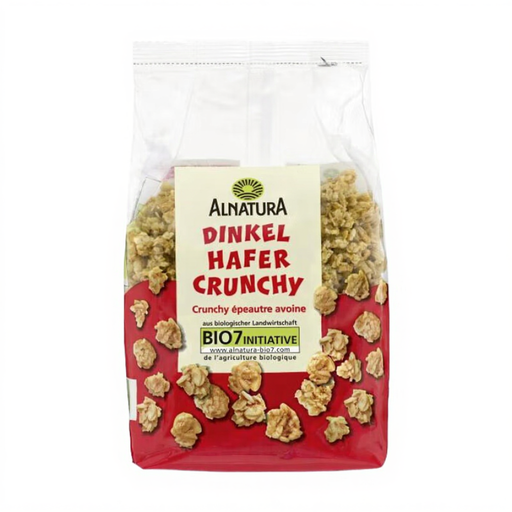 Image unavailable
A ready-made crunchy option for anyone who likes spelt and oats together. Check the sugar per 100 g, as well as the ingredients and allergen information on the specific pack.
 Image unavailable
Another crunchy option to compare with other ready-made mueslis. “Less Sweet” doesn’t specify the sugar content, so check the nutrition information per 100 g.
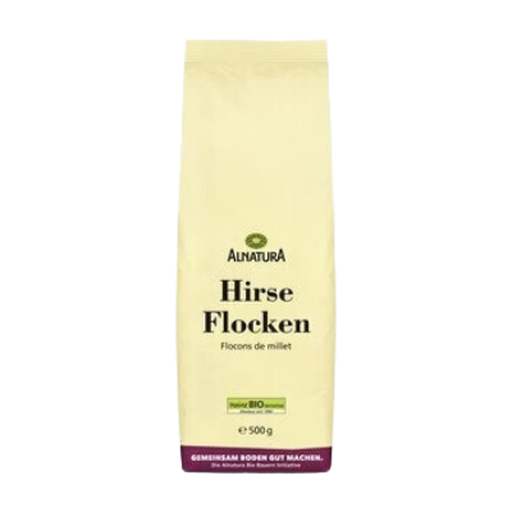 Image unavailable
For anyone who wants to put together their own breakfast mix. These are millet flakes, not ready-made muesli, so you’ll need to add any other ingredients you want.
Look for wholegrain flakes near the top of the ingredients list, and check whether the muesli already contains dried fruit. For example, REWE describes its Bio 5-Grain Muesli as a base mix without dried fruit. The German Federation for Food Law and Food Science explains that ingredients are listed in descending order by weight.
No. Muesli with no added sugar can still contain sugar, for example from fruit ingredients. So as well as checking the claim, read the ingredients list and the “of which sugars” figure per 100 g.
No. Wholegrain mixes can contain ingredients such as wheat, rye or barley. If you need a gluten-free product, check that the specific variety is explicitly labelled gluten-free, as well as checking its ingredients and allergen information.
Mix the Bircher muesli with liquid and leave it to soak, adjusting the time to suit the product and the consistency you want. Alnatura recommends ten minutes for its Bircher muesli; Seitenbacher also suggests soaking it overnight.