People keeping an eye on sugar and wholegrains
You’re looking for a wholegrain muesli with a low declared sugar content and want to check the nutritional information, rather than relying solely on the front of the pack.


For a diabetes-aware breakfast, “wholegrain” or “no added sugar” alone isn’t enough to guide your choice. Compare the ingredients, as well as the sugar, carbohydrates and fibre per 100 g. Seitenbacher’s figures for two low-sugar mueslis list 1 g of sugar per 100 g for each. Even when the sugar content is low, total carbohydrates and the portion you actually eat remain important for your individual meal planning.
You’re looking for a wholegrain muesli with a low declared sugar content and want to check the nutritional information, rather than relying solely on the front of the pack.
If you need to account for carbohydrates in your meal, you’ll need to know not only the amount per 100 g but also the weight of the portion you actually eat. diabetesDE highlights the importance of calculating carbohydrates for people with insulin-dependent diabetes.
You’d like fruit or nuts in your muesli, but don’t want to mistake “no added sugar” for a low total sugar content. Lebensmittelklarheit points out that this claim doesn’t mean “sugar-free”.
Start by comparing the nutritional values per 100 g and the ingredients. Then check the portion you actually eat and whether the specific mix meets your requirements for ingredients and allergens.
| Criteria | What to check | Who it matters to |
|---|---|---|
| Sugar and fibre | Compare sugar and fibre per 100 g, and check which grains are listed as wholegrain in the ingredients. | If I’m looking for a wholegrain base with as little declared sugar as possible, I want to see the fibre content alongside it. This is a priority for around 40% of consumers. |
| Carbohydrates and portion size | Check the carbohydrates per 100 g and calculate the amount for your actual weighed portion. | For my individual meal planning, I need to know how many carbohydrates my portion contains, even if little sugar is listed. Around 30% of consumers put being able to plan their carbohydrate intake first. |
| Fruit and sugar claims | Alongside any “no added sugar” claim, check the total sugar per 100 g and ingredients such as raisins or other dried fruit. | I like fruit muesli, but want to understand how much sugar it contains despite having no added sugar. This is a priority for around 10% of consumers. |
| Allergens | Read the ingredients and allergen information on the current pack, particularly for cereals containing gluten and nuts. | If I need to avoid certain ingredients, the composition determines which mueslis are suitable for me. This check takes priority for around 20% of consumers. |
Dried fruit can contribute sugar to the finished muesli. bio-familia lists 12 g of sugar per 100 g for familia Original Swiss Müesli No Added Sugar.
Compare the sugar and carbohydrate figures per 100 g, and read the ingredients as well as the claim on the front of the pack.
A low sugar content doesn’t tell you how many carbohydrates are in the whole portion. diabetesDE emphasises the importance of calculating carbohydrates for people with insulin-dependent diabetes.
Use the carbohydrates per 100 g to calculate the amount in your weighed portion of muesli, and account for the other parts of your meal according to your individual plan.
A wholegrain mix may contain cereals with gluten and nuts. If you have an allergy or coeliac disease, the specific recipe matters.
Check the highlighted allergens and any “may contain” warnings on the current pack.
Recipes can change. Nestlé specifically notes that information for FITNESS products in shops may differ.
Before buying, check the ingredients and nutritional information on the pack you’ve actually chosen.
The Müsli zuckerarm and Spezial-Müsli 2 ranges are worth comparing for their sugar, fibre and wholegrain ingredients.
Original Swiss Müesli No Added Sugar is a fruit and nut muesli option. Read the no added sugar claim alongside the nutritional information.
These wholegrain flakes are worth considering if you’d like to compare flakes rather than a traditional muesli.
Cini Minis are a cinnamon cereal made with wholegrain wheat flour. Pay particular attention to their sugar and carbohydrate content when comparing them.
For Kellogg's Corn Flakes, it’s worth comparing the specific grain ingredients and nutritional values with those of a wholegrain muesli.
This selection includes oat and spelt flakes, as well as crunchy mueslis. For a diabetes-aware breakfast, compare the nutritional information and ingredients on each pack. Product names alone don’t tell you whether a product suits your individual meal plan.
 No image available
An oat-based option if you’d like to put together your own breakfast. Check the carbohydrates for your portion and, if you have any intolerances, the information on the pack.
 No image available
A crunchy muesli option for anyone comparing wholegrain ingredients and nutritional values. Check the sugar, carbohydrates and fibre on the pack; “Less Sweet” doesn’t replace this comparison.
 No image available
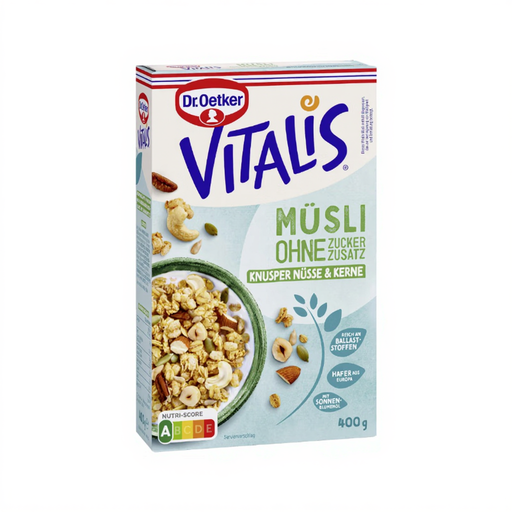
A nutty crunchy muesli option if you’re looking for a no added sugar claim. Still, compare the total sugar and carbohydrates per 100 g. If you have a nut allergy, check the current ingredients information.
 No image available
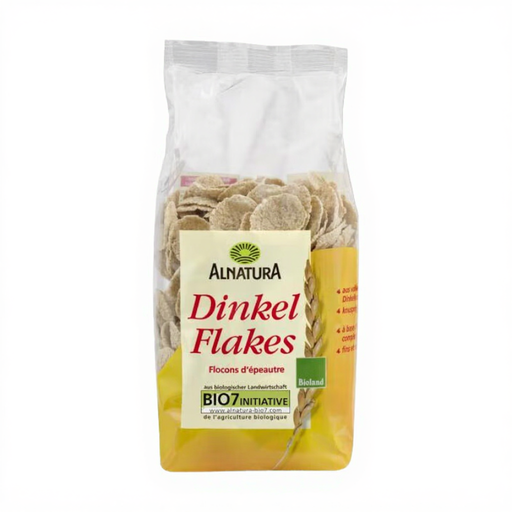
A spelt flake option if you prefer flakes to a muesli mix. Compare the sugar and total carbohydrates per 100 g. If you need a gluten-free diet, bear in mind that spelt contains gluten.
 No image available
An oat-based crunchy muesli for anyone looking for a crisp mix. The nutritional information on the pack will show whether its sugar and carbohydrate content suits your meal plan; the “Less Sweet” claim alone won’t.
No, this claim doesn’t describe the total sugar or carbohydrate content. bio-familia lists 12 g of sugar per 100 g for Original Swiss Müesli No Added Sugar, so check the nutritional information and ingredients as well.
What matters is the carbohydrates in the meal you actually eat, not just the sugar content of the muesli. diabetesDE explains the importance of calculating carbohydrates for people with insulin-dependent diabetes. Use the information on the pack and the weight of your portion in line with your individual treatment plan.
Pay particular attention to cereals containing gluten and nuts, if these are relevant to you. The European Commission lists both groups among the allergens that must be declared. Always check the ingredients and any “may contain” warnings on the specific pack.
No. Compare the sugar, total carbohydrates, fibre and ingredients as well. Nestlé Cerealien lists wholegrain wheat flour for Cini Minis, but also 24 g of sugar per 100 g. The wholegrain claim alone doesn’t give you the full nutritional picture.