Buffet managers using a build-your-own approach
You want to offer a wholegrain base muesli, with fruit and nuts served separately, rather than opening a different ready-made blend for every taste.


For a hotel breakfast buffet, a wholegrain base muesli with toppings served separately offers a flexible starting point. Ready-mixed fruit, nut or crunchy varieties can add a little more choice. The ingredients in each product, your guests’ preferences and clear allergen information for items served loose are all important. Wholegrain muesli is not automatically suitable for every special diet.
You want to offer a wholegrain base muesli, with fruit and nuts served separately, rather than opening a different ready-made blend for every taste.
You’re looking for a ready-mixed fruit variety and want to check the organic claims, fruit content and, where relevant, vegan recipe against the specific product.
You need to distinguish the ingredients and allergens in each blend and make the required information about each food available to guests when it is served loose.
First decide whether guests will create their own muesli or whether ready-made blends will take centre stage. Then check the ingredients and allergen information for every bowl you plan to serve, as well as choosing a pack size that suits your usage and refill schedule.
| What you need | What to check when buying | Who it matters most to |
|---|---|---|
| Flexible wholegrain base | Wholegrain cereals and the ingredients in the base blend; whether fruit and nuts should be served separately. | If you want guests to choose from different toppings, you’ll need a base that doesn’t already contain all the extras. Around 29% of consumers put this flexibility first. |
| Ready-made organic fruit blend | Organic certification, the types and proportion of fruit, and the nutritional information per 100 g. | If there’s little room for an additional toppings station, a ready-mixed fruit variety may fit your buffet plan better. For around 24% of consumers, this kind of organic fruit option is their top priority. |
| Allergens and special diets | Ingredients and allergens for each product; for a gluten-free option, an explicit gluten-free label and separate serving utensils. | Guests with specific dietary requirements should be able to identify the blends on offer clearly. That’s why around 29% of consumers prioritise allergen management and special-diet options. |
| Pack size and refilling | Pack weight, storage instructions, shelf life and actual daily usage. | When guest numbers vary, I don’t want to open more packs than can be stored and used properly. For around 18% of consumers, planning their purchases is the most important consideration. |
For muesli served loose, Section 4 of Germany’s Food Information Implementing Regulation requires allergen information for the specific product. Which ingredients are relevant to guests depends on the blend itself, even when several bowls are displayed side by side.
Wholegrain describes the grain used; it doesn’t mean a product is suitable for a gluten-free diet. For example, the ja! Trauben-Nuss-Müsli Vollkorn described by REWE contains oat, rye and wheat flakes.
If guests need a gluten-free option, plan for a blend explicitly labelled gluten-free and use separate serving utensils. Check its other allergens too: according to the product information, the separately labelled Kölln chocolate variety also contains hazelnut and milk ingredients.
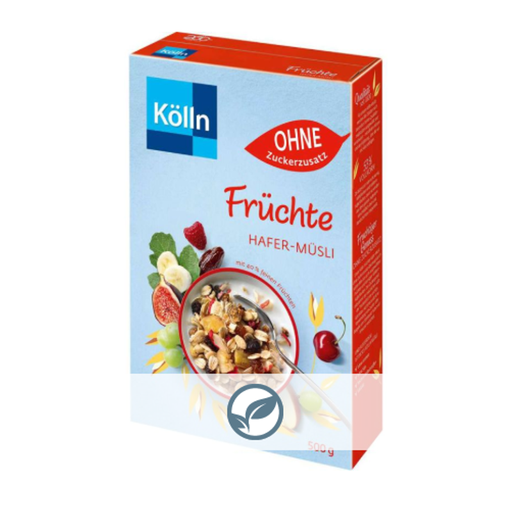
Dried fruit naturally contains sugar. The Früchte-Hafer-Müsli without added sugar described by Kölln lists 22 g of sugar per 100 g.
Use the wording on the specific pack and compare the nutritional information per 100 g. A plain base muesli also gives guests the option to add their own fruit.
The ja! Trauben-Nuss-Müsli Vollkorn described by REWE contains hazelnuts, almonds and peanuts. A recipe like this won’t meet the needs of guests who have to avoid these ingredients.
Make allergen information available for each specific blend. Only describe an alternative as nut-free if its product information explicitly supports that claim.
Whether a larger or smaller pack suits your buffet depends on how much muesli you use and how often opened packs need to be replenished.
Compare pack weight and storage instructions with your hotel’s usage. If you’re arranging custom blends, also check the recipe, packaging and delivery terms directly with the supplier.
The examples below show a range of recipes and purchasing options. Ingredients and characteristics apply to the specific products named, not to every muesli from a particular brand.
Oat-based mueslis, including a plain wholegrain base and ready-mixed varieties.
A manufacturer of traditional and crunchy mueslis, with options for custom blends.
A muesli brand with several product ranges, including an organic honey and nut variety.
A brand offering wholegrain and organic mueslis, including its Bio Müsli Frühstücks Mischung #545.
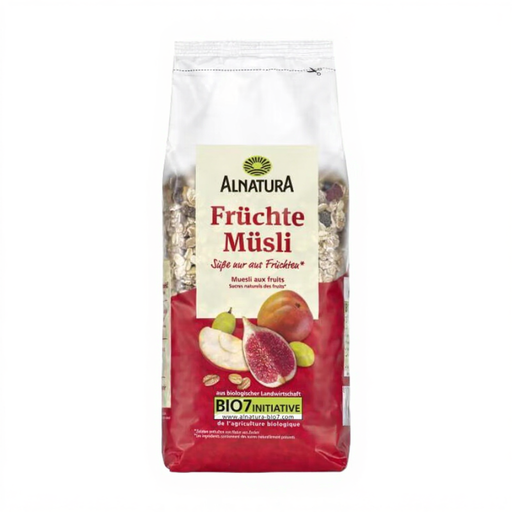
An organic-focused brand with a ready-mixed wholegrain fruit variety.
A supermarket own-brand wholegrain grape and nut muesli in a 1 kg pack.
This selection includes ready-mixed fruit, crunchy and chocolate mueslis. Before serving them at your buffet, check the current packaging and its ingredients. These varieties don’t replace a separately planned plain wholegrain base or an option explicitly labelled gluten-free.
 No image available
A ready-mixed option for a fruit selection at your buffet. Before buying, check the ‘4-Nut & Fruit’ description against the ingredients list on the pack, so you can confirm the recipe and allergen information.
 No image available
A ready-mixed fruit muesli for when you want an alternative to a plain base. ‘No added sugar’ doesn’t mean sugar-free: compare the nutritional information per 100 g and check the current pack for allergens.
 No image available
A ready-mixed crunchy option for guests who don’t want to add their own toppings to a base muesli. Check the nutritional information to see what ‘Less Sweet’ means, and take the ingredients and allergen information into account when serving it loose.
 No image available
Another crunchy blend for an easy-to-serve buffet option. Use the nutritional information per 100 g to guide your choice rather than assuming ‘Less Sweet’ tells you the sugar content; check the allergen information before serving it too.
 No image available
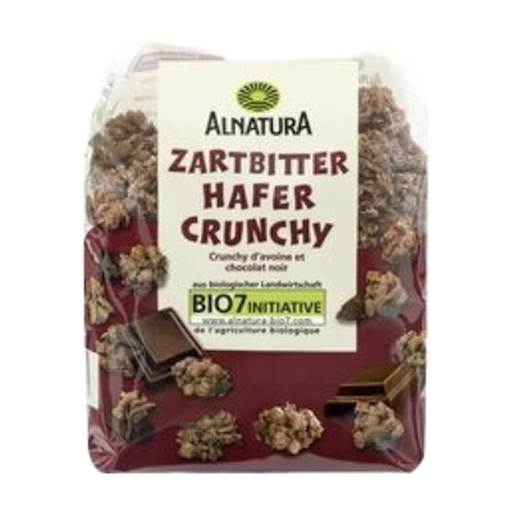
A ready-mixed crunchy variety with a chocolate flavour. The 375 g pack size can help you plan refills; for buffet labelling, always refer to the ingredients and allergen information on the current pack.
Yes. Under Section 4 of Germany’s Food Information Implementing Regulation, the required allergen information must be provided for each non-prepacked muesli product. Permitted ways of doing this include a sign on or near the food, a noticeboard, and, subject to the relevant conditions, written or electronic information that guests can access directly.
No. Wholegrain doesn’t tell you whether a blend is gluten-free. For example, the ja! Trauben-Nuss-Müsli Vollkorn described by REWE contains rye and wheat. For a gluten-free buffet option, you’ll need a product explicitly labelled as such and separate serving utensils.
No. Dried fruit can contribute to the stated sugar content. The Früchte-Hafer-Müsli without added sugar described by Kölln lists 22 g of sugar per 100 g, so compare the nutritional information for the specific product.
Follow the storage instructions on each pack. Alnatura recommends storing its described fruit muesli in a dry place, protected from heat. When refilling, also make sure opened packs and their ingredient information remain clearly identifiable.