Families who regularly stock up
If you plan several breakfasts a week, consider pack size alongside how quickly you’ll use it. Alnatura sells its Maxi Muesli in a 1-kg pack, and the ja! mueslis mentioned from REWE are also available in this size.


When stocking up for a family, pack size isn’t the only thing to consider. A wholegrain base mix can be adapted to suit different tastes, while granola comes with a set recipe. Before choosing a larger pack, check the wholegrain content or ingredients list, the sugar per 100 g and the allergens for the specific variety.
If you plan several breakfasts a week, consider pack size alongside how quickly you’ll use it. Alnatura sells its Maxi Muesli in a 1-kg pack, and the ja! mueslis mentioned from REWE are also available in this size.
A wholegrain base mix can be topped up with extra ingredients to suit each person. Kölln describes its Mühlenklassiker Vollkorn Basis-Müsli as containing 88% wholegrain and having no added sugar. Check the nutrition information for the total sugar content.
If certain ingredients need to be avoided, check the information on the specific pack rather than relying on the general term ‘wholegrain muesli’. Check the ingredients, allergens and precautionary allergen statements. If you need a gluten-free option, look for an explicit gluten-free label.
First decide whether a mix of flakes that you can customise or a crunchy recipe is right for your household. Then compare the information for the specific products and choose a pack size that suits how quickly you’ll use it.
| Criteria | What to check | Who is it important for? |
|---|---|---|
| Wholegrain base | Check for a stated wholegrain percentage or where the wholegrain flakes appear in the ingredients list. According to the German Food Federation, ingredients are listed in descending order by weight. | If wholegrain is to be the basis of the family’s breakfast, I want to be able to identify the cereal ingredients clearly. Around 37% of consumers put this kind of transparent base first. |
| Pack size | Compare the net weight with how much you expect to use, and follow the storage instructions on the pack. | If several people eat the mix regularly, the pack should suit how much the household gets through. Around 27% of consumers prioritise planning their supplies. |
| Sweetness and sugar | Check the sugar per 100 g and look out for ingredients such as dried fruit or syrup. ‘No added sugar’ does not mean ‘sugar-free’. | If family members prefer different levels of sweetness at breakfast, I want to choose the recipe or a customisable base carefully. Sweetness is the top criterion for around 18% of consumers. |
| Allergens | Check the ingredients, allergen information and precautionary allergen statements on the current pack. If you need to avoid gluten, look for an explicit gluten-free label. | If someone in the household needs to avoid an ingredient, whether the specific variety is suitable matters more than its pack size. Around 18% of consumers put this first. |
A wholegrain claim tells you nothing about the sugar content. REWE states that ja! Früchte-Müsli contains 18.4 g of sugar per 100 g.
Compare wholegrain information and sugar per 100 g separately. ‘No added sugar’ is not another way of saying ‘sugar-free’ either.
A mix may not be suitable for everyone in the household. According to REWE, ja! Trauben-Nuss-Müsli contains hazelnuts, almonds and peanuts.
Check the label on the specific pack before buying. If a gluten-free diet is required, choose a product that is explicitly labelled as gluten-free.
A multipack that isn’t suitable for your household may need to be replaced with a different mix.
Recipes can vary. Brüggen says its granolas are made by mixing the cereal ingredients with syrup and then baking them.
Check the ingredients, wholegrain information, and sugar and fat per 100 g for each variety, rather than assuming you know what’s in it from its crunchy texture.
EDEKA notes that the product information for its Bio Basis Müsli Cerealien-Mix may differ from the details on the packaging.
When your pack arrives, check the ingredients, allergens, nutrition information and best-before date again.
Kölln sells mixes of flakes and granolas, as well as options specifically labelled gluten-free.
Alnatura offers a range of muesli recipes, including its Maxi Muesli in a 1-kg pack.
Seitenbacher sells a range of wholegrain and speciality mueslis.
Brüggen makes a range of mueslis, including classic and crunchy recipes.
REWE sells a range of ja! mueslis in 1-kg packs, including fruit and grape-and-nut varieties.
EDEKA Bio includes a Basis Müsli Cerealien-Mix in a 500-g pack.
This selection includes granolas made with oats or spelt, in packs ranging from 375 g to 750 g. If you’re stocking up for a family, compare the pack size with how much you get through and check the sugar information and allergens for each recipe separately.
 No image available
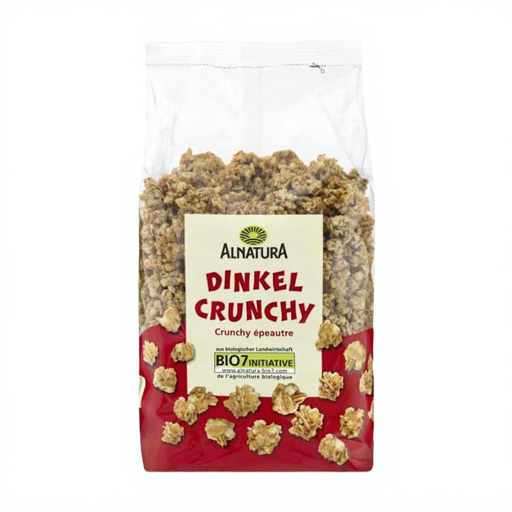
A crunchy oat muesli for families looking for a 750-g pack. Check the sugar per 100 g and allergen information on the pack; the words ‘Less Sweet’ in the name don’t replace this check.
 No image available
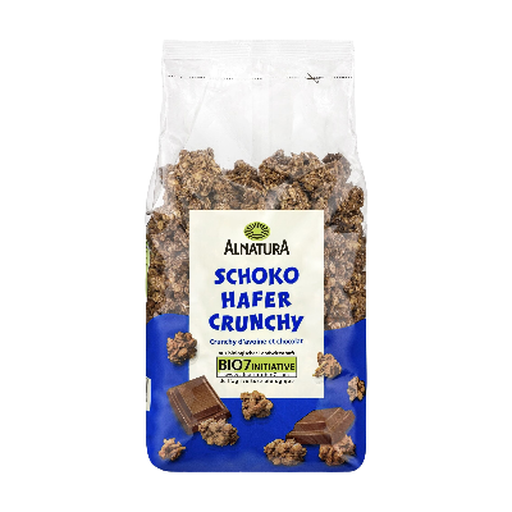
A crunchy spelt mix for households looking for a 750-g pack. If gluten or other allergens are a concern, check the label on the specific pack.
 No image available
A chocolate and oat granola for families who fancy a crunchy option. The pack contains 750 g. To compare it with other recipes, check the sugar per 100 g as well as the ingredients and allergens.
 No image available
A 600-g pack of granola for households looking for something smaller than a larger multipack. When choosing how sweet you want it, the nutrition information matters more than the ‘Less Sweet’ wording in the product name.
 No image available
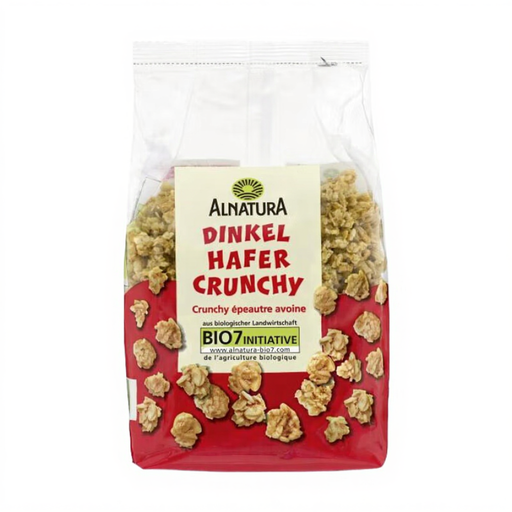
A smaller 375-g pack for families who want to try a spelt and oat mix. If several people eat it regularly, plan for the pack size and follow the storage instructions on the packaging.
No. The German consumer advice centre explains that ‘no added sugar’ means no sugar or other ingredients with a sweetening effect have been added. Sugar from fruit in the product may still be present. So check the sugar per 100 g as well.
A stated wholegrain percentage gives you a clear indication. If there isn’t one, check the ingredients list: according to the German Food Federation, ingredients are listed by weight, so wholegrain flakes near the top of the list are worth noting when comparing products.
No. Wholegrain does not mean gluten-free; mixes may contain wheat, rye or barley, for example. If you need a gluten-free product, look for an explicit label on the specific variety and check its allergen information.
The current packaging is the best guide when choosing a specific mix. EDEKA notes that the product information shown for its Bio Basis Müsli Cerealien-Mix may differ from the packaging. In particular, check the ingredients, allergens and nutrition information.