Choose how sweet it is
If you’d like to add your own fruit or other sweet ingredients, start with a wholegrain base mix. Check the ingredients for the specific variety rather than assuming that ‘base’ means a particular recipe.


If you want to choose how sweet your breakfast is, start with a wholegrain base mix and add fruit or other ingredients to taste. Fruit muesli is a good choice if you want dried fruit already included; for crunchy clusters, look for toasted muesli. Wholegrain alone doesn’t tell you how much sugar a product contains, so compare the ingredients and ‘of which sugars’ per 100 g for each variety.
If you’d like to add your own fruit or other sweet ingredients, start with a wholegrain base mix. Check the ingredients for the specific variety rather than assuming that ‘base’ means a particular recipe.
Fruit muesli is a good choice if you want dried fruit already included in the mix. However, the sweetness of dried fruit doesn’t mean the finished muesli is sugar-free.
If you’re after a toasted, crunchy texture, compare the sugar content and ingredients lists of individual crunchy mueslis. A wholegrain claim is no substitute for checking both.
First decide whether you want to sweeten it yourself, have dried fruit in the mix or prefer crunchy clusters. Then check the wholegrain ingredients and the ‘of which sugars’ nutrition information for the specific variety.
| What matters to you | What to check when buying | Who it matters to |
|---|---|---|
| Wholegrain as the base | Are wholegrain flakes near the top of the ingredients list? Is the wholegrain content stated? | I want wholegrain cereals to form the basis of my muesli, even when I eat it sweet. Around 31 % of consumers put a wholegrain base first. |
| Control the sweetness yourself | Compare ‘of which sugars’ per 100 g and check the ingredients list for sugar, syrups and dried fruit. | If I want to add the sweet ingredients myself, I need a mix whose recipe suits that choice. For around 31 % of consumers, controlling the sweetness is the priority. |
| Fruity mix | Check the type and, where stated, the proportion of dried fruit, as well as the other ingredients. | I want my muesli to contain fruit as soon as I open the pack, so I don’t need to add anything. This fruity mix is the top priority for around 23 % of consumers. |
| Crunchy texture | For crunchy muesli, compare the wholegrain ingredients and ‘of which sugars’ per 100 g. | I want toasted crunchy clusters, but I still want to be able to assess the specific recipe. Around 15 % of consumers prioritise a crunchy texture. |
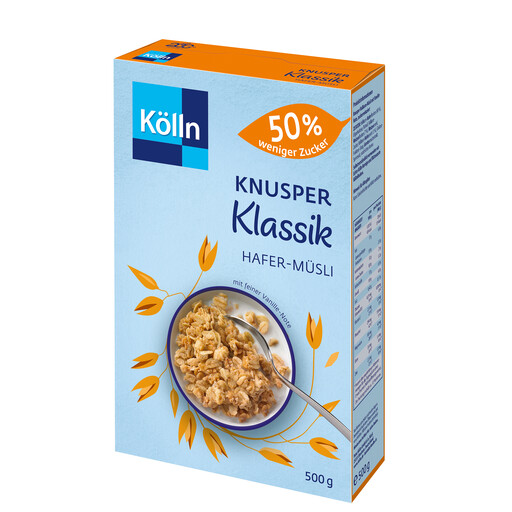
The wholegrain content doesn’t tell you how much sugar a muesli contains. Kölln states that its Knusper Klassik 50 % weniger Zucker Hafer-Müsli contains 70 % wholegrain and 8 g of sugar per 100 g; the ingredients list also includes sugar and glucose-fructose syrup.
Always compare the wholegrain ingredients and ‘of which sugars’ for the same variety.
Dried fruit naturally contains sugar. Alnatura states that its fruit muesli contains 40 % fruit and describes its sweetness as coming exclusively from the fruit.
Choose fruit muesli to suit your taste and check the ingredients. To find out the sugar content, also read the nutrition information on the specific pack.
Depending on the variety, ingredients may include cereals containing gluten, nuts or sesame, among others. Products from the same brand can also have different ingredients.
Before buying, read the ingredients list and any precautionary allergen information on the pack you’ve chosen.
The varieties covered range from a wholegrain base mix to a crunchy oat muesli.
The Seitenbacher Müsli zuckerarm featured here is a wholegrain mix that you can compare by checking its specific ingredients and nutrition information.
The mueslis featured here combine wholegrain flakes with fruit or other ingredients.
The 5-Korn-Müsli featured here is a mix for people who want to add their own sweet ingredients.
Nature Crunch is a specific muesli example for comparing wholegrain and sugar information.
Brüggen is relevant here mainly as a manufacturer of muesli for retailer own-label ranges.
This selection includes fruity and crunchy mueslis for a sweet breakfast. Check the ingredients and nutrition information for each variety, especially if the type of sweetness matters to you.
 No image available
For anyone looking for a crunchy oat muesli and wanting to compare sugar information. ‘50 % less sugar’ is part of the product name, so check the nutrition information and ingredients on the pack.
 No image available
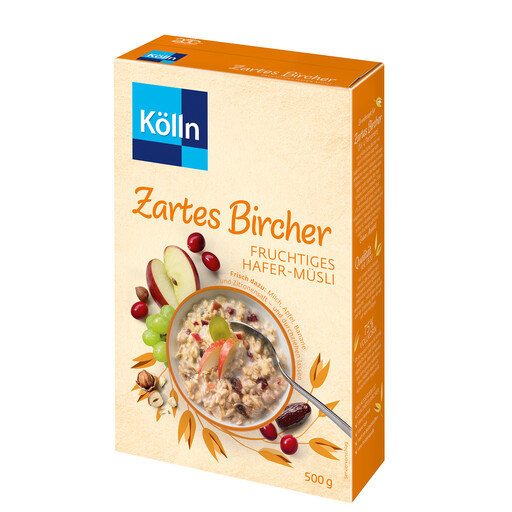
For anyone who prefers a fruity mix to a plain muesli base. Check the ingredients if you’re interested in where the sweetness comes from or whether the product contains nuts.
 No image available
For anyone looking for a crunchy oat muesli. The name ‘Less Sweet’ is no substitute for comparing ‘of which sugars’ per 100 g and checking the ingredients list.
 No image available
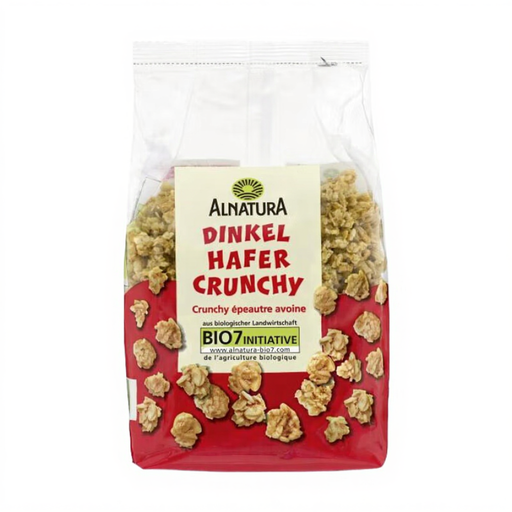
For anyone looking for spelt and oats in a crunchy muesli. Compare the ingredients and ‘of which sugars’ per 100 g for this variety with other crunchy mueslis.
 No image available
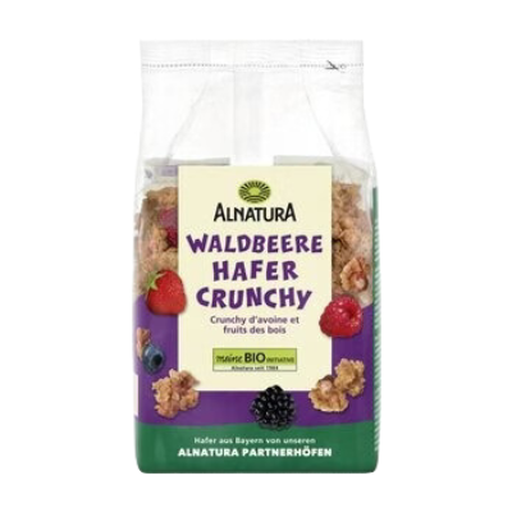
For anyone who wants berries and crunchy oat muesli in one mix. You can’t tell from the product name whether the sweetness comes only from fruit, so check the ingredients list and nutrition information.
No. Wholegrain describes the cereal base, not the sugar content. Kölln states that its Knusper Klassik 50 % weniger Zucker Hafer-Müsli contains 70 % wholegrain and 8 g of sugar per 100 g; Seitenbacher states that its Müsli zuckerarm contains 70 % wholegrain and 1 g of sugar per 100 g. Always compare the specific variety.
Check whether wholegrain flakes appear near the top of the ingredients list and whether the wholegrain content is stated. According to Lebensmittelverband Deutschland, ingredients are listed in descending order by weight; details of the specific cereal types can also help you compare products.
Read the ingredients list and any precautionary allergen information on the specific pack. Lebensmittelverband Deutschland lists cereals containing gluten, nuts and sesame among the major allergens that must be declared when included as ingredients. A precautionary allergen statement, on the other hand, describes a possible risk and doesn’t indicate that the ingredient is present.
Follow the storage instructions on the pack. For the products featured here, Kölln and Alnatura recommend storing them in a dry place away from heat. Also check the best-before date for your variety.