For several breakfasts after your weekly shop, a mix with clearly named wholegrain ingredients and a sugar value you can assess from the nutrition information is a sensible starting point. If people in your household prefer crunchy or sweeter cereals, compare wholegrain content and sugar separately. Before buying a larger pack, check the ingredients, allergens and how much you’re likely to use.
Who is this choice relevant to?
Wholegrain-conscious meal planners
You’re buying a base for several breakfasts and want to know which grains are actually wholegrain. The ingredients list, nutrition information and pack size will tell you more than the design on the front of the pack.
Muesli shoppers keeping an eye on sugar
You don’t want to rule out sweet varieties altogether, but you do want to compare sugar per 100 g and avoid confusing a claim such as ‘no added sugar’ with ‘sugar-free’.
Families with different breakfast preferences
You’re shopping for several people, so taste and ease of preparation matter as well as the type of grain. If anyone has an allergy or intolerance, check that the information on the specific pack is suitable for everyone.
What should you look for when buying?
First, check which wholegrain ingredients the variety contains. Then compare sugar and fibre per 100 g, and only after that decide whether the taste, ingredients and pack size suit your household.
| Criteria |
What to check when buying |
Who it matters most to |
| Wholegrain base |
Which grains are specifically described as wholegrain? Is a wholegrain percentage given? |
I want to choose a clear grain base for several breakfasts as part of my weekly shop, rather than judging by the colour of the pack. Around 36% of consumers put this wholegrain base first. |
| Sugar content |
Compare sugar per 100 g in the nutrition information with sweetening ingredients in the ingredients list. |
Even when a variety contains wholegrain, I want to know how much sugar it contains; ‘no added sugar’ alone doesn’t answer that. This comparison is a priority for around 36% of consumers. |
| Suitability for your household |
Consider the taste, pack size and how much you’ll use. If needed, check the allergens and precautionary ‘may contain’ information on the current pack. |
If several people will be eating it, I need a variety that will actually get used and whose ingredients suit my household. This is the most important consideration for around 28% of consumers. |
Common mistakes when doing your weekly shop
-
Assuming a dark colour means wholegrain
Colour alone doesn’t tell you whether the grain base is wholegrain. The product description and specific ingredients are more useful when making your choice.
Read the ingredients list and check for a stated wholegrain percentage, if the pack gives one.
-
Overlooking sugar in wholegrain cereals
Wholegrain content doesn’t tell you how much sugar a product contains. For example, Nestlé CINI MINIS lists 33% wholegrain; check the sugar content separately in the nutrition information.
Compare the grain base and sugar per 100 g as two separate criteria.
-
Reading ‘no added sugar’ as ‘sugar-free’
This claim doesn’t mean that the nutrition information will show no sugar. In mixes containing fruit, the listed sugar content is still relevant when comparing products.
As well as checking the claim on the front of the pack, read the nutrition information per 100 g and the full ingredients list.
-
Choosing a large pack without considering your household
A variety may taste good, but particular ingredients or listed allergens might make it unsuitable for some people in your household. A mix that’s only eaten occasionally can also be harder to plan into your weekly shop.
Before buying, check the current pack for allergens and precautionary ‘may contain’ information, and choose a pack size that matches how much you’re likely to use.
Brands to help you compare
Seitenbacher
Bio-Müsli Frühstücks Mischung #545 is a specific example of a mix with named wholegrain flakes.
- Seitenbacher lists organic wholegrain oats, organic wholegrain wheat and organic barley as ingredients.
- The mix contains almonds and cereals containing gluten. If you have an allergy or intolerance, check the current pack.
familia
The brand offers a range of muesli varieties. When comparing products for your weekly shop, it’s the ingredients of each variety that count.
- For Original Swiss Müesli No Added Sugar, bio-familia lists 82% cereals, of which 98% are wholegrain.
- ‘No added sugar’ doesn’t mean ‘sugar-free’. Check the sugar content and, if needed, the ingredients and allergens on the specific pack.
Nestlé Cereals / CINI MINIS
CINI MINIS are cinnamon-flavoured, crunchy cereals for households that enjoy this kind of taste.
- Nestlé Cereals lists a wholegrain content of 33% for CINI MINIS.
- A stated wholegrain percentage doesn’t replace checking the sugar, ingredients and possible allergens on the current pack.
Kellogg's
For this buying decision, it’s the specific Kellogg's variety that matters, not just the brand name.
- Kellogg's describes its Corn Flakes as flakes made from maize.
- The name ‘Corn Flakes’ alone doesn’t confirm that they’re wholegrain. If you’re looking for wholegrain, check the details of the variety you choose.
Products for different breakfast preferences
This selection includes oats, wheat cereal biscuits and crunchy muesli. They give you different options for preparation and pack size when planning your weekly shop. Check the wholegrain content, nutrition information and allergens on the current pack of the variety you choose.
 No image available
Jeden Tag coarse rolled oats, 500 g
Coarse rolled oats for households looking for a flake base for several breakfasts. The pack contains 500 g; if you have an intolerance, check the ingredients on the current pack.
View on Joybuy
 No image available
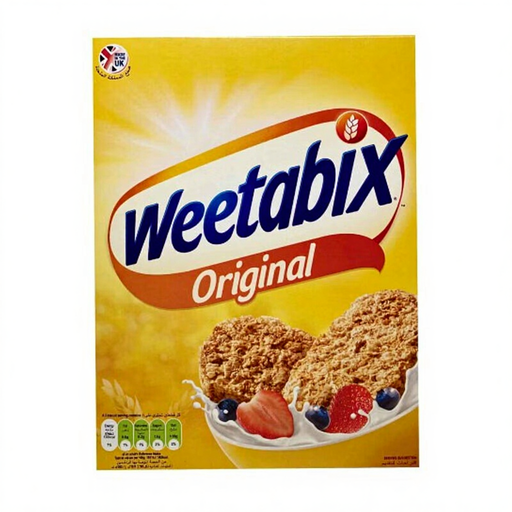
Weetabix Original wholegrain wheat cereal biscuits, 430 g
Wheat cereal biscuits for a breakfast with individual portions instead of loose flakes. The pack contains 430 g; if you have a gluten intolerance, check the labelling.
View on Joybuy
 No image available
Jeden Tag Less Sweet Crunchy Oat Muesli, 750 g
Crunchy oat muesli for households planning to buy a larger pack as part of their weekly shop. The pack contains 750 g; ‘Less Sweet’ doesn’t replace comparing the sugar content per 100 g.
View on Joybuy
 No image available
Dr. Oetker Vitalis Less Sweet Pure Crunchy Muesli, 600 g
Crunchy muesli for shoppers who prefer this texture to a flake mix. The pack contains 600 g; compare the sugar content regardless of the ‘Less Sweet’ claim, and check the ingredients if you have an allergy.
View on Joybuy
 No image available
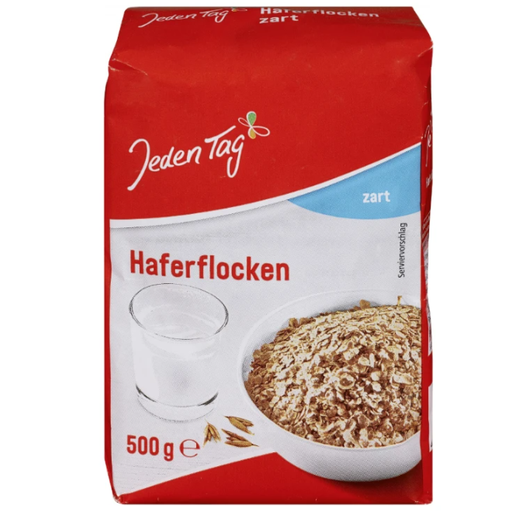
Jeden Tag fine rolled oats, 500 g
Fine rolled oats for households that prefer a different flake texture at breakfast to coarse rolled oats. The pack contains 500 g; use the nutrition information per 100 g on the pack to compare nutritional values.
View on Joybuy
Frequently asked questions
How can I tell whether muesli and cereals are wholegrain?
Look for ingredients specifically described as wholegrain and, where provided, a stated wholegrain percentage. The German Nutrition Society points out that the colour of a grain product isn’t a reliable guide.
Is muesli with no added sugar also sugar-free?
No, ‘no added sugar’ doesn’t automatically mean ‘sugar-free’. Compare sugar per 100 g in the nutrition information and read the ingredients list. Lebensmittelklarheit also explains that sugar can appear as an ingredient under different names.
What should I check before buying if I have allergies?
Read the highlighted allergens in the ingredients list and, if applicable, any precautionary ‘may contain’ information on the specific pack. The European Commission says that allergenic ingredients in prepacked foods must be clearly labelled. Which ingredients and warnings are relevant depends on the variety you choose.
How should I plan a larger pack of muesli for the week?
Choose a pack size based on how much your household is likely to use, and follow the storage instructions on the pack. When you buy it again, check the ingredients and nutrition information once more, as recipes can change.


