Breakfast with ingredients of your choice
If you add fruit, yoghurt or nuts to your bowl yourself, a wholegrain base without dried fruit is a good option. You can then choose what else to add.


If you want to choose the sweetness and ingredients yourself, go for a wholegrain base without dried fruit. For a fruity breakfast straight from the pack, try fruit muesli; for extra crunch, choose crunchy muesli or granola. Check the wholegrain content, sugar and fat per 100 g, as well as the ingredients and allergens on the specific pack. The three options differ in more than just their grain base.
If you add fruit, yoghurt or nuts to your bowl yourself, a wholegrain base without dried fruit is a good option. You can then choose what else to add.
Fruit muesli combines cereal flakes and dried fruit in the pack. If organic ingredients matter to you, check the label on the specific variety. Sugar from fruit is also included in the nutritional information.
If crunch is what you’re after, take a look at crunchy muesli or granola. Compare sugar and fat per 100 g, along with syrup, oils and allergens in the ingredients list, rather than choosing on the basis of a claim about sweetness alone.
First decide whether you want a base you can customise, a fruity flavour or a crunchy texture. Then compare the information on packs of the same type of product.
| What matters to you | What to check | Who it matters most to |
|---|---|---|
| Wholegrain base | Look for clearly labelled wholegrain ingredients and, where stated, their proportion. A dark colour alone isn’t enough to tell you. | If you want to add fruit and other ingredients yourself, look for a clearly identifiable grain base. This is the main priority for around 33 % of consumers. |
| Sugar | Compare “of which sugars” per 100 g and check the ingredients list for dried fruit, syrup and added sugar. | If the amount of sugar matters more to you than fruit flavour or crunch, check the nutritional information first. Around 25 % of consumers put this top of their list. |
| Fruit and organic ingredients | Check the fruit content and organic labelling on the specific pack. Decide whether you want dried fruit included in the mix. | A ready-made mix is handy if you want a fruity breakfast without adding your own fruit; organic ingredients may also be a deciding factor. This is the top priority for around 25 % of consumers. |
| Crunch | Check the sugar and fat per 100 g, as well as syrup and oils in the ingredients list. | If you want crunchy pieces rather than loose flakes, you may need to choose a different recipe and compare it carefully. This preference comes first for around 17 % of consumers. |
The German Nutrition Society points out that colour isn’t a reliable indicator of wholegrain. And when it comes to a mix, “hearty” on its own tells you nothing about the proportion of wholegrain ingredients.
Check the wholegrain labelling, any stated proportion and the order of the ingredients.
Comparing it with other crunchy mueslis is no substitute for checking the nutritional information. According to EDEKA, its crunchy muesli described as “less sweet” contains 12,8 g of sugar per 100 g.
Compare “of which sugars” per 100 g and check which sweetening ingredients are included.
Wholegrain mixes may contain gluten-containing cereals, nuts or sesame, and precautionary allergen warnings vary by product. “Vegan” and “no added sugar” don’t tell you whether a product contains allergens.
If you have allergies, check the ingredients and precautionary allergen warnings on the current pack of each individual variety.
H. & J. Brüggen says its crunchy muesli varieties are made with syrup and then baked. That’s a different recipe from loose cereal flakes, and doesn’t mean the nutritional values are the same.
If you’re considering a crunchy variety, compare its sugar, fat and ingredients directly with a flake mix you might also choose.
The classic Mühlenklassiker is a wholegrain muesli base for a breakfast you can customise yourself.
Alnatura fruit muesli is for anyone who wants wholegrain flakes and dried fruit ready-mixed in one pack.
Seitenbacher Low-Sugar Muesli is a fruit-free option if the stated sugar content matters more to you than fruit flavour.
REWE Bio’s 5-Grain Muesli is a base mix you can add fruit or other ingredients to yourself.
GUT&GÜNSTIG “less sweet” crunchy muesli is an example of a crunchy mix made with wholegrain oat flakes.
These Joybuy products include crunchy and fruity muesli, as well as plain oats for mixing yourself. Oats make a good breakfast base, but they aren’t ready-made granola. Compare the variety you choose using the current information on its pack.
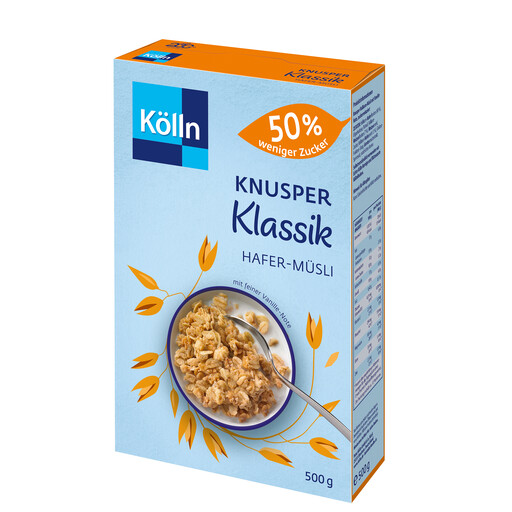 No image available
A crunchy muesli option if texture matters to you at Sunday breakfast. “50% Less Sugar” is part of the product name; when choosing, also check the sugar per 100 g on the current pack.
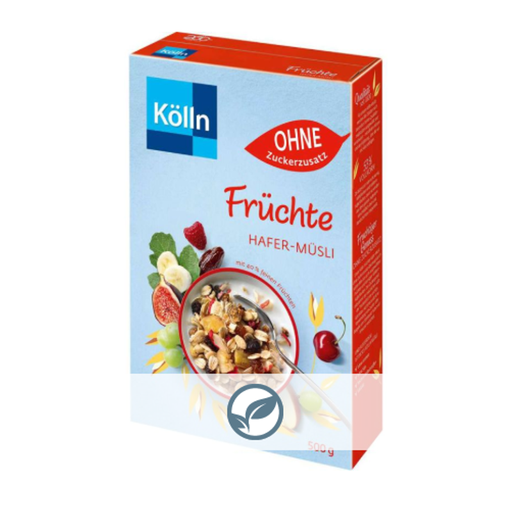 No image available
A fruit muesli option for when you’d rather not add your own fruit. The product name states 50 % fruit and no added sugar; even with fruit muesli, you should check “of which sugars” per 100 g.
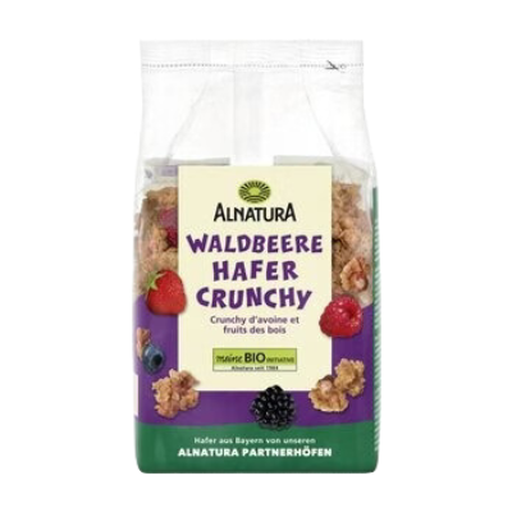 No image available
If you want to combine berries with a crunchy muesli mix, this variety is a good option to compare. Check the sugar and fat per 100 g, as well as the ingredients on the specific pack.
 No image available
A base for making your own muesli with the ingredients you choose. Jumbo oats are neither ready-made fruit muesli nor baked granola.
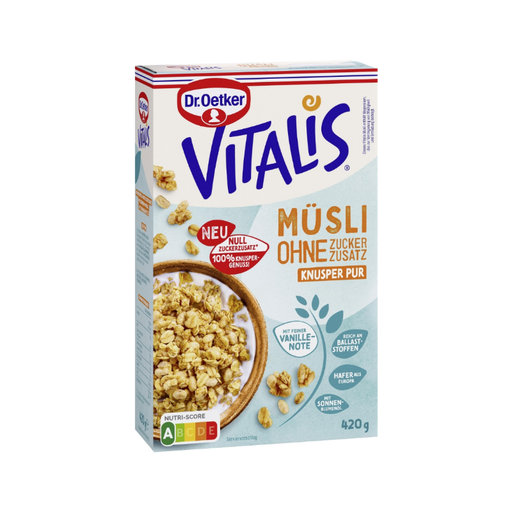 No image available
A crunchy option for anyone who also wants to check the no-added-sugar claim. “No Added Sugar” doesn’t mean sugar-free: before choosing, compare the nutritional information per 100 g and the ingredients on the pack.
No. Wholegrain describes the cereal ingredients, not the sugar content of the whole mix. Seitenbacher states that its Low-Sugar Muesli contains 1 g of sugar per 100 g; according to EDEKA, the EDEKA crunchy muesli reviewed contains 12,8 g per 100 g. Compare the nutritional information for the products you’re considering.
No. Ingredients such as dried fruit can contain sugar even when no sugar has been added. Alongside the no-added-sugar claim, always check “of which sugars” per 100 g and the ingredients list.
Not necessarily. Depending on the variety, the wholegrain mueslis described here contain ingredients such as wheat, barley, rye or spelt. If you need to avoid gluten, only choose a variety clearly labelled as suitable for your needs, and check the current pack.
Follow the storage instructions on the pack and seal it well after opening. Alnatura recommends storing its fruit muesli in a dry place, protected from heat.