Buffet managers looking for a wholegrain base
If you want to offer a bowl guests can customise, provide fruit and other toppings separately. That way, it’s clear what belongs to the base mix and what has been added.


For a hotel breakfast buffet, a clearly labelled wholegrain base makes a versatile bowl, especially when guests are invited to add their own fruit and other toppings. Fruit muesli and crunchy mixes can broaden the choice; for these, the specific ingredients, stated wholegrain content and nutritional information determine how they should be assessed. If muesli is served loose in Germany, the required allergen information for that food must be accessible to guests.
If you want to offer a bowl guests can customise, provide fruit and other toppings separately. That way, it’s clear what belongs to the base mix and what has been added.
A ready-mixed fruit muesli saves you having to mix in the fruit separately. If it is also to be vegan, check that this is confirmed for the specific product; nuts and sesame should be included in the allergen information where applicable.
A crunchy mix can sit alongside a flake-based option. Compare the wholegrain content, ingredients and sugar per 100 g for the specific product.
First, decide whether guests should be able to customise the main bowl. Then check each additional fruit or crunchy option against its ingredients and the information that must be available to guests at the buffet.
| Criterion | What to check when buying | Who it matters to |
|---|---|---|
| Wholegrain base | Check the ingredients list and the stated wholegrain content of the specific product. | If guests are to add their own fruit and other toppings, I need a clearly identifiable base with minimal pre-mixing. This flexibility is a priority for around 33% of consumers. |
| Allergen information | Record the allergen information for each product used and clearly match it to the relevant buffet container. | If muesli is served loose, I need to make the required information about that food accessible to guests. This labelling is the main consideration when choosing for around 27% of consumers. |
| Fruit options | Check the ingredients list for dried fruit, nuts and sesame; only assume a recipe is vegan if this is confirmed for the specific product. | For a fruity bowl, I’d rather not have to mix fruit into the flakes myself, but I still need to be able to declare its ingredients clearly. This is the biggest priority for around 20% of consumers. |
| Crunchy texture | Compare the wholegrain content, ingredients and sugar per 100 g. | Alongside a simple base, I want a crunchy alternative without relying solely on a claim on the packaging. This texture is the priority for around 20% of consumers. |
The German Nutrition Society points out that the colour of a grain product can be misleading. It doesn’t tell you the wholegrain content of a particular muesli or granola.
Read the ingredients list and compare the stated wholegrain or wholegrain-flake content of each product.
Dried fruit contributes to the sugar figure in the nutritional information. For example, REWE’s product page lists 20.3 g of sugar per 100 g for Brüggen Früchte Müsli; this figure applies to that product only.
Compare the sugar per 100 g and the ingredients list rather than judging the nutritional value by the amount of fruit or a claim on the front of the pack.
Even a base mix can contain cereals containing gluten. Other allergens and precautionary statements depend on the specific product.
Match the information for the product used to each container. In Germany, when food is served loose, the information required under § 4 LMIDV must be clearly visible, distinct and easy to read for each food.
The differences below relate to the specific products mentioned, not to each brand’s entire range.
Two different options: a simple base and a crunchy topping.
Maxi-Müsli is a ready-mixed, fruity wholegrain option.
Bio Müsli Frühstücks Mischung combines wholegrain flakes with fruit and nuts.
5-Korn-Müsli is a mix of flakes and seeds that guests can customise.
Früchte Müsli is a ready-mixed fruit option with wholegrain flakes.
Basis Müsli Cerealienmix combines wholegrain flakes with extra crunchy ingredients.
Here, fruity and crunchy mueslis sit alongside plain oats that guests can customise. The oats aren’t ready-mixed granola; choose between the product types to suit your planned buffet offering.
 No image available
A crunchy muesli option to serve in a separate bowl alongside a simple flake base. For buffet planning, compare the sugar and allergen information on the product being used.
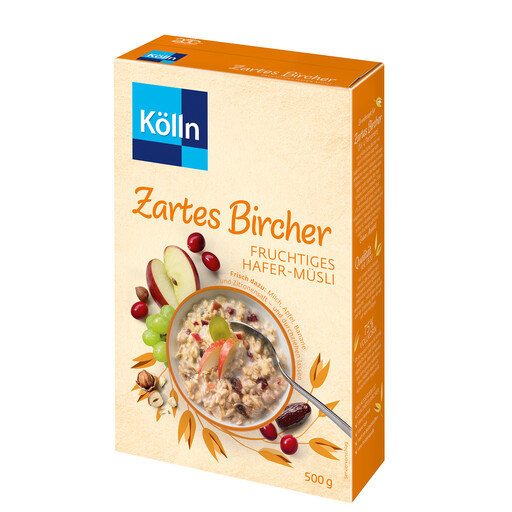 No image available
A fruit muesli that offers a ready-mixed alternative to a plain bowl of flakes. Check the ingredients and allergen information on the pack you’re using before serving it loose.
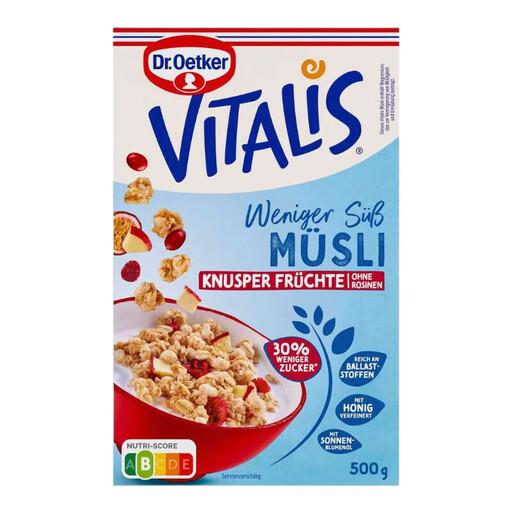 No image available
A fruity, crunchy option for guests who want a different texture from a flake-based bowl. Compare the nutritional information per 100 g and the ingredients list for the specific product.
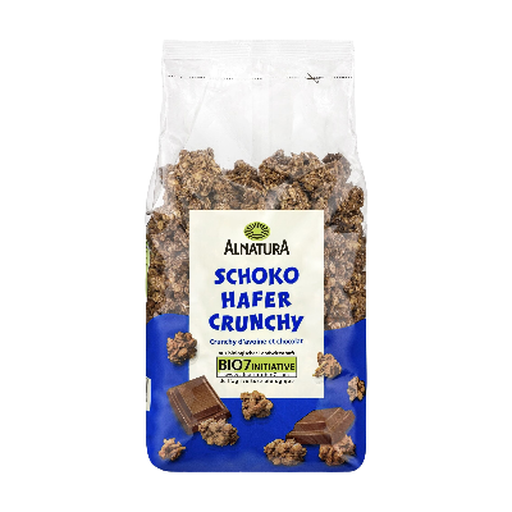 No image available
A crunchy chocolate option to complement a less heavily pre-mixed bowl. Compare the sugar content, ingredients and allergens against the pack being used at the buffet.
 No image available
Fine oats for a breakfast bowl guests can customise, not a ready-made crunchy granola mix. Fruit and other toppings need to be provided separately; check the information on the pack you’re using for buffet labelling.
In Germany, when food is served loose, the required information about allergenic ingredients and processing aids must be available for that food. Under § 4 of the Food Information Implementing Regulation, it must be clearly visible, distinct and easy to read. Subject to the conditions set out there, this information can be provided on a sign by the food, on a noticeboard, or in written or electronic form that is immediately accessible.
No. When choosing for a buffet, check the ingredients list and any stated wholegrain content for the specific granola. The 90% rule explained by the German Nutrition Society applies to wholemeal bread and rolls; it shouldn’t be used as a general benchmark for muesli or granola.
No, the two claims don’t mean the same thing. Alnatura attributes the sweetness of its Maxi-Müsli to the fruit it contains; to assess the sugar content, you should also check the nutritional information for the specific product.
Follow the storage instructions on the pack you’re using. According to their product information, Alnatura Maxi-Müsli and Kölln Knusper Klassik should be stored in a dry place and protected from heat. When refilling, make sure the product information remains clearly matched to the relevant buffet container.