For biscuits with visible oats and a heartier bite, jumbo or large-flake oats are the obvious choice; for a finer dough, fine or extra-fine oats may be more suitable. Whatever the flake size, check the wholegrain and ingredient information. If you need to bake gluten-free because you have coeliac disease, look for an explicit gluten-free label on the oats and the other ingredients.
Which oats are right for you?
For biscuits with visible oats
If you prefer a heartier bite, jumbo or large-flake oats are a good starting point. Kölln specifically recommends jumbo oats for biscuits with a hearty texture, while Alnatura describes its large-flake oats as suitable for baking.
For a finer dough
If you’d rather the oats were less noticeable in your biscuits, fine or extra-fine varieties may be a better fit. Alnatura lists extra-fine oats as an ingredient for biscuits.
If you’re choosing by ingredients and labelling
If you want to check for wholegrain, organic certification or specific allergen warnings, look at the packaging for the exact product. If you have coeliac disease, an explicit gluten-free label is also important; flake size alone won’t tell you this.
What to look for when buying
Choose a flake size to suit the texture you want, then check the ingredients, labelling and recipe. According to EDEKA, dough made with oats alone needs an extra binding agent.
| What to consider |
What to check when buying |
Who it matters to |
| Bite and visible oats |
Look for “jumbo” or “large flake”, and check whether the recipe calls for whole flakes. |
I want to see the oats in my biscuits and notice their texture when I eat them. Around 36% of consumers put this hearty bite first. |
| A finer dough texture |
Look for “fine”, “small flake” or “extra-fine”; allow for the binding agent specified in the recipe. |
I’d rather the oats were less noticeable in the dough. Around 29% of consumers prioritise this. |
| Wholegrain and ingredients |
Read the product name and ingredients list; if you want organic, check for organic certification too. |
I want to know whether I’m buying wholegrain oats or a blend. Around 21% of consumers prioritise this information. |
| Gluten-free and allergen information |
If you have coeliac disease, look for “gluten-free”; if you have allergies, check the information on the specific pack and on the other baking ingredients. |
I need to take particular ingredients or possible traces into account when baking. Around 14% of consumers prioritise these labels. |
Common mistakes when choosing and baking
-
Assuming “wholegrain” describes the flake size
Wholegrain describes how the grain is processed, not the texture of the biscuits. According to the German Nutrition Society, wholegrain flakes are made from the entire grain, including the bran and germ.
Choose jumbo or finer oats to suit the recipe, and check the wholegrain and ingredient information separately.
-
Replacing all the flour with oats without adapting the recipe
According to EDEKA, dough made solely with oats won’t reliably hold together without an extra binding agent. Choosing the right flake size alone won’t keep biscuit dough together.
Use a recipe for oat biscuits that includes the binding agent it calls for, rather than swapping the flour for oats without making any other changes.
-
Assuming oats are gluten-free without checking the label
Regular oats can come into contact with gluten-containing grains during processing. That’s why the consumer advice centre distinguishes between products explicitly labelled gluten-free and ordinary oats.
If you need to bake gluten-free because you have coeliac disease, choose oats with the appropriate label and check the other ingredients too.
-
Assuming allergen warnings apply to every variety
Allergen information can vary between products from the same brand. A warning on one pack doesn’t automatically apply to other oats.
If you have allergies, carefully read the current label on the exact variety you’re buying for your recipe.
Brands and products to consider
Kölln
Kölln sells oats in a range of flake sizes. For biscuits, the brand particularly distinguishes between jumbo and finer varieties.
- Kölln recommends its organic jumbo oats for biscuits with a hearty texture, and says this variety is made from 100% wholegrain oats.
- The brand’s baking suggestion isn’t a recipe test. A gluten-free label applies only to varieties specifically labelled as such.
Alnatura
Alnatura’s organic oats include extra-fine and large-flake varieties.
- Alnatura lists extra-fine oats as an ingredient for biscuits and describes its large-flake wholegrain oats as suitable for baking.
- Organic certification and flake size don’t tell you whether a product is gluten-free or what allergen warnings apply to the specific pack.
Seitenbacher
Seitenbacher uses oats in a bagel recipe alongside wheat and spelt flour.
- The recipe shows how oats can be used with other dough ingredients.
- A bagel recipe doesn’t mean that every Seitenbacher variety is suitable for biscuits or gluten-free baking.
Brüggen
Brüggen sells oats and also manufactures products for supermarket own brands.
- Its product range can be a useful reference when comparing oats sold under different supermarket own brands.
- When choosing oats for biscuits, the flake size, ingredients and labelling on the specific pack are what matter.
REWE
REWE’s range includes REWE Bio Jumbo Oats, a large-flake variety.
- For this particular product, REWE lists oats as the only ingredient and labels it organic.
- This information applies to the named variety; check the ingredients and flake size again for other products.
EDEKA
EDEKA offers baking tips for using oats, including advice for biscuits.
- EDEKA recommends jumbo oats for biscuits and points out that dough made solely with oats needs a binding agent.
- These baking tips don’t assess any specific pack of EDEKA oats.
Oats at Joybuy
This selection includes both jumbo and fine oats, so you can choose according to the texture you want in your biscuits. Check the packaging for each variety. For the two Jeden Tag products in particular, make sure the product form matches the ingredient description before you buy.
 No image available
Kölln jumbo oats
A jumbo-flake option for recipes where you want the oats to remain visible in your biscuits.
The product’s quantity information varies, so check the pack size before buying. If you’re baking gluten-free, the label on the specific pack is what matters.
View at Joybuy
 No image available
Alnatura organic fine oats, 400 g
Fine oats may be a good choice if you’d like a less coarse texture in your biscuit dough.
Organic variety, with a pack size of 400 g. If you have allergies or are baking gluten-free, check the labels on the current pack.
View at Joybuy
 No image available
Kölln fine oats, 500 g
A fine-flake option for biscuit recipes where you don’t want coarse pieces to take centre stage.
The product name states 500 g. Follow the recipe when adding a binding agent, and check the label if you have specific dietary requirements.
View at Joybuy
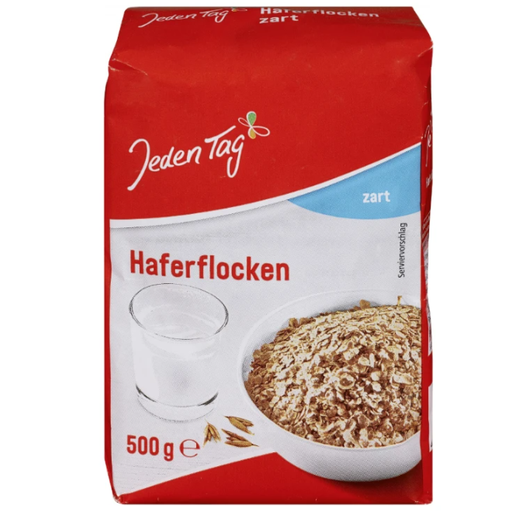 No image available
Jeden Tag fine oats, 500 g
The product name describes fine oats for a less coarse dough texture.
Check the product form on the pack: the ingredients list describes the product as oat flour instead. This difference matters if your recipe calls for whole oats.
View at Joybuy
 No image available
Jeden Tag jumbo oats, 500 g
The product name describes jumbo oats for recipes where you want the flakes to remain distinct.
Before buying, check that the pack really contains jumbo oats: the ingredients list describes the product as oat flour instead. You can’t tell the form from the product name alone.
View at Joybuy
Frequently asked questions
Are oats automatically wholegrain?
According to REWE, traditional oats are made from the parts of the dehulled oat grain and are classed as a wholegrain food. For blends and processed porridge products, check the product name and ingredients list on the specific pack.
Which oats are best for biscuits with more bite?
Jumbo or large-flake oats are the obvious choice if you want to see and feel the oats in your biscuits. Kölln recommends jumbo oats for biscuits with a hearty texture, and EDEKA also suggests them for biscuits. The recipe will affect the result too.
Can I replace all the flour in biscuit dough with oats?
Not without a suitable recipe and binding agent. According to EDEKA, dough made solely with oats won’t reliably hold together without an extra binding agent, so simply swapping the flour for oats isn’t enough.
What should I look for in oats for gluten-free baking?
If you need to bake gluten-free because you have coeliac disease, choose oats explicitly labelled “gluten-free” and check all the other baking ingredients too. The consumer advice centre points out that ordinary oats can come into contact with gluten-containing grains during processing.


