What should you look for when buying?
First, decide whether you’d prefer a plain oat base to customise yourself or a ready-made mix. Then compare the texture, ingredients and nutritional information. Any essential allergen requirements should take priority over your preferred consistency.
| Criteria |
What to check when buying |
Who it matters most to |
| Wholegrain and fibre |
Look for “wholegrain” in the product name or ingredients list. For mixes, compare the wholegrain content and fibre per 100 g. |
If porridge is a regular part of my breakfast, I want to be able to identify the grain base clearly and compare the nutritional information. Around 36% of consumers put this first. |
| Consistency |
Choose fine or instant oats for smoother porridge, and jumbo oats for more texture. Check the preparation instructions. |
If I want my porridge to be soft and easy to spoon up, the type of oats matters more to me than other features. Around 29% of consumers put their preferred consistency first. |
| Ingredients and sugar |
Read the ingredients list and check the sugar per 100 g. For flavoured mixes, check for other grains and allergens too. |
If I want to add fruit or other ingredients myself, I need a recipe whose contents are easy to assess. This is the most important buying consideration for around 21% of consumers. |
| Gluten and allergens |
If you need to follow a gluten-free diet, check for an explicit “gluten-free” label as well as the ingredients and allergen information on the pack. |
If I need to avoid gluten for medical reasons or take an allergen into account, I can’t choose my oats on taste alone. Around 14% of consumers put these requirements first. |
Oat products for different breakfast preferences
This Joybuy selection includes oat products labelled as fine or jumbo, including varieties explicitly labelled gluten-free. Choose the texture you prefer and, if you have specific dietary requirements, check the current product labelling.
 No image available
Kölln fine rolled oats, 500 g
For porridge made with fine rather than jumbo oats.
The product name describes these as finely rolled, fine oats. Check the wholegrain and allergen information on the pack.
View at Joybuy
 No image available
Kölln gluten-free fine rolled oats, 500 g
For shoppers looking for fine oats with an explicit gluten-free label.
“Gluten-free” appears in the product name. If you need to follow a gluten-free diet for medical reasons, check the current labelling and the ingredients and allergen information on the pack.
View at Joybuy
 No image available
Alnatura organic fine oats, 500 g
Finely rolled oats for making your own porridge.
The product name specifies organic oats and a 500 g pack. If you need to follow a gluten-free diet, check the pack for an explicit gluten-free label.
View at Joybuy
 No image available
Kölln gluten-free jumbo oats, 500 g
For porridge with more texture from the oats rather than a very smooth consistency.
The product name specifies jumbo oats and “gluten-free”. If you need to avoid gluten for medical reasons, check the current labelling on the pack and the allergen information.
View at Joybuy
 No image available
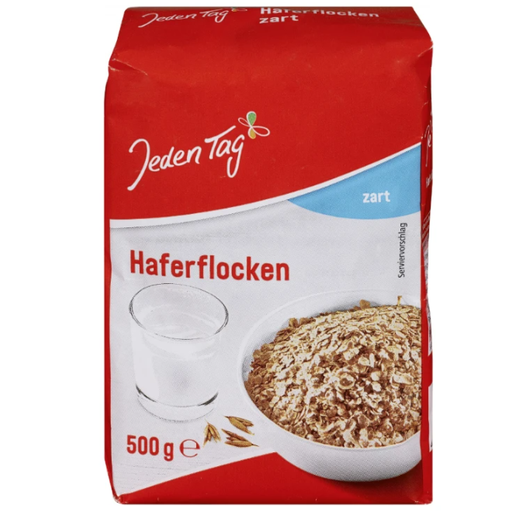
Jeden Tag fine oats, 500 g
A breakfast option if you’re looking for oats to prepare yourself.
The product name specifies fine oats. Before buying, check the pack to confirm whether these are oat flakes or oat flour. Check the allergen information too.
View at Joybuy
Frequently asked questions
How can I tell if a porridge product is wholegrain?
Look for “wholegrain” in the product name or ingredients list. Don’t rely on the word “porridge” or the colour alone. The German Nutrition Society identifies the wholegrain label as the key indicator. For mixes, compare the other ingredients and nutritional information too.
Should I choose fine or jumbo oats for my porridge?
Fine oats are better for smoother porridge, while jumbo oats give it a more noticeable texture. Choose according to the consistency you prefer, and follow the preparation instructions for the amount of liquid and soaking time.
How do I compare sugar and other ingredients in ready-made mixes?
For similar porridge varieties, compare the sugar per 100 g and read the ingredients list. According to Lebensmittelklarheit, ingredients are listed in descending order by weight. For fruit, nut or chocolate mixes, check the allergen information too.
Are ordinary wholegrain oats suitable for people with coeliac disease?
Ordinary oats aren’t automatically suitable if you need to follow a gluten-free diet, as they may come into contact with grains containing gluten. Lebensmittelklarheit recommends looking for an explicit “gluten-free” label. Also check the ingredients and allergen information for the specific product.
How should I store oats after opening?
Seal the opened pack well and store the dry product away from heat. Follow the storage instructions on your pack, as they can vary from product to product.


