If wholegrain is your priority for a quick weekday breakfast, choose cereals that clearly state their wholegrain content and compare sugar and fibre per 100 g. Unsweetened cornflakes may be a different choice if you’re watching sugar, but that doesn’t make them wholegrain. And don’t assume that cinnamon cereals containing wholegrain are the same as unsweetened flakes.
Which options suit different needs
A wholegrain-focused breakfast
If you’re short on time in the morning and specifically looking for wholegrain cereals, check that the wholegrain content is clearly stated and look at the fibre value. A longer ingredients list may also be something to consider.
Flakes with sugar in mind
If you want plain cornflakes as a breakfast staple, compare the sugar per 100 g and read the ingredients list rather than assuming that ‘unsweetened’ means wholegrain.
Wholegrain with a cinnamon flavour
If you prefer flavoured cereals, you can take the stated wholegrain content into account. Sugar is a separate consideration: you can’t tell how much sugar a product contains from its wholegrain content.
What to look for when buying
First decide whether a stated wholegrain content or a low sugar value matters more to you. Then check the flavour, ingredients and information on the pack.
| Criteria |
What to check |
Who it matters to |
| Wholegrain and fibre |
Look for a clear wholegrain statement and compare fibre per 100 g. The German Nutrition Society recommends eating at least a third of your cereal products as wholegrain options. |
If wholegrain is my main reason for choosing a cereal, I want to be able to see the amount on the pack and make sense of the fibre value. This is the main priority for around 42% of consumers. |
| Sugar |
Compare the ‘of which sugars’ value per 100 g and read the ingredients list. According to the German Food Federation, ingredients are listed in descending order by weight. |
I want plain flakes in the morning and choose mainly by sugar value, even if a variety doesn’t state a wholegrain content. This is the most important consideration for around 33% of consumers. |
| Flavour and routine |
Choose between plain flakes and flavoured cereals. For your chosen variety, check the ingredients and allergen information on the pack. |
My breakfast cereal needs to taste good and be easy to prepare; I also take the sugar value into account. Around 25% of consumers make this their top priority. |
Common buying misconceptions
-
‘Wholegrain’ doesn’t mean ‘low in sugar’
Nestlé Cereals Germany states that Cini Minis contain 36.6% wholemeal wheat flour, but also 24 g of sugar per 100 g. These figures describe different product characteristics.
Check the wholegrain content, fibre and ‘of which sugars’ value for the specific variety you’re considering.
-
Unsweetened cornflakes aren’t automatically wholegrain
REWE Bio and EDEKA Bio product information lists mainly maize and low sugar values, but doesn’t identify the flakes in question as wholegrain products.
If wholegrain is your priority, look for a clear wholegrain statement on the pack you choose.
-
Different serving sizes make comparisons harder
You can’t directly compare the sugar value for a small serving with the value for a differently sized portion. When comparing cereals, use the same basis: per 100 g.
Compare the nutrition information per 100 g first, then take your usual serving size into account.
-
Check the pack, not just the product name
The grain type, ingredients and possible allergen traces depend on the exact variety you buy. A recipe change could make information about a different pack inaccurate.
If you have an allergy or intolerance, pay particular attention to the ingredients and allergen information on the pack you’re buying.
Product ranges and brands to consider
Nestlé FITNESS
A wholegrain cereal range to compare for wholegrain content, fibre and sugar.
- For the FITNESS recipe in question, Nestlé Cereals Germany states 61.1% wholegrain wheat, 9.4 g of fibre and 8.8 g of sugar per 100 g.
- These figures apply to this recipe. Don’t assume they apply to a pack with a different name; check its ingredients and allergen information too.
REWE Bio
Unsweetened maize cornflakes as a plain breakfast staple, rather than a product labelled as wholegrain.
- REWE Markt GmbH states that the cornflakes in question contain 99% maize, less than 0.5 g of sugar and 4.1 g of fibre per 100 g.
- No wholegrain content is stated for this product. Check the allergen information on the specific pack if needed.
EDEKA Bio
Another unsweetened maize cornflake option for comparing ingredients and nutrition information.
- EDEKA24 states that the cornflakes in question contain 99.4% maize and 0.6 g of sugar per 100 g.
- This product is not labelled as wholegrain cornflakes. Check the allergen and ‘may contain’ information on the pack.
Nestlé Cini Minis
Cinnamon cereals for anyone weighing up flavour alongside a stated wholegrain content.
- Nestlé Cereals Germany states that they contain 36.6% wholemeal wheat flour and 6.4 g of fibre per 100 g.
- The manufacturer also states that they contain 24 g of sugar per 100 g. That’s a different choice from unsweetened maize flakes.
Kellogg's Corn Flakes
Classic maize cornflakes to consider if you don’t need a stated wholegrain content.
- Kellogg’s Shop Germany lists maize, barley malt, sugar and salt as ingredients, along with 3.0 g of fibre and 8 g of sugar per 100 g.
- No wholegrain content is stated for this variety, so don’t assume it’s a wholegrain option just because it’s made from grain.
Wholegrain cereals at Joybuy
This selection features a wholegrain cereal for a quick weekday breakfast. Whether plain maize flakes better suit your priorities depends on the wholegrain statement, sugar value and flavour.
 No image available
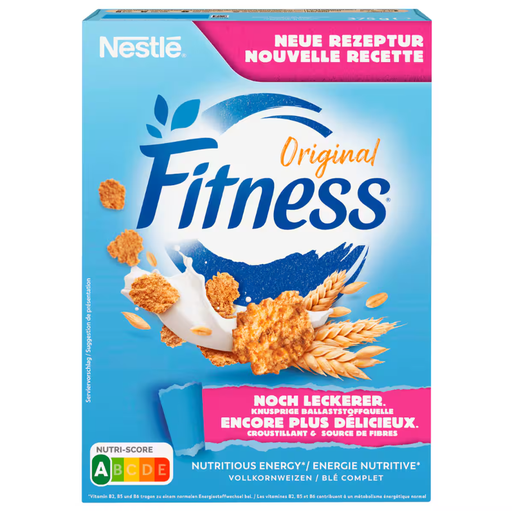
Nestlé Fitness Original Whole Grain Cereal, 375 g
A weekday breakfast option if you’re looking for a cereal explicitly labelled as wholegrain. The Joybuy product description states that it contains 58% wholegrain, 10.7 g of fibre and 8.8 g of sugar per 100 g.
Different wholegrain and fibre values are stated for another Nestlé FITNESS recipe. So before buying, check the nutrition information, ingredients and allergens on the specific pack. This variety isn’t stated to be maize-based.
Joybuy
Frequently asked questions
Are unsweetened organic cornflakes automatically wholegrain cornflakes?
No. According to their product information, the REWE Bio and EDEKA Bio cornflakes in question are made mainly from maize, but aren’t labelled as wholegrain cornflakes. If wholegrain matters to you, check for a clear statement on the specific pack.
How do I compare the sugar content of different cereals?
Compare the ‘of which sugars’ value per 100 g before comparing serving sizes. This keeps the basis for comparison consistent; you can then relate the figures to your usual portion.
Is the product name enough to choose a cereal if I have an allergy?
No. Read the ingredients and allergen information on the pack you’re actually buying. Lebensmittelklarheit points out that ingredients that commonly cause allergies are highlighted in ingredients lists; also check for product-specific ‘may contain’ information.
How should I store cornflakes after buying them?
Follow the storage instructions on your pack. For the EDEKA Bio cornflakes in question, EDEKA24 recommends storing them in a dry place away from heat. Don’t assume the same advice applies to every other variety.


