Wholegrain-conscious breakfast eaters
You want to know whether a breakfast cereal contains wholegrain, and in what proportion, for your Sunday breakfast. The grain information is a more reliable guide than the shape of the flakes.


If you’re looking for crunchy flakes with a clearly stated wholegrain content for Sunday breakfast, it’s worth checking the type of grain and the ingredients list. Unsweetened cornflakes put the emphasis elsewhere, while oats can be a wholegrain alternative with a different texture. Compare sugar and fibre per 100 g, and check the allergen information on the current pack if needed.
You want to know whether a breakfast cereal contains wholegrain, and in what proportion, for your Sunday breakfast. The grain information is a more reliable guide than the shape of the flakes.
You want to enjoy flakes with milk, yoghurt or fruit and compare the sugar content of the dry products. The “of which sugars” figure per 100 g gives you a consistent basis for comparison.
You need to check the types of grain, highlighted allergens and possible “may contain” warnings before choosing. A corn base alone doesn’t prove that a product is suitable for your needs.
A good fit if: You want crunchy flakes with a clearly stated wholegrain content.
The trade-off: Wholegrain content alone doesn’t tell you about sugar levels or whether a product is suitable for people with allergies.
A good fit if: You prefer classic cornflakes and are primarily comparing sugar per 100 g.
The trade-off: “Unsweetened” doesn’t indicate that a product is wholegrain.
A good fit if: A clearly stated wholegrain base matters more to you than the shape of cornflakes.
The trade-off: Oats aren’t cornflakes and have a different texture.
| Criteria | What to check when buying | Who it matters to |
|---|---|---|
| Wholegrain and fibre | Look for the type of grain and the stated wholegrain content in the ingredients list; compare fibre per 100 g. | If wholegrain is my main reason for choosing a product, I want to be able to see how much it contains. This is likely to be the priority for around 46% of consumers. |
| Sugar | Compare “of which sugars” per 100 g and check the ingredients list for added sweetening ingredients. | For my Sunday breakfast, I want to compare sugar levels, even if one option doesn’t state a wholegrain content. Around 36% of consumers are likely to prioritise low sugar levels above all else. |
| Allergens and gluten | Read the current ingredients list, highlighted allergens and possible “may contain” warnings; check separately for any gluten-free labelling you need. | If I need to avoid certain ingredients, I’ll only decide after checking the specific pack. For around 18% of consumers, this check is likely to come before wholegrain and sugar levels. |
A product’s stated wholegrain content and its sugar level are separate pieces of information. Nestlé lists 8,8 g of sugar per 100 g for FITNESS; retailer Müller lists 24,5 g per 100 g for Lion Cereals.
For each product, compare both “of which sugars” per 100 g and the type of grain and wholegrain content.
EDEKA24 lists EDEKA Bio Cornflakes ungesüßt (unsweetened) as containing 0,6 g of sugar per 100 g; no wholegrain content is stated.
If wholegrain is a deciding factor, look for this information in the product description and ingredients list.
Even cornflakes can carry warnings about traces of gluten-containing grains. For EDEKA Bio Cornflakes ungesüßt, EDEKA24 lists possible traces of gluten, among other things.
If you have specific requirements, check the labelling on the current pack, including the ingredients, allergens and “may contain” warnings.
Wholegrain flakes for shoppers looking for a stated wholegrain content in crunchy cereals.
Echte Kölln Kernige oats are a wholegrain alternative, not cornflakes.
Kellogg's Corn Flakes are included here as an example of classic cornflakes.
The unsweetened organic cornflakes are a corn-based option for comparing sugar levels.
These products include oats, wholegrain wheat biscuits, oat muesli and oat pillows as alternatives to cornflakes. For each option, check whether the grain base, sugar content and texture suit your Sunday breakfast.
 No image available
An alternative to cornflakes if you’re happy to have oats for Sunday breakfast instead. The pack contains 500 g; check the wholegrain information and allergens on the current pack.
 No image available
For a breakfast of fine rolled oats instead of cornflakes. The pack contains 500 g; compare the nutritional information per 100 g and check the current allergen labelling.
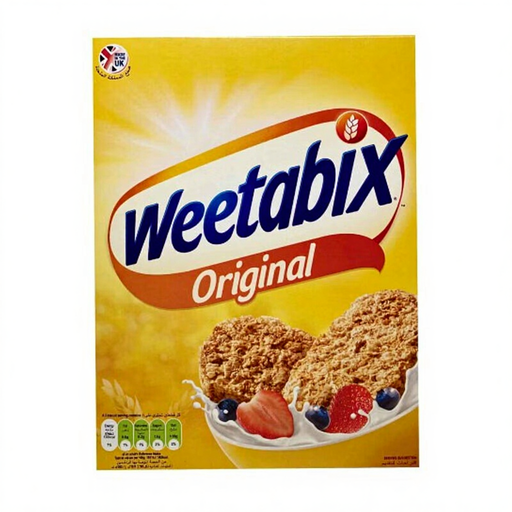 No image available
A wholegrain wheat option if you’re considering cereal biscuits instead of individual cornflakes. The pack contains 430 g; if you have wheat or gluten requirements, the current labelling is essential.
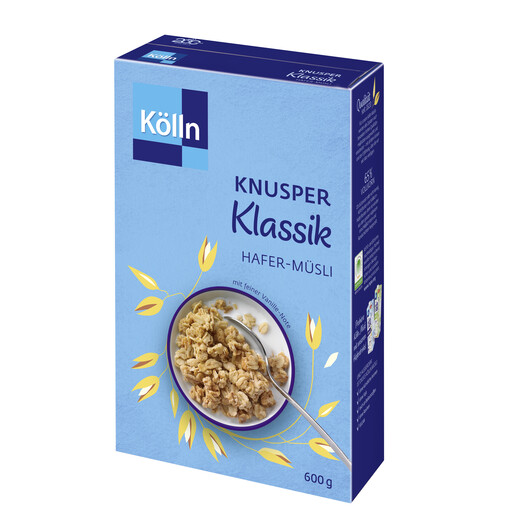 No image available
For a breakfast of oat muesli instead of cornflakes. The pack contains 600 g; check the wholegrain content and sugar per 100 g separately.
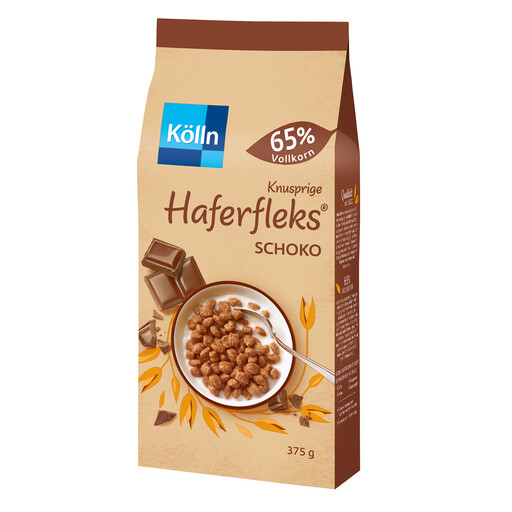 No image available
A chocolatey oat cereal, not cornflakes. The pack contains 375 g; when comparing it with less sweet options, the sugar per 100 g is particularly important.
No. The shape of a product doesn’t reliably indicate its wholegrain content. Kellogg's lists corn, barley malt, sugar and salt as ingredients in its Corn Flakes, while Nestlé states that FITNESS contains 61,1% wholegrain wheat. The information for each specific product is what matters.
No. According to consumer advice centre Verbraucherzentrale, “no added sugar” means that no sugars or other ingredients with a sweetening effect have been added. The “of which sugars” figure per 100 g shows how much sugar the finished product contains.
No. Check the current pack for all ingredients, allergens, possible traces and any gluten-free labelling you may need. Despite their corn base, EDEKA24’s unsweetened organic cornflakes may contain traces of gluten.
Start by comparing the type of grain and any stated wholegrain content, then compare sugar and fibre per 100 g. Also check the ingredients and allergens; milk, yoghurt and other additions will change the nutritional values of your finished breakfast.