A croissant is a reliable wholegrain choice for a holiday snack only if the wholegrain label and ingredient information match the specific product; a dark colour or visible grains aren’t enough. If the classic croissant texture isn’t essential, a clearly labelled wholegrain baked good is another option. Check allergens and preparation requirements separately for every choice.
Who needs to consider their choice?
Holiday households looking for more fibre
If you’re looking for a snack with a clearly identifiable wholegrain content, check the product name and ingredients rather than the colour of the baked good. This is also the advice from the German Nutrition Society and Lebensmittelklarheit.
Families checking ingredients and allergens
If you’re shopping for several people, you’ll need information about the specific croissant or baked good. For allergy concerns, pay particular attention to cereals containing gluten and, depending on the recipe, milk.
Households short on preparation time
For an impromptu holiday break, it makes a difference whether the baked good is ready to eat or the croissant dough needs to be baked all the way through, as EDEKA states for its GUT&GÜNSTIG product.
What should you look for when buying?
First, check whether the specific product is labelled as a wholegrain baked good. Then check the allergen information and whether it’s ready to eat.
| Criteria |
What to check |
Who should consider it? |
| Wholegrain content |
Look for an explicit wholegrain label and check the ingredients. ‘Multigrain’, spelt or visible grains alone don’t prove that a product is wholegrain. |
If I’m specifically looking for a wholegrain snack for a holiday break, I don’t want to base my choice on its dark colour. For around 42% of consumers, this confirmation is a key consideration when buying. |
| Ingredients and allergens |
For packaged products, read the ingredient and allergen information; for unwrapped products, ask for the allergen information provided. |
When shopping for several people, I need to be able to tell whether the specific baked good is suitable based on its ingredients. Around 33% of consumers prioritise ingredients and allergens. |
| Preparation |
Check whether the product is ready to eat or needs to be baked before eating. |
For a last-minute day out, I want to be able to pack a snack without taking unbaked dough with me. For around 25% of consumers, convenience and preparation come first. |
Common misconceptions
-
Assuming ‘multigrain’ or a dark colour proves a product is wholegrain
On their own, these features don’t tell you whether a croissant contains wholemeal flour or wholegrain meal. The German Nutrition Society and Lebensmittelklarheit recommend checking the specific product name and information.
Compare the wholegrain label with the ingredients rather than relying on appearance.
-
Overlooking allergens in unwrapped baked goods
Unwrapped baked goods can also contain allergenic ingredients. According to Lebensmittelklarheit, information about allergens that must be declared should be available for unwrapped products too.
If you need to avoid certain ingredients, ask for the allergen information for the specific baked good before you buy.
-
Mistaking ready-to-bake dough for a ready-to-eat snack
EDEKA states that its GUT&GÜNSTIG croissant dough must not be eaten raw. The recommended baking time is 12–15 minutes, depending on the oven.
For an impromptu day out, choose a ready-to-eat product or make sure you bake the dough fully before packing it.
Brands to help guide your choice
REWE
REWE lists croissants in its online product search.
- You can check product information to help you choose a specific item.
- To find out whether a croissant on offer is wholegrain, check its own product name and ingredients.
EDEKA / GUT&GÜNSTIG
EDEKA describes a GUT&GÜNSTIG croissant dough that’s ready to bake.
- Ingredient, allergen and preparation information is available for this specific dough product.
- The product described is made with wheat flour and isn’t labelled as a wholegrain croissant; always check the information on the pack you buy.
Lidl – Unser Brot
Under ‘Unser Brot’, Lidl describes butter croissants and other baked goods.
- Croissants and other types of baked goods can be considered as different snack options.
- For a wholegrain choice, the information for the specific product matters, not the rest of the bakery range.
Wholegrain snacks at Joybuy
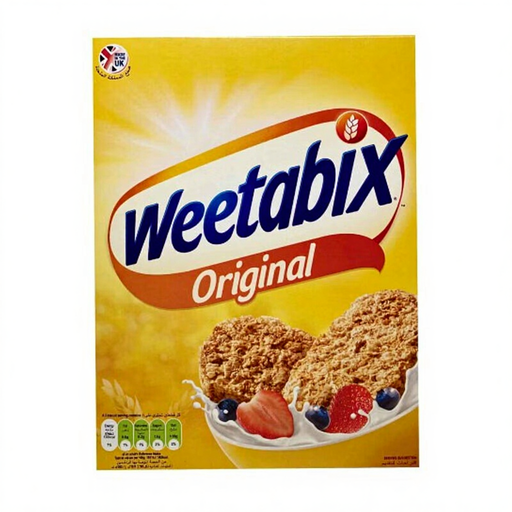
If you’re open to a wholegrain snack without the texture of a croissant for your holiday break, the wheat biscuits below are a different type of product from a croissant or wholegrain bread roll.
 No image available
Weetabix Original wholegrain wheat biscuits, 430 g
A snack alternative for a holiday break if wheat biscuits appeal more than flaky croissant pastry.
Wheat is mentioned in the product name. If you have allergy concerns, check the ingredients and allergen information on the pack, along with the portioning and preparation instructions.
View at Joybuy
Frequently asked questions
Is a dark or seeded croissant automatically wholegrain?
No. A dark colour or visible grains don’t prove that a product contains wholegrain. Check the wholegrain label and ingredients for the specific product; the German Nutrition Society specifically points out that colour can be misleading.
Where can I find allergen information for unwrapped croissants?
Information about allergens that must be declared should also be available for croissants sold loose, as Lebensmittelklarheit explains. Ask the bakery for information about the specific product. Cereals containing gluten and, depending on the recipe, milk are important things to check.
Can I take chilled croissant dough straight on a day out?
The GUT&GÜNSTIG croissant dough described by EDEKA isn’t suitable for eating raw and must be baked all the way through before eating. If you want a snack that doesn’t need baking, choose a ready-to-eat product instead.


