Families who eat bread regularly
If you buy bread for several meals, you’ll need the right amount and a plan for opened packs or leftover slices.


For families who eat bread regularly, packaged wholemeal bread can be a practical option, provided the pack size, ingredients and storage instructions suit how much you actually use. Fresh bakery bread is ideal for a meal you’re planning to share soon, while a bread mix takes time and the right equipment. What feels like a premium choice depends more on the type of bread you want and the occasion than on the brand name alone.
If you buy bread for several meals, you’ll need the right amount and a plan for opened packs or leftover slices.
For a family breakfast or dinner, the crust, type of grain and freshness you want may matter more than having a large supply. Baking it yourself takes extra time.
If you need to avoid certain grains or allergens, check the ingredients and allergen information for each specific loaf. Breads sold at the same shop can vary.
First, decide whether you need bread ready to serve, a supply to last several days or a mix that still needs to go in the oven. Then check the quantity, ingredients and storage instructions against what works for your household.
A good fit if: you’re planning bread for several meals and want to check the product information before buying.
Consider: the pack size and storage instructions after opening need to suit how much you’ll use.
A good fit if: you’re planning to serve the bread soon and want a fresh crust.
Consider: buy larger quantities as needed or freeze them in portions.
A good fit if: homemade bread is part of the occasion and you have the time and an oven or bread maker.
Consider: the mix makes measuring easier, but you’ll still need to prepare and bake the bread.
| Criteria | What to check | Who should consider this? |
|---|---|---|
| Ingredients and allergens | Check the grains, ingredients list and allergen information on the specific product. | If my family needs to avoid certain ingredients, clear labelling is especially important. Around 33% of consumers would make checking ingredients their main reason for choosing a product. |
| Quantity and consumption | Compare the pack weight with the amount of bread you’re likely to need for the next few meals. | When I’m buying for several people, I want to plan for enough bread without ending up with a large, partly eaten loaf. Around 27% of consumers would prioritise planning the quantity. |
| Freshness and leftovers | Follow the storage instructions and check whether leftover bread can be frozen in portions. | If our bread consumption varies from day to day, I want to defrost only the slices we need. Avoiding leftovers would be the top priority for around 20% of consumers. |
| Occasion and baking effort | Choose between bread that’s ready to serve and a bread mix; for a mix, check the instructions and equipment required. | For a family breakfast, I want to decide whether fresh bread from the shop will do or whether we have time to bake our own. Around 20% of consumers would first consider the occasion and the effort involved. |
A brand name or organic label won’t tell you whether the type of grain, crust and pack size suit the meal you have planned.
Before you buy, decide which features matter to you and check them against the specific loaf.
Even a larger household won’t necessarily get through a whole loaf in time. Poor storage can cause bread to dry out or spoil.
Buy an amount that suits your needs and freeze any leftover slices in portions if necessary. Follow the pack instructions for storing cut bread, too.
The term “multigrain” doesn’t mean a bread is suitable for people who need to avoid certain grains.
Check the ingredients and allergen information for every product; don’t assume a bread is gluten-free based on its name.
A mix doesn’t save you the preparation and baking time. That can matter if you’re planning to serve the bread soon.
Check the instructions and equipment needed before choosing a mix for a specific serving time.
Seitenbacher’s wholemeal bread mix is worth considering if you’d like to bake your own. According to the manufacturer, the 885-g pack contains enough ingredients to make one or two loaves.
The EDEKA Bio product described is a packaged rye wholemeal bread made with natural sourdough, in a 500-g pack.
One example stocked by REWE is Pema Bio 4-Korn wholemeal bread, in a 500-g pack. The bread is made by Pema, rather than to a standard REWE own-brand recipe.
Lidl describes “Unser Brot” as a bakery range with fresh products baked several times a day, including spelt, multigrain and sourdough breads.
This selection includes packaged pumpernickel for a meal with no baking required, alongside bread mixes for households who want to bake their own. Whichever option you choose, the quantity needs to be right; with a mix, you’ll also need to allow time for preparation.
 No image available
An option if your family is planning a homemade spelt loaf for several meals. The pack contains 1 kg of bread mix; you’ll need to prepare it, allow time for proving and bake it. Check the allergen information on the product.
 No image available
For a family meal without baking your own bread. The pack contains 500 g of pumpernickel; check the quantity against your needs and follow the storage instructions on the pack after opening.
 No image available
A packaged 500-g option for households who want to serve bread to several people. If the grain mix or allergens matter to you, check the current pack information particularly carefully: the product details available for green spelt and allergens are not consistent throughout.
 No image available
For a meal with packaged bread rather than a bread mix. The pack contains 500 g of pumpernickel. Before buying, check the allergen information on the specific product, particularly for milk and sesame, as the details available differ.
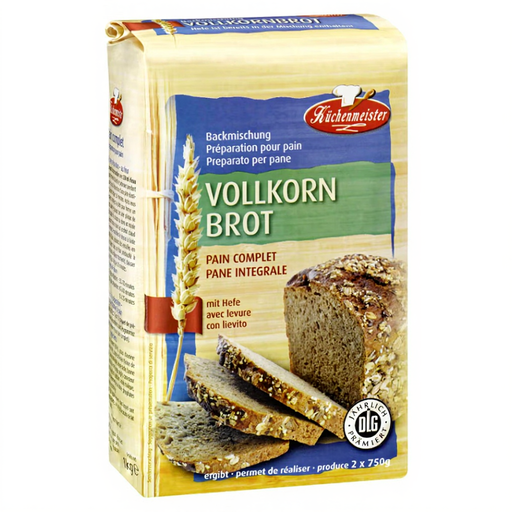 No image available
For a family meal where you want to bake the bread yourself. The mix weighs 500 g; check the pack instructions before buying to see how much bread it makes. If the wholemeal content is important, pay particular attention to the information about wheat flour on the pack.
No. The right size depends on how much bread you actually eat or can freeze in portions. A large loaf isn’t much help if a substantial amount is left over once it’s been opened.
As a rule, store bread at room temperature in a dry place away from light, and follow the instructions on the pack. The German Federal Centre for Nutrition notes that bread dries out in the fridge; you can freeze any extra slices in portions.
No. If you can see mould on bread, you should throw away the whole loaf. The consumer advice centre notes that mould can spread beyond the visible patch.
No. Wholemeal, organic and gluten-free describe different properties. Check the labelling and ingredients list for the specific bread rather than assuming these qualities from its name.
Check the current ingredients list, highlighted allergens and precautionary “may contain” information for every loaf. For example, the Seitenbacher mix described contains rye, wheat and spelt; EDEKA24 lists possible traces of tree nuts, sesame and soya for its organic rye wholemeal bread.