For packed lunches prepared regularly, pre-sliced rye wholemeal bread is a practical starting point, provided the pack size, ingredients and rate of consumption suit the school week. Fresh bread may be a good choice if you have particular preferences when it comes to crust and texture, while individually portioned breads and bread mixes call for different shopping and time-planning. Check the specific product to confirm that a bread is wholemeal and to see which allergens it contains.
Who should consider their choice carefully?
Households that regularly need packed lunches
If you pack bread for several school days, consider the pack size, number of slices and how much will actually be eaten. Pre-sliced bread makes preparation easier, as long as you use the pack in good time.
Families with particular bread preferences
If your child doesn’t like certain crusts or firm, grainy slices, try a small amount of a different wholemeal variety first. It’s also worth considering whether the bread is easy to fill and eat from a lunchbox.
Households that need to check ingredients and allergens
If you need to avoid certain grains or other allergens, check the information for each specific variety. Colour, visible grains and the brand name are no substitute for checking the ingredients list and allergen information.
What should you look for when buying?
Start with the amount you’ll actually need for the school week. Then check the wholemeal description, ingredients and nutritional information. Everyday convenience also plays a part in choosing between sliced bread, fresh bakery bread and a bread mix.
| What matters |
What to check when buying |
Who it matters to |
| Pack size and how much you’ll use |
Compare the pack weight with the number of slices you need for the school week; if you’re buying a bread mix, allow time for preparation. |
If I prepare packed lunches every day, I don’t want to run out of bread or regularly throw leftovers away. This need to plan ahead is a priority for around 31% of consumers. |
| Wholemeal content and nutritional information |
Read the specific bread description and ingredients; compare fibre and salt only on the same basis, such as per 100 g. |
For packed lunches, I want to know which grain has been used and what the bread’s nutritional value is. Around 31% of consumers consider this their top priority. |
| Texture and ease of eating |
Consider the shape of the slices, the crust and portion size; try a small amount of your chosen variety first. |
If firm or very grainy bread gets left in the lunchbox, I need a wholemeal variety that’s easier to eat. This is the main concern for around 23% of consumers. |
| Ingredients and allergens |
Check the current ingredients list and allergen information; for unpackaged bread, use the information provided at the point of sale. |
If anyone in my household needs to avoid certain ingredients, checking them comes before freshness and portion size. This is the top priority for around 15% of consumers. |
The German Nutrition Society recommends wholemeal bread as a basis for packed lunches and notes that it contains more fibre than white bread. This doesn’t tell you which particular variety a child will prefer. Wholemeal bread and multigrain bread are not interchangeable terms, either: the information for the specific bread is what counts.
Common selection mistakes
-
Assuming a dark colour or visible grains mean it’s wholemeal
Bread that looks dark or is sprinkled with grains isn’t necessarily the wholemeal variety you’re looking for.
Check the specific bread description and ingredients list instead of choosing on appearance alone.
-
Choosing a pack without considering how much you’ll use
A large pack is only practical for a lunchbox packed every day if you’ll use the bread in time or store it appropriately.
Plan how many portions you’ll need for the school week, and freeze the bread in portions if necessary. The Verbraucherzentrale (German consumer advice centre) recommends freezing and thawing later as a way to store supplies.
-
Overlooking allergen information
Rye, wheat and spelt are gluten-containing grains. Depending on the recipe, other ingredients and precautionary allergen statements may also be relevant.
Read the current information for the specific product. If you need to follow a gluten-free diet for medical reasons, ordinary gluten-containing wholemeal bread is not a suitable alternative.
-
Assuming in-store bread and pack information are the same everywhere
EDEKA notes that availability and pack information for its Bio Brotkorb may vary. The specific product also matters when buying unpackaged bread.
Keep a suitable alternative in mind for the school week and check the current information on the product or at the in-store bakery when you shop.
Brands and ranges to consider
ja! / REWE
REWE’s ja! range is its entry-level brand. One option for a lunchbox is ja! Rye Wholemeal Bread, a 500 g pre-packed loaf.
- REWE provides ingredient and nutritional information for this specific bread.
- The recipe contains rye and wheat; also check the precautionary statement about possible traces of sesame.
REWE Bio
The 500 g pre-packed REWE Bio Rye Wholemeal Bread is another rye wholemeal option.
- REWE states that this bread contains 10,4 g of fibre per 100 g and lists its ingredients.
- According to the product information, it may contain traces of soya, sesame and tree nuts.
EDEKA / EDEKA Bio
EDEKA’s ranges include GUT&GÜNSTIG and the EDEKA Bio Brotkorb, with five individually portioned types of bread.
- The different varieties in the Brotkorb offer options for changing up packed lunches.
- Ingredients and possible traces vary by variety. EDEKA notes that pack information may differ and that the Brotkorb may not be available in every store.
Lidl – Unser Brot
Lidl’s in-store bakery range includes wholemeal and multigrain breads. For a lunchbox, the description of the specific variety on offer is what matters.
- When shopping in store, you can choose a specific bakery product by its shape and crust.
- Wholemeal and multigrain bread are not the same; check the ingredients and allergen information for the product you choose.
Seitenbacher
Seitenbacher offers a wholemeal bread mix for households that want to bake their own bread for packed lunches.
- According to Seitenbacher, the 885-g mix makes one or two loaves and can also be used in a bread maker.
- It contains rye, wheat and spelt. Baking from scratch also takes time and requires suitable equipment.
Suitable breads and bread mixes at Joybuy
This selection includes ready-to-eat breads and bread mixes for baking your own packed-lunch bread. For ready-made bread, compare the pack size you need; for bread mixes, factor preparation time and the ingredients of the finished bread into your decision.
 Image unavailable
Mestemacher Traditional Westphalian Pumpernickel, 500 g
This ready-to-eat pumpernickel is worth considering if you don’t want to set aside time for baking bread for packed lunches. Before buying, check the current ingredients and allergen information, and make sure the shape and texture suit your child.
View at Joybuy
 Image unavailable
Alnatura Organic Spelt and Green Spelt Bread, 500 g
This ready-to-eat bread is an option if you’d like to consider grains other than rye for packed lunches. If you need to check for gluten-containing grains or other allergens, the current information on the pack is essential.
View at Joybuy
 Image unavailable
Küchenmeister Wholemeal Spelt Bread Mix, 1 kg
This bread mix suits a household that wants to make bread in advance for several packed lunches. It isn’t ready to eat, so allow time for preparation and have water and an oven or bread maker to hand. Check the ingredients on the pack, too.
View at Joybuy
 Image unavailable
Mestemacher Sylt Walnut Wholemeal Bread, 250 g
The smaller pack may be useful if you’d like to try a variety first to see whether it works for packed lunches. Check the ingredients and allergen information before buying, and see whether the bread is pre-sliced.
View at Joybuy
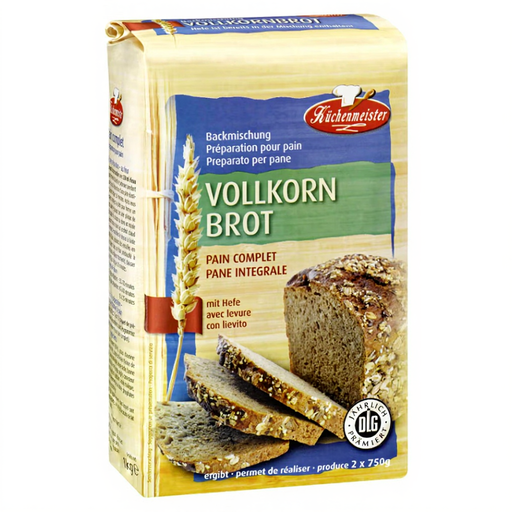 Image unavailable
Küchenmeister Wholemeal Bread Mix, 500 g
This mix is worth considering if baking fits into your preparations for the school week. Check the ingredients carefully, especially if you’re looking for a bread made mainly with wholemeal flour. You’ll also need to allow time for preparation and baking, and have suitable equipment.
View at Joybuy
Frequently asked questions
How can I identify gluten-containing grains in pre-packed bread?
Check the ingredients list for the specific bread. The Lebensmittelverband Deutschland (German Food Federation) explains that gluten-containing grains are labelled as allergens there. Each time you buy, also check the current precautionary allergen statements if they’re relevant to your household.
Is dark or grainy bread automatically wholemeal?
No. Check the specific description and read the ingredients list. Dark colour or visible grains alone don’t tell you whether it’s the wholemeal variety you’re looking for.
How can I store bread for several school days?
Divide the bread into portions according to how much you plan to use. For longer-term storage, the Verbraucherzentrale recommends freezing the portions you need and thawing them later. Also follow the instructions on the relevant pack.
When is a wholemeal bread mix a practical choice for packed lunches?
A bread mix works well if you can set aside time for baking and have suitable equipment. Seitenbacher says its wholemeal bread mix makes one or two loaves. For each mix, check the ingredients, any additional ingredients needed and the instructions.


