Who is this choice important for?

Parents of fussy lunchbox eaters

If visible seeds or a firm texture are a stumbling block, a finer-textured bread may make it easier to get started. The Verbraucherzentrale recommends initially mixing light and dark flours, and reports that many children prefer bread without visible seeds to seed-heavy bread that takes more chewing.

Families focused on wholemeal

If you’re specifically looking to buy wholemeal, check the product name and ingredients. Wholemeal flour can be finely milled; according to the Verbraucherzentrale, “multigrain” alone doesn’t confirm that a product contains wholemeal.

Households that need to consider allergens

Wheat, rye and spelt, as well as other ingredients and may-contain statements, vary from one bread or bread mix to another. Always check the details for the specific variety on the current packaging, or the allergen information for unwrapped bread.

What should you look for when buying?

Start with a texture your child will actually eat, then check the wholemeal ingredients, lunchbox-friendly format and allergens on the specific product.

What to consider What to check Who is it important for?
Fine texture Look for finely milled wholemeal ingredients and check the texture of the bread you’ve chosen. If my child doesn’t like visible seeds, I want to start with bread they’ll enjoy eating at break time. For around 33 % of consumers, this acceptability comes first.
Clearly identifiable wholemeal Check the product name and ingredients list for wholemeal flour or wholemeal meal; colour and “multigrain” aren’t enough. If I’m choosing wholemeal deliberately, I want the ingredient to be clear—not just a dark-looking crust. Around 27 % of consumers put this transparency first.
Lunchbox suitability and freshness Choose a slice size and pack size that suit your morning routine and how much bread your household will use. There’s little time to slice and fill bread before school, and I want to use up what I buy. For around 20 % of consumers, this practicality is the most important factor.
Grains and allergens Check the current ingredients list and allergen information for each variety, including whenever the recipe changes. If we need to avoid certain grains or other allergens, the exact ingredients matter more than the type of bread. For around 20 % of consumers, these checks come first.

Common mistakes when buying bread

  • Assuming a dark colour or “multigrain” means wholemeal

    A rustic appearance tells you little about the wholemeal ingredients used. According to the Verbraucherzentrale, “multigrain” doesn’t automatically mean wholemeal; malt extract can also make bread darker.

    Compare the product name and ingredients list, and look for clearly named wholemeal flour or wholemeal meal.

  • Going straight for very seedy bread for a fussy child

    According to the Verbraucherzentrale, many children prefer bread without visible seeds to seed-heavy bread that takes more chewing. A big change in texture could mean their lunch is left uneaten.

    Try a finer-textured bread with verifiable wholemeal ingredients, then gradually introduce other varieties if your child is happy with it.

    If the bread regularly goes untouched, more of it may end up being thrown away.

  • Assuming allergen information applies to other types of bread

    “Mixed bread” and “wholemeal bread” don’t tell you which grains are used or whether other allergens are present. Wheat, rye and spelt contain gluten, so bread made with them isn’t a gluten-free alternative.

    For packaged bread, check the information on the current pack. For unwrapped bread, ask for the allergen information for the specific variety you’ve chosen.

  • Buying more bread than you can use in time

    How well bread keeps varies by type. The Verbraucherzentrale notes that bread with a high proportion of rye, wholemeal flour or meal generally stays fresh for longer than bread with more wheat.

    Choose an amount you can use, store bread at room temperature in a dry place away from light, and freeze any extra slices if needed.

Brands and suppliers to consider

REWE

Supplier of packaged and fresh bread, including mixed and wholemeal varieties.

  • The product information for one sliced wheat-mixed bread lists 55 % wheat flour and rye wholemeal flour in the sourdough. This makes it easy to check the ingredients in that variety.
  • Rye wholemeal flour in the sourdough doesn’t prove that the bread as a whole has a high wholemeal content. The details for the specific product remain the deciding factor.

EDEKA

Supplier of various types of bread, including portion-sized formats.

  • The EDEKA Bio Brotkorb includes five portioned varieties with ingredients listed for each, including rye wholemeal and spelt bread.
  • EDEKA notes that information may differ from what’s shown on the packaging. So check the specific product you’ve chosen.

Lidl – Unser Brot

In-store bakery range with different types of bread, including spelt and multigrain.

  • The range of bread types gives you the chance to look in store for a format and texture that works for the lunchbox.
  • The term “multigrain” doesn’t confirm that wholemeal ingredients are used. Check the ingredients and allergens for the specific variety.

Seitenbacher

A bread-mix option for households that want to bake their own bread and choose the thickness of the slices.

  • One wholemeal bread mix lists rye wholemeal flour, wheat wholemeal flour and spelt, along with baking instructions.
  • Preparation takes time. As it contains the grains listed, this mix isn’t a gluten-free alternative.

Bread mixes for home baking

These two Joybuy products are bread mixes for baking your own bread. They’re suitable if you have time to bake before the school week and slice the bread yourself afterwards; they’re not a substitute for ready-to-fill slices.
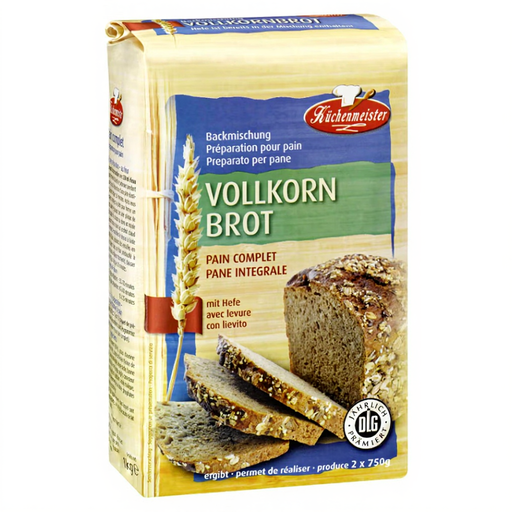
Küchenmeister wholemeal bread mix, 500 g

Küchenmeister wholemeal bread mix, 500 g

An option if you’d like to bake the bread yourself before the school week and slice it for the lunchbox afterwards.

Pack size: 500 g bread mix. If a fine texture or particular allergens are important to your choice, check the ingredients and information about the finished bread before buying.

View at Joybuy

Küchenmeister wholemeal spelt bread mix, 1 kg

Küchenmeister wholemeal spelt bread mix, 1 kg

An option if you’d like to bake wholemeal spelt bread yourself and can fit the preparation in before the school week.

Pack size: 1 kg bread mix. Spelt contains gluten; also check the full ingredients list and whether your child will enjoy the texture of the finished bread.

View at Joybuy

Frequently asked questions

Is multigrain bread automatically wholemeal?

No. The Verbraucherzentrale notes that “multigrain” doesn’t automatically mean wholemeal. Check the product name and ingredients list for clearly named wholemeal ingredients.

Does wholemeal bread have to contain visible seeds?

No, wholemeal flour can also be finely milled. So if a child doesn’t like seeds, visible seeds aren’t a reliable way to judge the wholemeal content; check the ingredients and texture of the variety you’ve chosen instead.

Is wheat and rye mixed bread gluten-free?

No, not if it contains wheat and rye: both are gluten-containing grains. Check the current ingredients and allergen information for the specific bread instead of assuming it’s suitable based on the name “mixed bread”.

How can you keep bread for several school days?

Store bread at room temperature in a dry place away from light, and freeze any slices you won’t use in time. If you see mould, the Verbraucherzentrale recommends throwing away the whole loaf.

Do you have to choose pure wholemeal bread straight away for the lunchbox?

No. The Verbraucherzentrale describes initially mixing light and dark flours as a gradual way to make the switch for children. Mixed bread may be suitable, provided its ingredients meet your wholemeal requirements and individual needs.