For busy shoppers stocking up
If you want to shop or bake less often, choose an amount you can use up sensibly, both before and after opening. For a larger shop, check the best-before date and plan which portions to freeze.


For a predictable bread supply, packaged wholemeal rye bread labelled as sourdough is an option, provided the best-before date, pack size and guidance for after opening suit how much you use. If you prefer fresh bread, buy only what you can eat in time or freeze in portions. Baking ingredients let you decide how much bread to make, but you’ll need to allow time for preparation.
If you want to shop or bake less often, choose an amount you can use up sensibly, both before and after opening. For a larger shop, check the best-before date and plan which portions to freeze.
If crust and freshness matter more to you than keeping an unopened pack in the cupboard, freezing bread in portions is worth considering. You’ll also need to plan how to store the loaves you’ll eat soon.
Check the stated grain types, wholemeal ingredients and sourdough. If you need to take allergens into account, check the current pack labelling or the information provided for loose goods.
First, decide whether you want bread that’s ready to eat without baking, or whether you’d prefer to freeze fresh bread or bake it yourself.
A good fit if: you want bread ready to eat without any baking, and can use it soon after opening.
The trade-off: An unopened pack makes it easier to plan ahead. How long the bread can be kept after opening depends on the guidance for that particular product.
A good fit if: fresh bread is your priority and you have space to freeze portions.
The trade-off: If you don’t freeze it, make sure you can use the amount you buy soon.
A good fit if: you want to choose the recipe, loaf size and freezer portions yourself.
The trade-off: Baking ingredients aren’t ready-to-eat bread, so you’ll need to allow time for preparation and baking.
| Criterion | What to check when buying | Who it matters most to |
|---|---|---|
| Planning your stock | Pack size and best-before date; for packaged bread, also check the guidance for after opening. | If I buy several loaves, I don’t want to open or defrost more bread than I can use. A predictable amount is a priority for around 45 % of consumers. |
| Sourdough and freshness | Check the sourdough label and type of grain; for fresh bread, consider whether you can freeze it in portions. | Fresh bread and a clearly stated sourdough ingredient matter more to me than a loaf that keeps unopened for a long time. This is likely to be the deciding factor for around 33 % of consumers. |
| Recipe and allergens | Check the product name, ingredients list and allergen information; for loose goods, check the information provided. | If I need to avoid certain ingredients or allergens, I want to be able to check the exact recipe before buying. This is the main concern for around 22 % of consumers. |
Wholemeal and sourdough bread still need to be stored properly. According to Verbraucherzentrale, breads with a high proportion of rye, wholemeal flour or cracked grains tend to stay fresh for longer. This doesn’t mean that every loaf you buy has a set shelf life.
Buy an amount you can use soon, and freeze the rest in suitable portions.
A dark crumb, visible grains or a craft-sounding name doesn’t, on its own, tell you which grains and wholemeal ingredients the bread contains, or how it was made.
Read the product name and ingredients list. If the method of production is important to you, ask the specific supplier.
Allergen information applies to the specific product. For example, EDEKA24 lists possible traces of tree nuts, sesame and soya for EDEKA Bio Wholemeal Rye Bread.
Check the current pack labelling. For loose goods, read the allergen information provided before buying.
One packaged option is EDEKA Bio Wholemeal Rye Bread, described by EDEKA24 and sold in a 500-g pack.
The brand offers ingredients for people who want to bake their own sourdough bread and portion the finished loaves as needed.
The in-store bakery range may suit people who want to eat fresh bread soon after buying it or freeze it in portions.
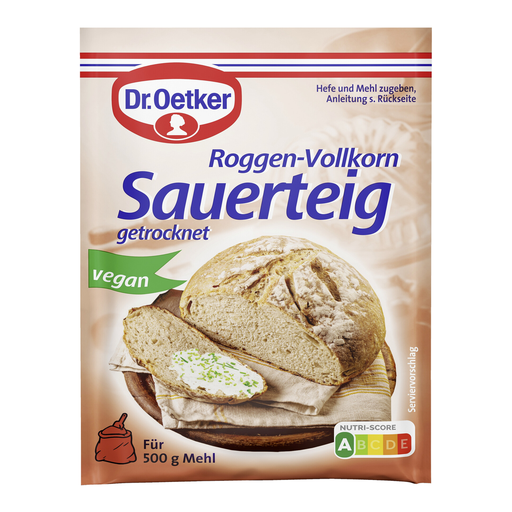
This selection is for people who want to stock up on ingredients to bake their own wholemeal bread: a wholemeal spelt bread mix and a dried wholemeal rye sourdough ingredient. Neither product is a ready-made loaf.
 No image available
For anyone who’d rather stock up on baking mixes than ready-made loaves, and wants to bake their own wholemeal spelt bread. The 1-kg pack is a baking mix; you’ll need to prepare and bake it before it’s ready to eat.
 No image available
For anyone who wants to stock up on a dried sourdough ingredient for baking their own wholemeal rye bread. The 15-g pack isn’t a ready-made loaf; you’ll need to allow for additional ingredients and a suitable recipe.
There’s no set length of time that applies to every wholemeal sourdough bread. Verbraucherzentrale says that breads with a high proportion of rye, wholemeal flour or cracked grains tend to stay fresh for longer. Your storage conditions and the condition of the bread also matter, as does the product-specific guidance for packaged bread.
For bread in general, Verbraucherzentrale recommends storing it at room temperature in a dry place away from light, rather than in the fridge, where it can dry out more quickly. Freezing in portions is an option for longer-term storage; follow any different guidance on the specific pack.
No. If you can see mould, throw away the whole loaf, as it may have spread beyond the visible patch.
Relevant allergens must also be labelled for unpackaged baked goods, as Lebensmittelklarheit explains. Check the information provided before buying or ask a member of staff for details about the specific bread.
No, the name doesn’t necessarily mean it’s 100 % wholemeal. Lebensmittelklarheit refers to the non-binding guidelines for bread and rolls, which say that at least 90 % of the grain in wholemeal bread should be wholemeal. Check the ingredients list when choosing a specific loaf.