For a packed campus lunch that doesn’t need reheating, rye sourdough labelled as wholemeal bread is an option if you enjoy its flavour and texture. According to the consumer advice centre, breads with a high proportion of rye, wholemeal flour or coarse grains, as well as sourdough breads, generally stay fresh for longer. Check the name and ingredients to confirm whether a particular loaf is both wholemeal and made with sourdough. Also check the allergens on the individual pack.
Who is this selection for?
Students with long days on campus
If you prepare your bread before lunchtime, freshness and storage are important factors to consider. The consumer advice centre points out that breads with a high proportion of rye, wholemeal flour or coarse grains generally stay fresh for longer.
Students who consciously choose wholemeal bread
You want to choose wholemeal bread rather than a loaf that only looks dark, and you’re happy with a more robust texture. The German Nutrition Society recommends looking for the term ‘wholemeal’ on the label.
Students with specific ingredient requirements
If wheat, rye, seeds or lupin are important to your choice, read the ingredients list and allergen information for the individual loaf. The consumer advice centre explains which details on packaged foods can help you make an informed choice.
What should you look for when buying?
First, check whether the bread is actually labelled as wholemeal and whether sourdough appears in the ingredients. If you’re preparing lunch for several days, storage and portioning also matter. If you have an allergy, checking the ingredients must come before these preferences.
| Criteria |
What to check when buying |
Who it matters to |
| Wholemeal |
Look for the term ‘wholemeal bread’ and check which grains are listed; don’t rely on colour alone. |
I specifically want to eat wholemeal bread at lunchtime and am happy to accept a more robust texture. Around 40% of consumers would put this first. |
| Freshness and preparation |
Check the ingredients list for rye, wholemeal and coarse-grain ingredients, as well as sourdough; follow the storage instructions. |
If I prepare bread for several days on campus, I want it to keep well until each lunch break. For around 30% of consumers, this would be the most important consideration. |
| Ingredients and allergens |
For packaged bread, read the ingredients list, highlighted allergens and ‘may contain’ information; for loose bread, ask for allergen information in store. |
I need to know before choosing whether particular grains or other ingredients are suitable for me. This check would take priority for around 30% of consumers. |
Common pitfalls
-
Assuming dark bread is wholemeal
A dark crumb doesn’t prove that a loaf is made from wholemeal flour. The German Nutrition Society advises against relying on colour when choosing bread.
Look for the term ‘wholemeal bread’ and read the ingredients list.
-
Assuming sourdough means a simple ingredients list
Sourdough bread can contain other ingredients. For example, a product composition published by REWE for rye sourdough bread lists sweet lupin flour and guar gum.
Check the ingredients and allergen information for the specific loaf rather than choosing by the word ‘sourdough’ alone.
-
Preparing several lunches without a storage plan
Even bread that stays fresh for longer needs to be stored properly once cut. Freshness information for unopened packs won’t answer this question.
Follow the instructions on the pack and freeze portions if needed.
-
Relying on a past promotion
The promotion for ‘KörnerKönner’ bread announced by Lidl Germany ran from 27 April to 2 May 2026, and was available only in selected stores in Thuringia, Saxony and Baden-Württemberg.
Before you shop, check your local store’s current range and the labelling on the bread available.
Brands to consider
REWE
REWE provides product information for wholemeal and sourdough breads, making it possible to compare individual recipes.
- A REWE product page lists natural sourdough, wholemeal rye flour and other rye ingredients.
- Check the current ingredients list for each loaf: the product described also contains wheat and may contain traces of sesame and tree nuts.
EDEKA
EDEKA explains what the term wholemeal bread means and describes sourdough as a possible ingredient in various bread recipes.
- The wholemeal label is a more useful starting point than the colour of the bread.
- You can only check the ingredients and allergens in a particular loaf by looking at the product itself.
Seitenbacher
A Seitenbacher mix described by REWE contains coarse wholemeal rye and wheat, as well as rye sourdough, and is aimed at people who want to bake their own bread.
- You can check the listed grains and sourdough in the ingredients information.
- Baking your own bread takes time and requires suitable equipment; the mix contains rye and wheat.
Lidl
Lidl Germany documented a wholemeal sourdough bread promotion that was limited by time and region.
- The product description at the time listed wholemeal sourdough, wheat, rye and seeds.
- The promotion ran from 27 April to 2 May 2026 in selected stores across three German states; for a specific shopping trip, the current range is what matters.
Pumpernickel breads for your campus lunch on Joybuy
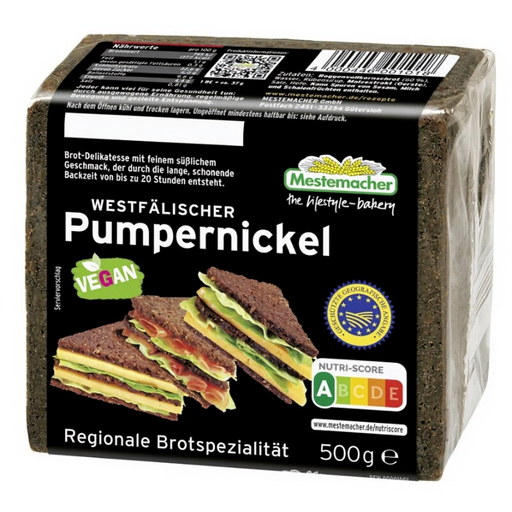
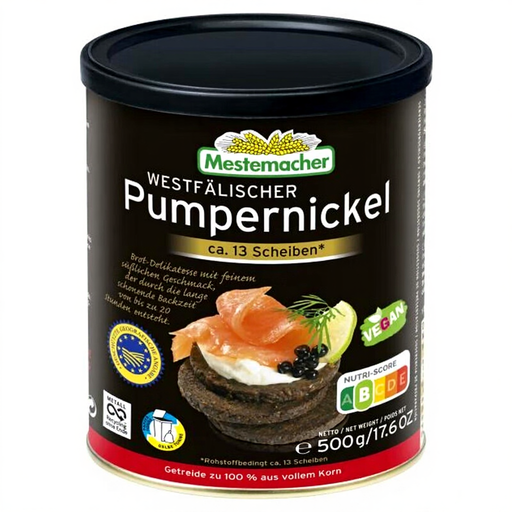
These two pumpernickel breads are options if you’re looking for wholemeal bread in a 500 g pack for your campus lunch. If sourdough matters to you, check the current ingredients list for both varieties before choosing.
 No image available
Mestemacher Traditional Westphalian Pumpernickel Bread, 500 g
This 500 g variety is an option for a packed lunch with pumpernickel. Check the pack to see whether sourdough is used and what information it gives about rye, sesame and soya.
View on Joybuy
 No image available
Mestemacher Westphalian Pumpernickel Bread, 500 g
This 500 g variety is another option if pumpernickel works for your packed lunch. Check the pack for sourdough; if you have a milk allergy, make sure you clarify the milk labelling before choosing.
View on Joybuy
Frequently asked questions
Is dark bread automatically wholemeal?
No, colour alone doesn’t prove that a bread contains wholemeal flour. The German Nutrition Society recommends looking for the term ‘wholemeal’ when buying bread; you can also check the ingredients list.
How should I store bread for several campus lunches?
Store bread according to the instructions on the pack and freeze portions if you won’t need them until later. The consumer advice centre generally recommends storing bread at room temperature in a dry place away from light. If you see mould, the whole loaf should be thrown away.
Do I need to check allergens in packaged wholemeal sourdough bread?
Yes. If particular ingredients or allergens matter to your choice, the labelling on the individual loaf is essential. The consumer advice centre highlights the importance of checking ingredients and allergen information on packaged foods; ‘may contain’ information can also be important.
Is sourdough bread automatically gluten-free?
No, using sourdough doesn’t mean a bread is gluten-free. Sourdough bread made with rye or wheat contains gluten-containing grains. If you need to follow a gluten-free diet for medical reasons, check the labelling on the specific product.


